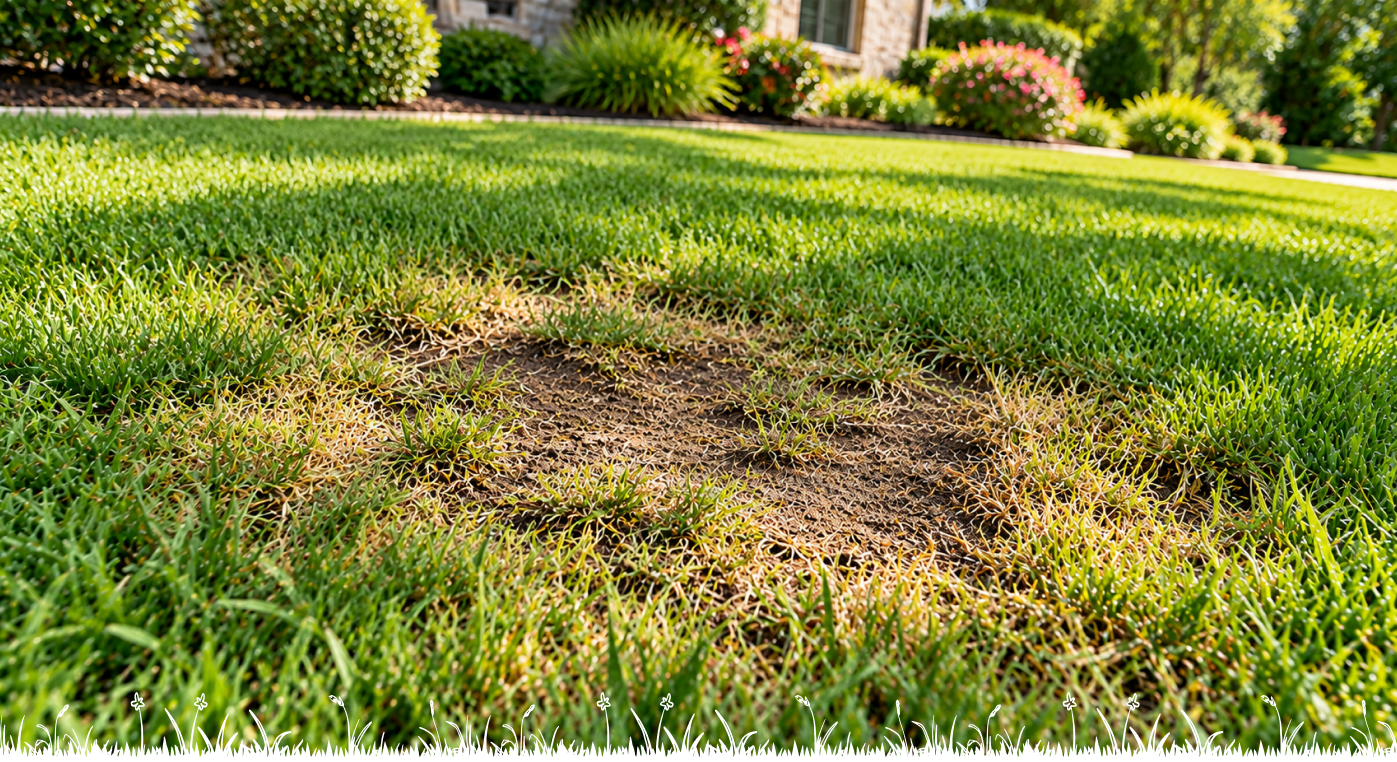
After a long North Texas summer, it is common to notice areas of grass that look thinner, weaker, or completely bare. High temperatures, intense sunlight, foot traffic, soil conditions, irrigation issues, and seasonal stress can all affect turf during the hottest part of the year.
Bare spots are more than a cosmetic issue. If the underlying cause is not identified, simply adding new grass may only provide a temporary solution. Before repairing a damaged area, homeowners should understand why the turf declined and whether the surrounding conditions are suitable for healthy regrowth.
For homeowners looking for lawn repair services, identifying the cause of bare spots is an important first step toward restoring a healthier and more consistent lawn.
Why Bare Spots Appear After Summer
Summer places significant stress on lawns in North Texas. Extended periods of heat can affect turf growth, while repeated activity across the property can create additional pressure on already-stressed grass.
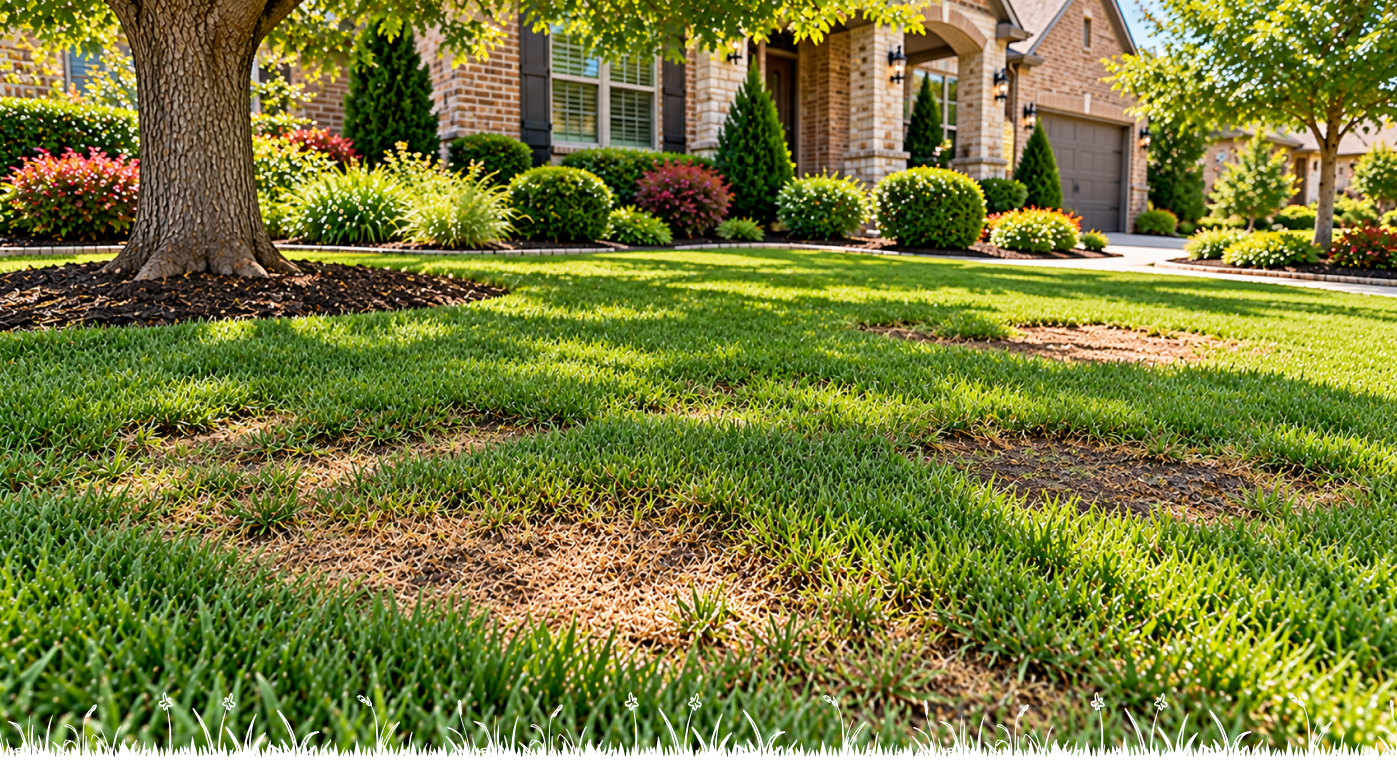
Not every bare spot has the same cause. One area may have suffered from heavy foot traffic, while another may have inadequate sunlight or compacted soil.
That is why identifying the location, shape, and surrounding conditions of a bare area can provide useful clues about what happened.
Summer Heat Can Stress Turf
North Texas summers can expose lawns to prolonged periods of high temperatures. Turf that is already dealing with limited moisture, poor soil conditions, or other stress can become thinner during these periods.
Grass may stop growing as actively when environmental conditions become difficult. Repeated stress can eventually leave sections of the lawn noticeably weaker than surrounding areas.
However, heat alone is not always responsible. Homeowners should look at other conditions affecting the damaged section before deciding how to repair it.
Heavy Foot Traffic Can Create Bare Areas
Areas that receive frequent walking, outdoor activities, pets, or repeated equipment traffic can become damaged over time.
Repeated pressure can flatten turf and compact the underlying soil. Once grass becomes thin, continued traffic can make it increasingly difficult for the area to recover.
If a bare spot consistently appears along a walkway, near an outdoor seating area, or around a commonly used part of the yard, traffic may be contributing to the problem.
Reducing unnecessary traffic while the area recovers can help prevent additional damage.
Compacted Soil Can Prevent Healthy Recovery
Soil compaction can create difficult conditions for grass roots.
When soil becomes heavily compacted, the growing environment can become less favorable for root development and water movement. This can leave turf weaker and make recovery more difficult after periods of summer stress.
Bare areas should therefore be evaluated at the soil level instead of focusing only on the grass that is visible above the surface.
Improving the growing environment may be more important than simply replacing the missing turf.
Shade Can Create Weak or Thin Turf
Some bare spots develop in locations where sunlight is limited.
Trees, structures, fences, and other landscape features can create shaded areas that receive significantly less direct sunlight than the rest of the property.
If a bare or thin section is consistently located beneath a mature tree or alongside a structure, insufficient sunlight may be part of the problem.
In these situations, homeowners should consider whether the area is actually suitable for the existing grass type before attempting to repair it.
Irrigation Problems Can Leave Certain Areas Dry
A lawn can receive different amounts of moisture depending on its location and the way the irrigation system covers the property.
Areas along the edges of a lawn, near structures, or around landscape features may sometimes receive less water than more open sections.
If bare spots consistently appear in the same locations, homeowners should determine whether the area is receiving appropriate moisture rather than simply increasing watering throughout the entire property.
Professional irrigation services can help identify coverage problems and determine whether the watering setup is appropriate for the landscape.
Grass Type Matters
Different turfgrass varieties respond differently to North Texas conditions.
Bermuda, Zoysia, and St. Augustine can have different preferences regarding sunlight, moisture, maintenance, and growing conditions.
This means a grass type that performs well in one part of a property may not necessarily perform as well in another.
Before repairing a bare spot, homeowners should consider whether the existing grass is appropriate for that particular location.
Lawn Diseases and Pests Can Cause Damage
Not every bare patch is caused by heat or physical stress.
Certain lawn diseases and pest activity can contribute to thinning or damaged turf. These problems may sometimes appear as irregular patches or areas where grass gradually loses density.
If the damaged area continues to expand despite appropriate lawn care, homeowners may need to investigate whether disease or pest activity is involved.
Treating the visible bare spot without addressing the underlying cause can result in the problem returning.
Bare Spots Can Develop Around Landscape Beds
The transition between lawn and landscape beds can also influence turf health.
Grass growing directly alongside planting beds may experience different soil, moisture, sunlight, and maintenance conditions compared with turf in open lawn areas.
A clearly defined landscape edge can help keep lawn areas organized and prevent grass from gradually moving into planting beds.
Our recent article, How Landscape Edging Can Keep Your Lawn and Garden Beds Cleaner, explains how defined boundaries can help make lawn and landscape maintenance more manageable.
When Should You Repair a Bare Spot?
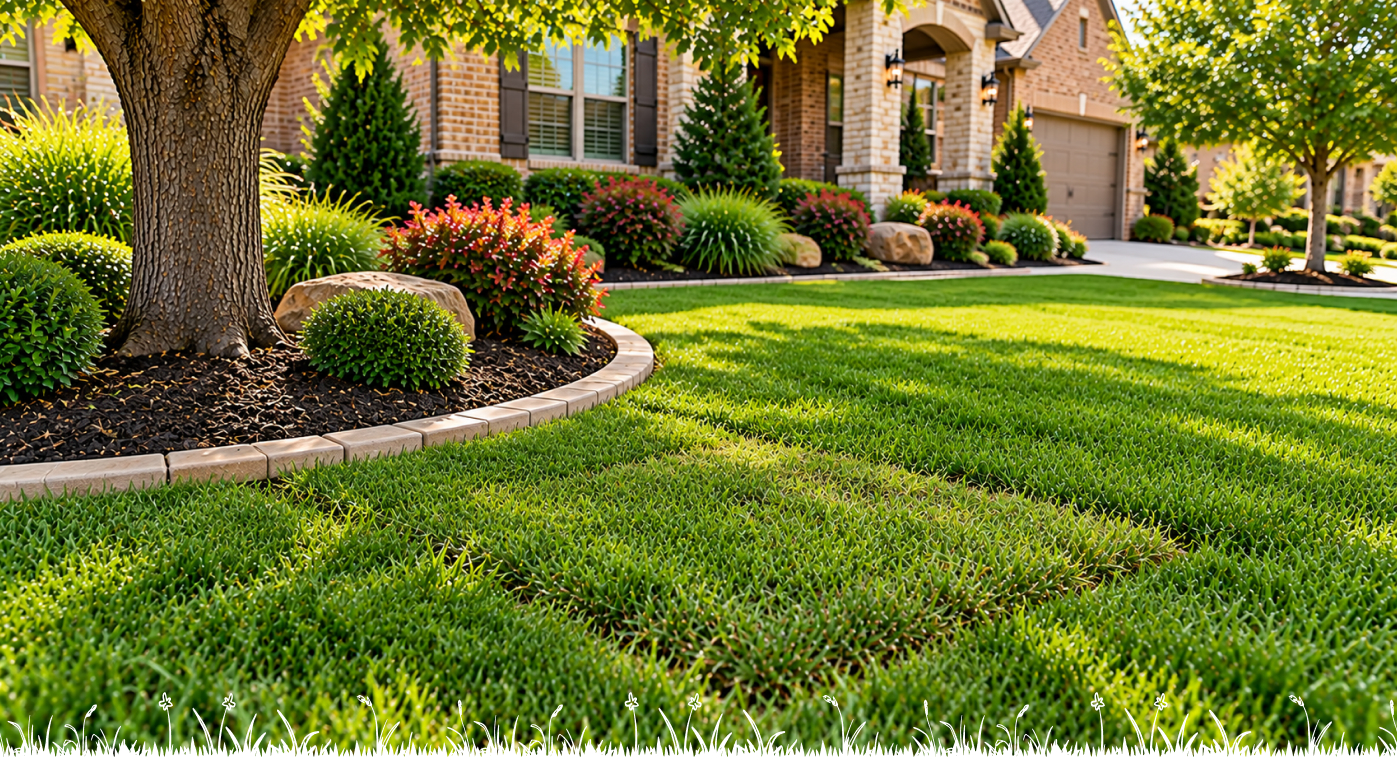
The right time to repair a bare area depends on the cause of the damage and the condition of the surrounding turf.
Before beginning repairs, homeowners should evaluate:
- How large the damaged area is
- Whether the grass is completely absent or simply thin
- How much sunlight reaches the location
- Whether the soil is compacted
- Whether the area receives regular foot traffic
- Whether irrigation coverage is adequate
- Which type of grass is already growing nearby
Addressing these factors first can improve the chances of establishing healthier turf.
Repairing the Lawn May Require More Than New Grass
Simply placing new grass over a bare area does not always solve the problem.
If compacted soil, poor sunlight, inadequate moisture, heavy traffic, or another issue caused the original damage, the same conditions can affect newly established turf.
A successful repair should therefore address the condition of the growing area as well as the missing grass.
For larger or recurring problems, professional lawn restoration services can help homeowners evaluate the damaged areas and determine an appropriate approach.
Keep Repaired Areas Protected
Once a bare area has been repaired, protecting it can be just as important as the initial work.
Avoid unnecessary foot traffic while the grass establishes and monitor the area for changes in moisture, growth, and color.
The surrounding lawn should also receive consistent maintenance so the repaired section can gradually blend with the existing turf.
Regular observation is especially useful when a bare spot developed because of a recurring condition.
When Sod May Be the Better Option
Some bare areas can recover through appropriate maintenance, while larger or severely damaged sections may require new turf.
If a homeowner needs to establish a larger section of consistent grass, sod installation services can provide an efficient way to introduce established turf to the property.
The correct approach depends on the size of the area, existing grass type, soil condition, sunlight, and long-term maintenance requirements.
How to Prevent Bare Spots after Future Summers
Preventing future damage starts with understanding what caused the original problem.
Homeowners can monitor high-traffic areas, pay attention to shaded sections, watch for irrigation inconsistencies, and address compacted soil before turf becomes severely damaged.
Routine lawn maintenance can also help identify developing problems earlier.
For Lewisville homeowners searching for lawn maintenance Lewisville TX, consistent professional care can help keep turf monitored and maintained throughout changing North Texas conditions.
Frequently Asked Questions
Why does my lawn have bare spots after summer?
Summer heat, heavy foot traffic, compacted soil, insufficient sunlight, irrigation problems, pests, and lawn diseases can all contribute to bare areas.
Will bare spots fill in on their own?
Some thin areas may recover when favorable growing conditions return, but completely bare areas may require additional repair. The cause of the damage should be identified first.
Should I water bare spots more?
Not automatically. If the problem is caused by shade, compacted soil, traffic, or another factor, additional water may not solve the underlying issue.
Can mowing cause bare spots?
Improper mowing can place additional stress on turf, particularly when grass is already dealing with heat or other environmental challenges. Mowing practices should match the grass type and current conditions.
Is sod a good option for repairing bare areas?
Sod can be useful for larger or severely damaged areas where homeowners want to establish consistent turf relatively quickly. The existing soil and growing conditions should still be addressed first.
How can I prevent bare spots next summer?
Monitor high-traffic areas, maintain appropriate irrigation, watch shaded sections, avoid unnecessary soil compaction, and maintain the lawn consistently throughout the year.
Restore a Healthier North Texas Lawn
Bare spots after summer are often a sign that one or more areas of the lawn experienced conditions that were difficult for the turf to handle.
Rather than treating every bare patch the same way, homeowners should consider sunlight, soil, moisture, traffic, grass type, and other surrounding conditions. Identifying the cause first can make lawn repairs more effective and help prevent the same problem from returning.
Cameron’s Pro Lawn Services provides lawn maintenance, landscaping, irrigation, sod installation, and seasonal services for homeowners and properties throughout Lewisville and surrounding North Texas communities.
Need help with bare or struggling areas of your lawn? Contact Cameron’s Pro Lawn Services for a free quote.

Cameron's Lawn Care Service
Explore helpful lawn care, landscaping, irrigation, sod installation, seasonal maintenance, and outdoor property care tips from our team.
See All Blog