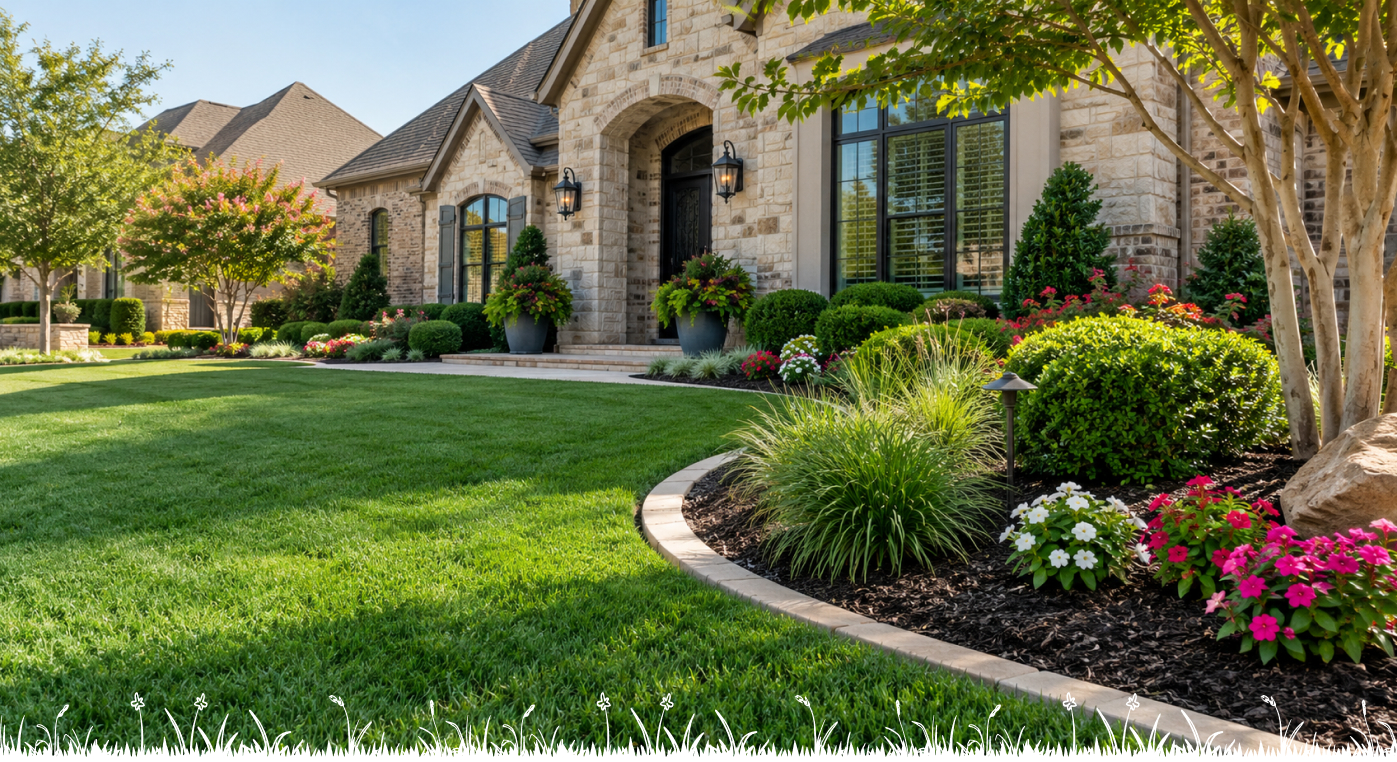
A well-maintained landscape is about more than healthy plants and green grass. The way lawn areas connect with planting beds, walkways, trees, and other outdoor features can also affect how clean and organized a property looks. Landscape edging creates a defined transition between different areas and can make routine maintenance easier.
Without clear boundaries, grass can gradually spread into garden beds, mulch can move into lawn areas, and planting spaces can lose their original shape. For North Texas homeowners, thoughtful edging can help maintain a cleaner appearance while making the overall landscape easier to manage.
When planning landscape design services, homeowners should consider edging as part of the complete outdoor layout rather than treating it as a separate decorative detail.
For homeowners who want to keep both their lawn and landscape looking organized, lawn maintenance Lewisville TX services can provide consistent care while helping the entire outdoor space maintain a clean, well-kept appearance.
Why Landscape Edging Matters
Lawn areas and planting beds have different maintenance requirements. Creating a clear boundary between them helps keep each area more organized and easier to care for.
Grass naturally spreads toward nearby planting areas, particularly when beds are directly connected to turf. Over time, this can make garden beds appear smaller and less defined.
A consistent edge creates visual separation while helping maintain the original shape of the landscape. It can also make mowing, trimming, mulching, and general cleanup more straightforward.
Edging Helps Keep Grass Out of Garden Beds
One of the most practical reasons to create landscape edges is to control where turf grows.
Grass can gradually move into planting beds and compete with shrubs, flowers, and other plants. Removing that unwanted growth repeatedly can become an unnecessary maintenance task.
A properly defined edge helps establish a clear boundary between turf and planted areas. This can be particularly useful around larger landscape beds where grass borders a significant portion of the planting area. Regular lawn maintenance services can also help keep these boundaries clean and clearly defined throughout the year.
Regular lawn care also becomes easier when these boundaries remain clearly defined.
Defined Edges Help Keep Mulch in Place
Mulch provides both functional and visual benefits around plants. It can help protect exposed soil while giving planting beds a finished appearance.
However, mulch can gradually move into surrounding lawn areas, particularly after heavy rain, maintenance activity, or regular foot traffic.
A clearly defined edge helps separate mulch from turf and makes the planting bed look more organized. It also makes it easier to refresh mulch later without having to redefine the entire shape of the bed.
Clean Edges Improve the Shape of Landscape Beds
Landscape beds do not always need to be straight. Curved edges can create a softer appearance and work well with the natural shape of a property.
However, curves need to be consistent. Uneven edges or sudden changes in direction can make a landscape look unfinished even when the plants themselves are healthy.
Smooth transitions can help the planting area look intentional and complement the architecture of the home, driveway, walkways, and surrounding lawn.
Edging Can Make Lawn Maintenance Easier
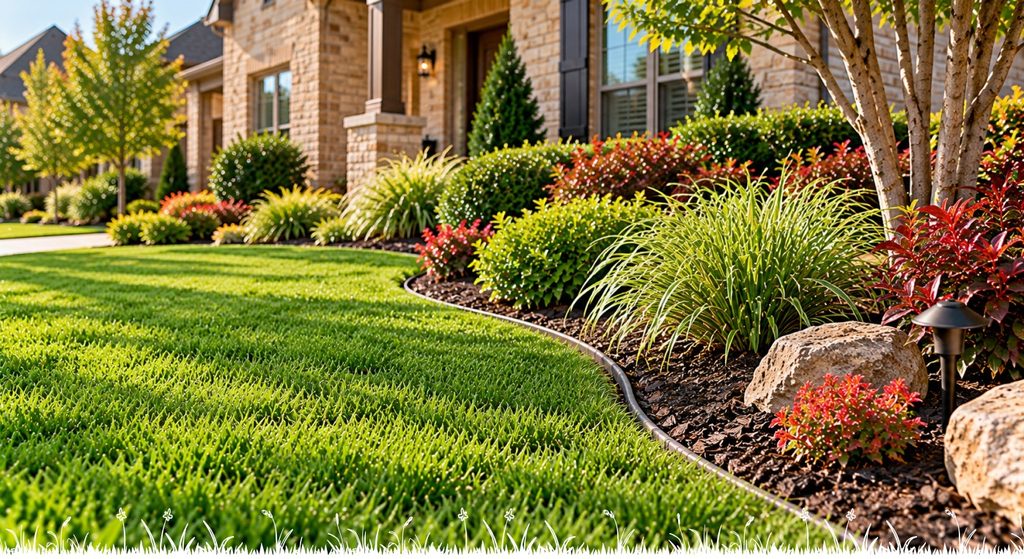
Defined landscape boundaries can make regular lawn care more manageable.
When the edge between turf and planting beds is clear, mowing equipment can follow the lawn more consistently. This reduces the amount of grass that needs to be manually trimmed around planting areas.
It can also make cleanup easier because grass clippings and other lawn debris are less likely to become mixed with mulch or soil.
The goal is not simply to reduce maintenance time. A well-planned boundary creates a property layout where different maintenance tasks can be performed more efficiently.
Consider the Entire Property before Creating an Edge
Landscape edging should be planned as part of the property’s overall design.
The shape of a planting bed should work with existing trees, walkways, driveways, lawn areas, and the architecture of the home. Creating an edge without considering these elements can make the landscape feel disconnected.
Homeowners should also think about how much lawn they actually need for recreation, access, pets, or other everyday activities.
A thoughtful design balances usable lawn space with planting areas rather than adding landscape beds simply because there is available space.
Choose an Edging Style That Fits the Property
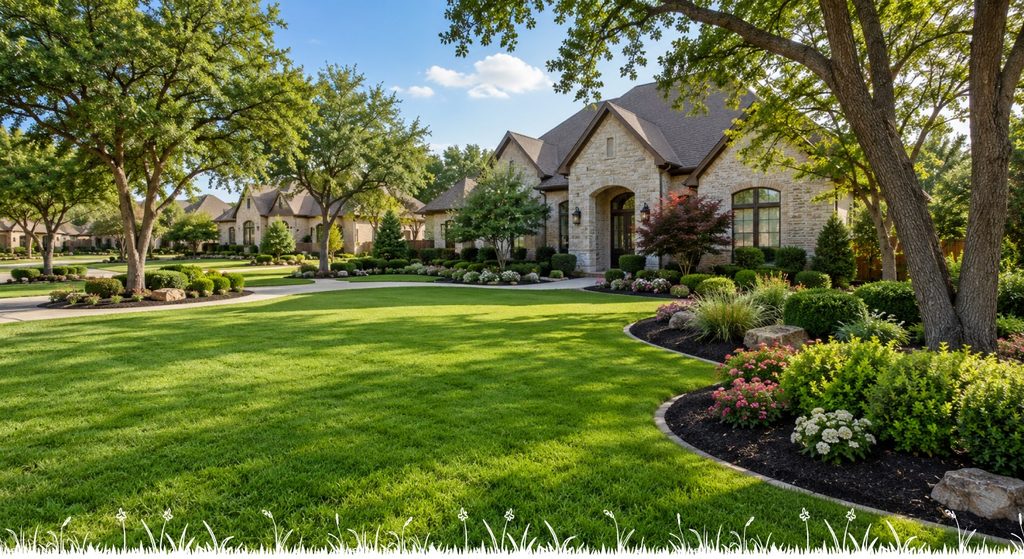
There is no single edging style that works for every landscape.
Some properties look better with a simple natural soil boundary, while others may benefit from a more structured material edge.
The choice should complement the overall design instead of becoming the most noticeable feature in the yard.
Traditional properties may benefit from subtle, natural-looking transitions, while more formal landscapes may work well with stronger geometric lines.
The best edging usually looks like a natural part of the landscape rather than something added afterward.
Plan Around Future Plant Growth
Plants should not be selected based only on how they look immediately after installation.
Shrubs can become wider, ornamental grasses can spread, and flowering plants can fill additional space as they mature. If plants are installed too close to the edge, they may eventually grow over the boundary and make the bed appear crowded.
Homeowners should allow enough room for mature plant growth when planning both the planting area and its edge.
When selecting plants for areas around trees, homeowners should also consider how limited sunlight can affect turf and surrounding vegetation. Our first new guide, Why Does Grass Turn Thin Under Trees in North Texas?, explains how shade, tree roots, soil conditions, and foot traffic can affect grass growing beneath mature trees.
Keep Irrigation in Mind
Landscape edging should not interfere with the natural movement of water across the property.
Changing the shape or elevation of a planting bed can sometimes influence where water collects or flows. This matters particularly around driveways, walkways, foundations, and areas that already experience runoff.
When new planting beds or landscape borders are created, irrigation services should also be considered to make sure plants and surrounding turf receive appropriate moisture.
Consider Sod When Expanding or Reshaping Lawn Areas
Landscape redesigns can sometimes change the amount or shape of usable lawn.
If an old planting bed is reduced, damaged turf may need to be replaced around the newly defined edge. Likewise, a landscape project may create new lawn sections that need consistent turf coverage.
When homeowners need new grass after modifying their landscape layout, sod installation services can provide an efficient way to establish a consistent lawn surface.
Seasonal Changes Can Affect Landscape Edges
Even a professionally created landscape edge requires maintenance throughout the year.
Grass can grow across the boundary, mulch can shift, leaves can accumulate, and plants can change considerably with the seasons.
Regular seasonal services can help keep planting beds, lawn edges, and surrounding outdoor areas organized as weather and growth conditions change.
When Should You Redefine Landscape Edges?
There are several signs that an existing landscape edge may need attention:
- Grass repeatedly grows into planting beds.
- Mulch frequently spreads into lawn areas.
- Bed boundaries have become uneven.
- Plants are becoming crowded near the edge.
- Curves no longer complement the property.
- Soil or water collects along the boundary.
- The landscape looks visually disconnected.
If several of these problems are present, redefining the edge may provide a better long-term solution than repeatedly correcting individual areas.
How Edging Works With the Rest of the Landscape
Edging is most effective when it works together with other landscape elements.
Plant selection, bed size, lawn shape, mulch, drainage, irrigation, and maintenance requirements should all be considered when creating a landscape layout.
For homeowners looking for residential landscaping services, this type of complete planning can help create outdoor spaces that look organized while remaining practical to maintain.
Frequently Asked Questions
What is the purpose of landscape edging?
Landscape edging creates a clear boundary between lawn areas and planting beds, helping keep grass and mulch separated while giving the property a cleaner appearance.
Does landscape edging make lawn maintenance easier?
Yes. Defined edges can make mowing and trimming around planting beds easier and help reduce grass from spreading into landscaped areas.
What type of landscape edging is best?
The best option depends on the property’s design, existing landscape materials, maintenance needs, and the desired appearance. Natural soil edges and structured edging materials can both work well.
How often should landscape edges be maintained?
Landscape edges should be checked regularly because grass can grow across boundaries, mulch can shift, and soil can accumulate along the edge.
Can landscape edging affect drainage?
It can if the shape or elevation of a planting bed is changed incorrectly. Edging should be planned with the property’s existing drainage patterns in mind.
Can landscaping and lawn areas be redesigned together?
Yes. Combining lawn layout, planting beds, edging, drainage, irrigation, and plant selection can create a more practical and cohesive outdoor space.
A Cleaner Landscape Starts With Better Boundaries
Landscape edging may seem like a small detail, but it can have a noticeable effect on the appearance and maintenance of an entire property.
Clear boundaries help keep grass out of planting beds, contain mulch, define landscape shapes, and make routine lawn care easier. The best results come from planning the edges together with the property’s plants, lawn areas, drainage, irrigation, and overall layout.
A properly planned landscape should look attractive while also being practical to maintain throughout the year.
Cameron’s Pro Lawn Services provides professional landscaping, lawn maintenance, irrigation, sod installation, and seasonal services throughout Lewisville and surrounding North Texas communities.
Need help creating cleaner landscape boundaries? Contact Cameron’s Pro Lawn Services for a free quote.

Cameron's Lawn Care Service
Explore helpful lawn care, landscaping, irrigation, sod installation, seasonal maintenance, and outdoor property care tips from our team.
See All Blog