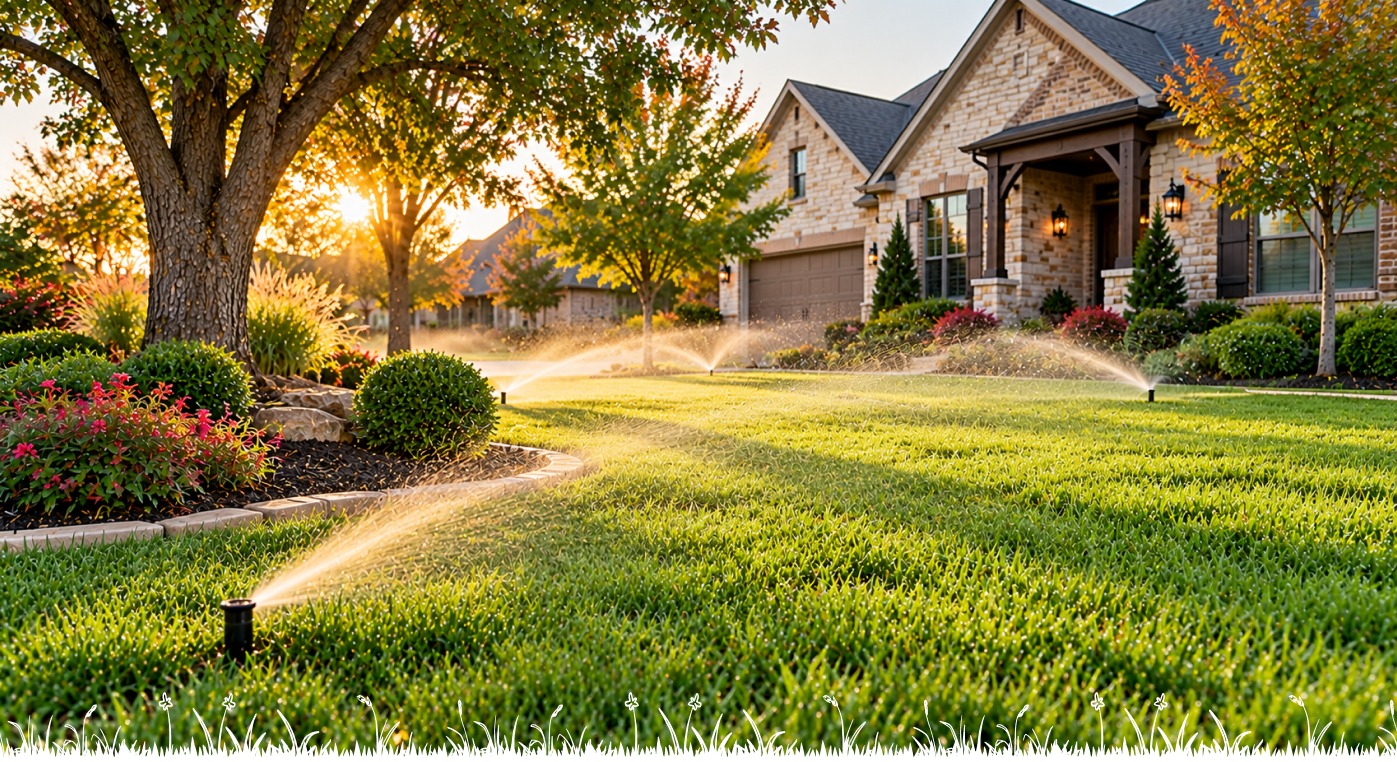
October brings a noticeable change to North Texas lawns. As temperatures begin to cool and days become shorter, grass generally does not require the same watering routine it needed during the hottest part of summer.
Continuing a summer watering schedule without making adjustments can lead to unnecessary water use and overly wet soil. On the other hand, reducing irrigation too much can leave turf stressed if dry conditions continue.
For homeowners, understanding how weather, soil, grass type, and rainfall affect watering can make seasonal lawn care more effective. A properly adjusted watering routine can help maintain healthier turf while avoiding unnecessary irrigation.
For homeowners who need professional lawn irrigation services, evaluating the property’s actual watering needs is an important first step.
Why October Requires a Different Watering Approach
Summer heat can significantly increase how quickly moisture leaves the lawn and soil. By October, cooler temperatures and changing weather conditions can reduce moisture loss.
This does not mean every lawn should immediately stop receiving regular irrigation. Instead, homeowners should evaluate the condition of the turf and soil before making changes.
Recent rainfall, sunlight exposure, grass type, soil conditions, and the property’s drainage can all influence how much supplemental water is actually needed.
A seasonal adjustment should therefore be based on conditions rather than simply changing the controller because the calendar has reached October.
Reduce Watering as Temperatures Cool
As temperatures decline, lawns typically lose moisture more slowly than they do during the peak of summer.
Homeowners can begin reviewing whether their irrigation system is still running at the same frequency used during the hottest months.
Rather than making a major reduction all at once, monitor the turf and soil. If the lawn remains healthy and the soil retains adequate moisture, watering frequency may be reduced gradually.
This can help avoid unnecessary irrigation while still providing enough moisture for the lawn during the seasonal transition.
Check Soil Moisture Before Watering
The condition of the soil can provide useful information about whether irrigation is actually necessary.
If moisture is still present in the root zone, another irrigation cycle may not be needed immediately. Conversely, dry soil combined with visible turf stress may indicate that supplemental watering is appropriate.
Checking the soil can be more useful than simply allowing a fixed schedule to run without considering current conditions.
This is particularly important during October because rainfall and temperatures can change quickly in North Texas.
Pay Attention to October Rainfall
North Texas weather can vary considerably during the fall.
A period of meaningful rainfall may provide sufficient moisture for the lawn, while several dry days or weeks can increase the need for supplemental irrigation.
Homeowners should therefore consider recent rainfall before allowing the irrigation system to operate at its normal summer frequency.
If the property uses an automatic controller, reviewing its seasonal settings can help ensure that irrigation is responding appropriately to changing conditions.
Water According to the Lawn’s Actual Needs
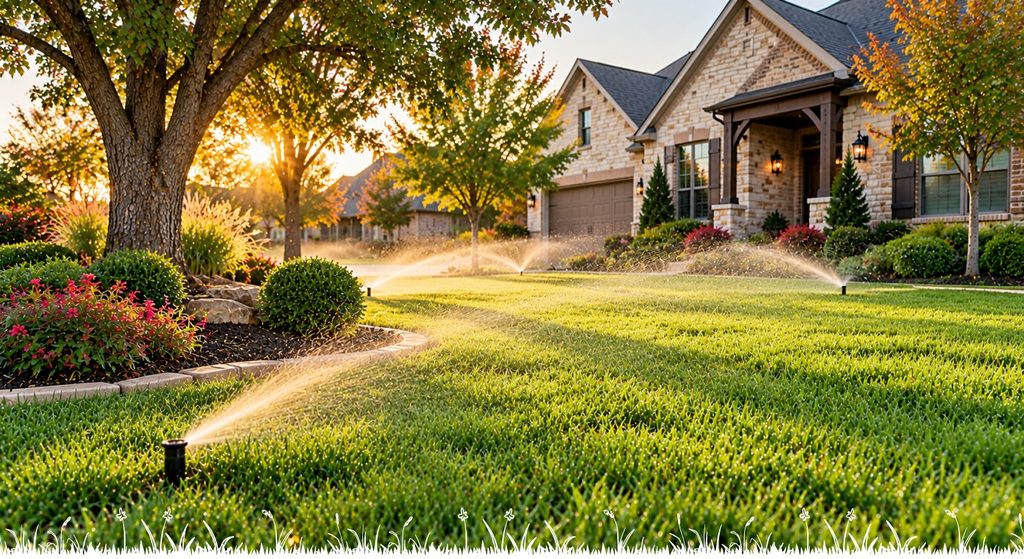
A good watering routine should focus on providing appropriate moisture rather than simply running sprinklers frequently.
The exact frequency can vary depending on grass type, soil, sunlight, rainfall, and the overall condition of the property.
Homeowners should also watch for signs that water is being applied faster than the soil can absorb it.
If water begins flowing across sidewalks, driveways, or other hard surfaces, the application may be too heavy for the soil to absorb efficiently.
Watch for Signs of Overwatering
More water is not necessarily better for turf.
Consistently saturated soil, standing water, runoff, or areas that remain excessively wet can indicate that an irrigation schedule needs to be reviewed.
Overwatering can also make it more difficult to determine whether other lawn problems are caused by moisture, soil, drainage, or another issue.
Instead of automatically adding more watering cycles, homeowners should identify what is actually causing the lawn to appear stressed.
Different Areas May Need Different Amounts of Water
Not every section of a property experiences the same growing conditions.
Open lawn areas exposed to direct sunlight may dry faster than turf beneath trees or beside structures. Sloped areas may also behave differently from flat sections.
Because of these differences, one watering routine may not always provide ideal conditions throughout the entire property.
Dividing irrigation into appropriate zones can help deliver water according to the specific needs of different lawn and landscape areas.
Check Sprinkler Coverage
Uneven irrigation coverage can create a lawn where some areas remain dry while others receive excessive moisture.
Homeowners should look for sections that consistently appear much greener or noticeably drier than surrounding turf.
Broken sprinkler heads, clogged nozzles, poor positioning, leaks, or incorrect spray patterns can all contribute to uneven watering.
An irrigation inspection can help identify whether the problem is actually related to the watering system rather than the amount of water being scheduled.
Consider Your Grass Type
Grass variety can also influence how a lawn responds to seasonal changes.
Bermuda, Zoysia, and St. Augustine have different characteristics and may respond differently to changes in temperature, sunlight, and moisture.
The grass type should therefore be considered when adjusting an irrigation schedule rather than treating every lawn exactly the same.
Our recent guide comparing Bermuda, Zoysia, and St. Augustine explains some of the factors Lewisville homeowners should consider when choosing turf for different property conditions.
October Is a Good Time to Inspect the Irrigation System
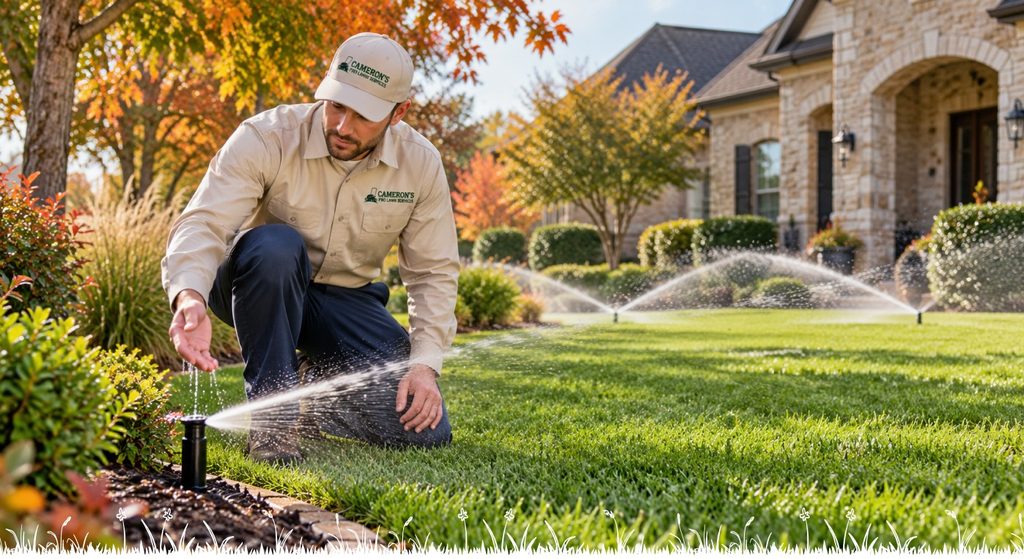
Seasonal changes provide a useful opportunity to inspect the condition of an irrigation system.
Homeowners can check for:
- Broken sprinkler heads
- Clogged nozzles
- Leaking connections
- Poor spray coverage
- Overspray onto sidewalks
- Dry areas between irrigation zones
- Water pooling in certain sections
- Incorrect controller settings
Addressing these problems can improve water distribution and make the system more efficient during changing seasonal conditions.
Avoid Automatically Watering During the Day
The timing of irrigation can also affect how efficiently water is used.
Watering during the strongest daytime heat can increase moisture loss before the lawn has an opportunity to benefit fully from the applied water.
Early morning is often a practical time for irrigation because temperatures are generally cooler and there is less immediate heat stress.
Homeowners should still consider weather, local watering requirements, and the actual needs of their property when choosing irrigation times.
Adjust Your Schedule After Significant Rain
If the lawn receives substantial rainfall, continuing the normal irrigation schedule may provide more water than the turf requires.
A properly functioning rain sensor or weather-based controller can help prevent unnecessary irrigation after rainfall.
Homeowners with manually controlled systems should also pay attention to recent weather and make temporary adjustments when appropriate.
The goal is to supplement natural rainfall rather than automatically water regardless of how much moisture the lawn has already received.
Consider Drainage When Adjusting Watering
Watering and drainage are closely connected.
If water repeatedly collects in one area of the property, increasing or decreasing irrigation alone may not solve the problem. The issue could be related to grading, soil conditions, runoff, or drainage.
Understanding where water goes after irrigation or rainfall can help homeowners avoid creating overly wet areas while trying to keep the lawn hydrated.
Seasonal Lawn Care Goes Beyond Irrigation
Adjusting irrigation is only one part of preparing a North Texas lawn for changing fall conditions.
Mowing, trimming, leaf management, weed control, soil care, and other seasonal tasks can also influence how well the property transitions from summer into cooler weather.
Homeowners looking for seasonal lawn services can use a broader maintenance approach instead of treating irrigation as an isolated task.
Keep Lawn Maintenance Consistent
Even when grass growth begins slowing, regular lawn care should not simply stop.
Mowing should continue while the grass is actively growing, while edging, trimming, cleanup, and monitoring should continue according to the property’s needs.
Consistent care can also make it easier to identify problems such as dry areas, thinning turf, or uneven irrigation before they become more difficult to address.
For homeowners searching for lawn maintenance Lewisville TX, consistent professional care can help keep the property looking clean and well maintained as North Texas conditions change.
Watering Needs Can Change Around New Lawn Areas
Newly installed turf may have different watering requirements from established lawn areas.
If a property has recently received new sod, the watering approach should account for the establishment needs of that turf rather than simply following the schedule used for mature grass.
The condition of the soil, weather, grass type, and installation timing should all be considered when determining how much supplemental water is appropriate.
Homeowners should also avoid assuming that more water is always better for newly installed turf.
A Related Watering Guide for North Texas Homeowners
Homeowners who are unsure how often their lawn should receive water can also review our earlier guide, How Often Should You Water Your Lawn in North Texas? It covers general watering considerations and explains why proper watering plays an important role in maintaining healthy turf.
Frequzntly Asked Questions
How often should I water my lawn in October in North Texas?
There is no single schedule that works for every property. Watering frequency depends on rainfall, temperature, grass type, soil conditions, sunlight, and the condition of the lawn.
Should I keep my summer watering schedule in October?
Not necessarily. Cooler temperatures and changing rainfall can reduce the lawn’s water requirements compared with peak summer conditions.
Is early morning a good time to water a lawn?
Early morning can be a practical irrigation period because temperatures are generally cooler and there is less immediate daytime heat.
How do I know if my lawn is getting too much water?
Standing water, runoff, consistently saturated soil, or areas that remain excessively wet can indicate that the irrigation schedule or system coverage should be reviewed.
Why are some parts of my lawn dry while others stay wet?
Uneven sprinkler coverage, different sunlight levels, soil conditions, slopes, and damaged irrigation components can all cause different areas to receive different amounts of water.
Should I change my irrigation schedule after rainfall?
If rainfall provides sufficient moisture, an additional irrigation cycle may not be necessary. Rain sensors and smart controllers can help reduce unnecessary watering.
Adjust Your Watering as North Texas Conditions Change
October is a good time to reassess how much water your lawn actually needs. Cooler temperatures, changing rainfall, shorter days, and differences between turf areas can all affect irrigation requirements.
Instead of continuing a summer schedule automatically, homeowners should monitor rainfall, soil moisture, turf condition, sprinkler coverage, and grass type. Adjusting irrigation according to actual conditions can help maintain healthier turf while avoiding unnecessary water use.
Cameron’s Pro Lawn Services provides professional lawn maintenance, landscaping, irrigation, sod installation, and seasonal services for homeowners and properties throughout Lewisville and surrounding North Texas communities.
Need help with your lawn or irrigation system? Contact Cameron’s Pro Lawn Services for a free quote.

Cameron's Lawn Care Service
Explore helpful lawn care, landscaping, irrigation, sod installation, seasonal maintenance, and outdoor property care tips from our team.
See All Blog