
October is an important transition period for North Texas lawns. Warm-season grasses such as Bermuda, Zoysia, and St. Augustine gradually slow their growth as temperatures become cooler and the lawn begins preparing for winter dormancy.
This is when many homeowners start wondering whether they should apply another round of fertilizer or stop for the season. The answer depends on the type of grass, current growth, soil conditions, previous applications, and how close the lawn is to dormancy.
For homeowners considering lawn fertilization, timing matters just as much as the fertilizer itself. Applying nutrients while grass is actively growing can support healthy turf, while applying them too late may provide little benefit.
Why Fertilizer Timing Matters in Fall
Fall is different from the peak summer growing season. During summer, warm-season grasses can grow quickly and require regular mowing and maintenance. As temperatures fall, that growth naturally slows.
Because of this change, homeowners should not treat October exactly like July or August. The lawn’s current growth should guide decisions about additional nutrients.
The goal of fall lawn fertilization is not simply to keep the grass looking green for as long as possible. Instead, fertilizer should be used at an appropriate time to support the lawn while it can still actively use the nutrients.
When Should You Stop Fertilizing Bermuda Grass?
Bermuda grass is one of the most common warm-season grasses in North Texas. It thrives during warm weather and gradually slows as temperatures decline.
As the grass approaches dormancy, its ability to actively use nitrogen also decreases. This means late applications should be approached carefully.
Homeowners should look at the condition of the lawn rather than assuming another fertilizer application is automatically necessary. If growth has already slowed considerably, forcing additional growth may not be beneficial.
Bermuda grass is one of the most common warm-season grasses in North Texas. It grows actively during warm weather and gradually slows as temperatures decline. Our recent guide, What Happens to Bermuda Grass in North Texas as Temperatures Cool?, explains how Bermuda grass responds as temperatures decline and why its fall maintenance needs change.
Look at Current Grass Growth
One of the easiest ways to determine whether the lawn may still benefit from fertilizer is to look at its growth.
If the grass is still actively growing and requires regular mowing, the lawn may still be using available nutrients. If growth has slowed significantly, another nitrogen application may not be necessary.
This is particularly important in October because weather conditions can change quickly across North Texas.
Consider What Has Already Been Applied
Homeowners should also consider how much fertilizer the lawn has already received during the year.
Applying fertilizer repeatedly without considering previous treatments can lead to unnecessary nutrient buildup. A lawn that has already received appropriate applications may not need another heavy treatment.
Keeping track of fertilizer applications can make it easier to determine whether another application is actually needed.
Soil Conditions Matter
Soil plays an important role in lawn health. Grass that appears weak, thin, or discolored does not necessarily have a fertilizer deficiency.
Compacted soil, poor drainage, irrigation problems, shade, pests, and heavy foot traffic can all affect turf performance.
A soil test can help homeowners better understand existing nutrient levels before deciding whether additional fertilizer is appropriate.
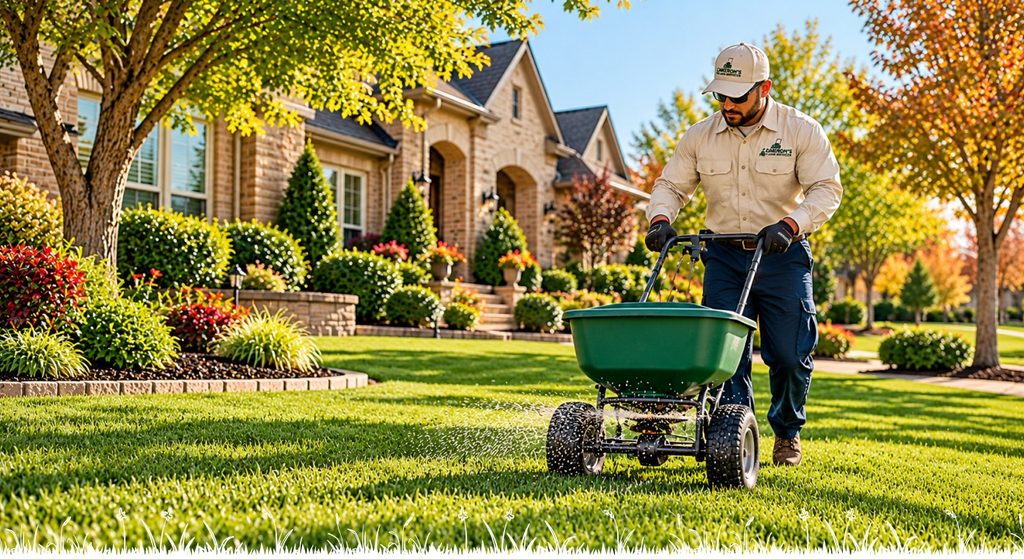
Avoid Heavy Late-Season Applications
More fertilizer does not automatically create a healthier lawn.
When warm-season grass is approaching dormancy, excessive nitrogen can encourage new growth at a time when the lawn should naturally be slowing down.
Homeowners should therefore avoid applying large amounts simply because the lawn is losing some of its summer color.
A measured approach is generally better than trying to force the lawn to remain in peak summer condition.
Don’t Fertilize Just to Keep Summer Color
Bermuda grass naturally changes as temperatures become cooler.
Some homeowners may interpret a gradual reduction in green color as a sign that the lawn needs more fertilizer. However, seasonal color changes can be completely normal.
Instead of trying to maintain summer color indefinitely, homeowners should focus on keeping the lawn properly maintained as it transitions toward dormancy.
Consider the Type of Grass
The type of turf growing on the property also matters.
Bermuda, Zoysia, and St. Augustine are warm-season grasses, but they do not have exactly the same growth patterns or maintenance requirements.
Before applying fertilizer, homeowners should identify the grass type and consider its current growth stage.
This becomes especially important during the fall transition when different areas of a property may respond differently to changing temperatures and sunlight.
Fertilizer Is Only One Part of Lawn Care
A healthy lawn requires more than nutrients.
Mowing, watering, soil conditions, sunlight, drainage, leaf removal, and seasonal maintenance can all affect turf health. If one of these areas is being neglected, fertilizer alone may not solve the problem.
A complete maintenance approach makes it easier to identify the actual reason a lawn is struggling.
Adjust Watering as Temperatures Cool
Watering requirements can also change during fall.
As temperatures become cooler and grass growth slows, lawns generally do not require the same watering routine used during the hottest summer months.
Homeowners should monitor rainfall, soil moisture, and lawn conditions rather than automatically following the same summer schedule.
Professional irrigation services can also help identify uneven coverage, damaged sprinkler heads, leaks, or other watering problems.
If you’re adjusting your lawn’s watering routine as temperatures change, our guide How to Adjust Your Lawn Watering Schedule in October in North Texas explains how rainfall, soil moisture, and seasonal conditions can affect irrigation needs.
Continue Mowing While Grass Is Growing
Cooler weather does not mean homeowners should immediately stop mowing.
Bermuda grass can continue growing for a while as temperatures decline. Mowing should continue as needed while the grass remains actively growing.
As growth becomes slower, mowing frequency can naturally decrease.
Homeowners should also avoid removing too much of the grass blade at one time, particularly when the lawn is already experiencing seasonal stress.
Remove Leaves and Lawn Debris
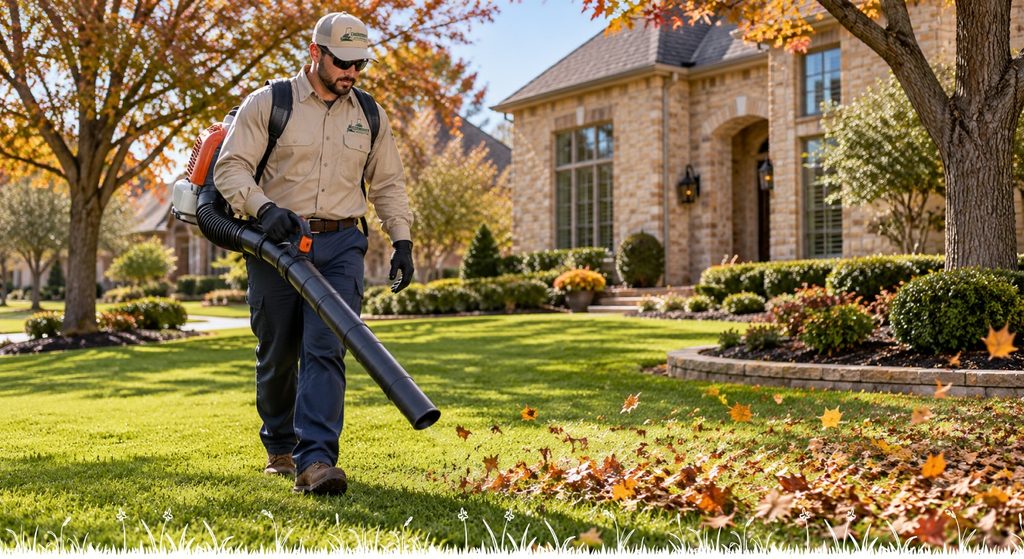
Fall leaves can accumulate quickly around North Texas properties, especially where mature trees are present.
A thick layer of leaves can block sunlight and keep moisture trapped against the turf.
Regular cleanup helps keep the lawn visible and makes it easier to notice thin areas, bare patches, drainage problems, or other conditions that may require attention.
Watch for Winter Weed Problems
As warm-season grass becomes less active, winter weeds can become more noticeable in weak or open areas of the lawn.
Maintaining dense, healthy turf can help reduce opportunities for weeds to establish. However, fertilizer should not be used simply as a weed-control solution.
Homeowners should consider their lawn’s previous weed problems and seasonal maintenance needs when planning fall care.
Look at the Entire Landscape
The lawn is connected to the rest of the outdoor space.
Trees can create shade, planting beds can affect water movement, and drainage can influence soil moisture. These factors can all affect how well grass grows.
Professional landscaping services can help homeowners maintain the lawn and surrounding landscape as one complete outdoor environment.
What If You Missed the Fall Fertilization Window?
If the lawn is already approaching dormancy, applying fertilizer late simply because an earlier application was missed may not be the best decision.
Instead, homeowners can focus on mowing appropriately, managing irrigation, removing leaves, and monitoring the condition of the lawn.
Planning ahead for the next growing season can be more beneficial than trying to force late-season growth.
Build Fertilization Into Seasonal Maintenance
Fertilization works best when it is part of a larger lawn-care plan.
Seasonal changes affect mowing, watering, cleanup, weed management, and other maintenance requirements. Keeping these tasks coordinated can help prevent small problems from becoming larger ones.
For homeowners looking for seasonal services, a structured maintenance approach can help keep the property prepared as conditions change throughout the year.
For homeowners looking for lawn maintenance Lewisville TX, seasonal lawn care should include more than mowing. Understanding when to fertilize, adjust watering, remove leaves, and prepare the turf for cooler weather can help maintain a healthier lawn throughout the year.
Frequently Asked Questions
When should I stop fertilizing my lawn in North Texas?
The right stopping point depends on grass type, current growth, weather, and how close the lawn is to dormancy. Warm-season grasses should not be pushed with late fertilizer applications once active growth has significantly slowed.
Can I fertilize Bermuda grass in October?
It depends on current turf growth and timing. If Bermuda grass is still actively growing, homeowners may still need to evaluate whether a final application is appropriate. If the lawn is already entering dormancy, additional fertilizer may not be beneficial.
Should I fertilize Bermuda grass after it turns brown?
Generally, no. Brown Bermuda grass is often entering winter dormancy, meaning it is no longer actively growing like it does during the warmer months.
Can too much fertilizer hurt my lawn?
Yes. Excessive fertilizer can encourage unnecessary growth and create other lawn problems. Applying fertilizer according to the grass’s needs is better than assuming more nutrients will always improve the lawn.
Should I get a soil test before fertilizing?
A soil test can be helpful when you are unsure about nutrient levels. It can help determine whether fertilizer is actually needed instead of relying only on the lawn’s appearance.
Does fall fertilization help the lawn in spring?
Properly timed fall fertilization can support turf health, but the application needs to be appropriate for the grass type and seasonal growth stage.
Does every North Texas lawn need fall fertilizer?
No. Fertilizer requirements vary based on grass type, soil conditions, previous applications, and current turf health. Some lawns may not need another application late in the season.
Know When to Stop Fertilizing Your Lawn
Fall is a transition period for North Texas lawns. As temperatures decline, warm-season grasses naturally slow their growth and begin preparing for winter dormancy.
The right approach to fall lawn fertilization is not about applying as much fertilizer as possible. Homeowners should consider grass type, current growth, soil conditions, previous applications, irrigation, and seasonal weather before deciding whether another treatment is necessary.
By combining appropriate fertilization with mowing, irrigation, leaf removal, landscaping, and seasonal maintenance, homeowners can help their lawns transition into the cooler months in better condition.
Need help maintaining your North Texas lawn? Contact Cameron’s Pro Lawn Services for a free quote.

Cameron's Lawn Care Service
Explore helpful lawn care, landscaping, irrigation, sod installation, seasonal maintenance, and outdoor property care tips from our team.
See All Blog