
Installing fresh sod during fall can give a North Texas lawn a clean, established appearance, but installation is only the beginning. The first few weeks after installation are important because the grass needs enough moisture to establish contact with the soil and begin developing roots.
Fall watering can also be different from summer watering. Cooler temperatures may reduce evaporation, while rainfall and North Texas soil conditions can affect how long moisture remains in the ground. After a new sod installation, homeowners should therefore pay attention to actual soil moisture instead of assuming that more water always produces better results.
Water New Sod Soon After Installation
Fresh sod should not be allowed to remain dry for an extended period immediately after installation. The grass has been separated from its previous growing environment, and its roots need consistent access to moisture while they begin establishing in the new soil.
Initial watering should moisten the sod and the soil beneath it rather than simply wetting the grass blades.
Proper preparation is also important for long-term turf success. Soil preparation, grading, sod placement, and early watering all work together to give the grass a better opportunity to establish.
Fall Sod May Not Need the Same Watering as Summer Sod
North Texas summer heat can dry soil and turf quickly. During fall, lower temperatures and shorter days can reduce evaporation.
That means a watering routine appropriate for extremely hot weather may provide too much moisture during cooler conditions.
Instead of following the same schedule throughout the year, homeowners should monitor the sod and underlying soil. Weather conditions, rainfall, sunlight, wind, soil type, and drainage can all influence how quickly the lawn dries.
The goal is consistent moisture during establishment without keeping the lawn excessively saturated.
Check the Soil beneath the Sod
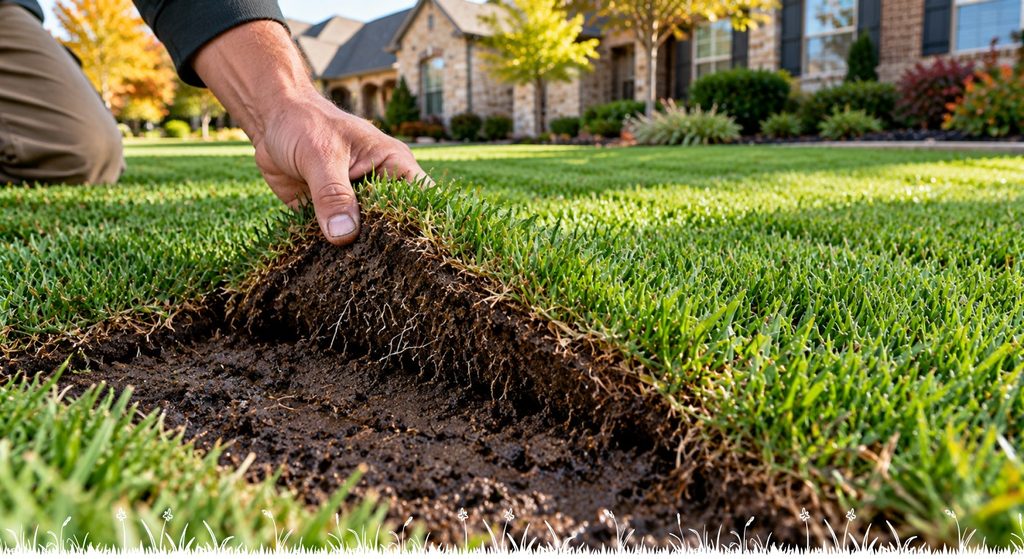
The surface appearance of new sod does not always tell the complete story. Grass blades may look dry while the soil underneath remains moist, or the surface may look wet even though moisture has not reached deeply enough.
During the early sod process, carefully checking moisture beneath an edge of the sod can provide a better indication of whether water is reaching the soil.
As roots begin developing, the sod should gradually become more securely attached to the ground. Watering can then be adjusted according to establishment, weather, and soil conditions.
Avoid Keeping New Sod Constantly Waterlogged
New sod needs moisture, but consistently saturated soil can create a different set of problems.
If water remains standing on the lawn or the soil stays extremely wet for long periods, the area may be receiving more water than it can absorb. Cooler fall temperatures can make this more noticeable because moisture may evaporate more slowly than during summer.
Homeowners should watch for puddling, extremely soft ground, prolonged standing water, or runoff from the lawn.
If water repeatedly runs across the lawn rather than entering the soil, our latest guide Why Is Water Running off Your Lawn Instead of Soaking into the Soil? Explains how clay soil, compaction, slopes, and watering duration can contribute to runoff.
Make Sure Water Reaches the Entire Lawn
Uniform watering is especially important during the early establishment period. One section of new sod may remain adequately moist while another begins drying much faster.
Corners, edges, narrow strips, slopes, and areas near hardscaping can sometimes receive different amounts of water from the rest of the lawn.
Existing irrigation coverage should therefore be evaluated after sod is installed. Landscape changes and newly covered areas can alter the watering requirements of the property.
Professional irrigation services can help identify coverage or watering issues that may affect how evenly new turf receives moisture.
Pay Extra Attention to Sod Edges and Seams
The edges of sod pieces can dry more quickly than the center, particularly if there are gaps between sections or poor soil contact underneath.
During early establishment, homeowners should watch seams and perimeter areas for signs of drying. Consistent moisture and good contact with prepared soil can help the pieces establish more uniformly.
Proper installation matters here as well. Sod should be positioned carefully so that pieces fit together appropriately without unnecessary gaps.
As rooting progresses, visible seams should become less noticeable as the turf begins establishing across the lawn.
Consider Drainage before Increasing Watering
If one area of the new lawn stays wet while another dries quickly, simply increasing the watering duration may not solve the problem.
Low areas, compacted soil, grading, and drainage patterns can cause water to collect unevenly across a property. This can result in one section becoming saturated while another receives insufficient moisture.
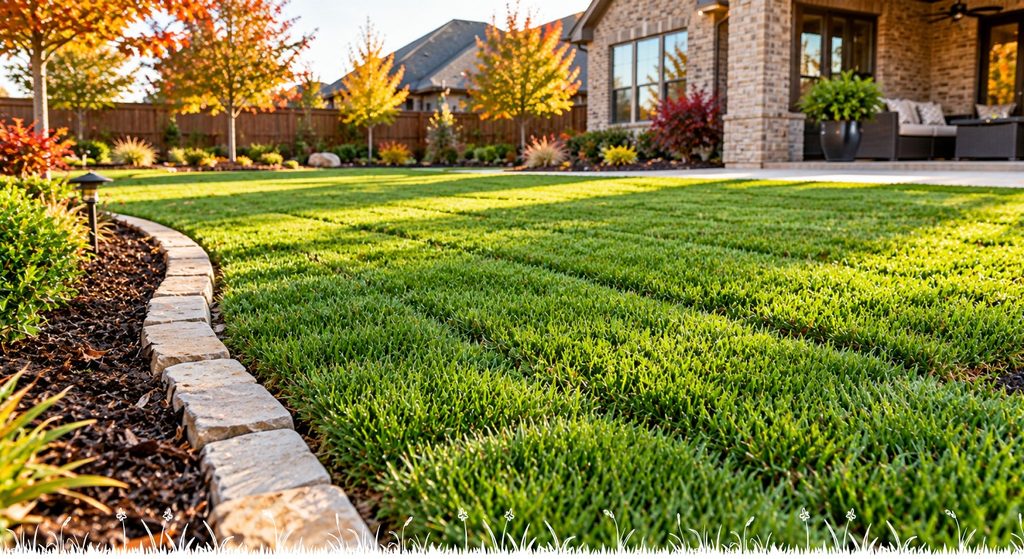
Landscape features may influence water movement as well. Beds, edging, slopes, and soil levels can redirect water toward or away from newly installed turf.
Professional landscape services can help homeowners consider grading, lawn areas, landscape beds, and overall water movement when improving an outdoor space.
Reduce Watering Gradually as Roots Establish
New sod generally requires closer moisture monitoring immediately after installation than an established lawn. However, the initial watering approach should not continue unchanged forever.
As roots begin establishing into the soil below, watering can gradually shift toward supporting deeper root development rather than keeping only the surface continuously wet.
The exact timing can vary because fall weather in North Texas is not always consistent. Warm days, cooler periods, rainfall, shade, and soil conditions can all change how quickly the lawn dries.
Homeowners should monitor the turf and soil rather than reducing watering based only on a fixed number of days.
Protect the Sod during Early Establishment
Watering is only one part of successful establishment. Heavy foot traffic can disturb sod before roots have secured it to the soil.
Children, pets, equipment, and repeated walking across newly installed turf may shift pieces or create uneven areas, particularly when the ground is moist.
Limiting unnecessary traffic during the early establishment period can help the sod remain in position while roots develop.
Once the lawn becomes established, ongoing mowing, irrigation, and seasonal care become important parts of maintaining its appearance.
For homeowners searching for lawn maintenance Lewisville TX, combining proper sod establishment with consistent long-term lawn care can help protect the investment made in new turf.
Frequently Asked Questions
How often should new sod be watered during fall?
There is no single schedule that fits every North Texas property. Temperature, rainfall, soil, sunlight, drainage, and the stage of root establishment all affect how quickly sod dries. The soil should be monitored and watering adjusted accordingly.
Can you overwater new sod in cooler weather?
Yes. New sod needs consistent moisture, but soil that remains saturated for long periods can indicate excessive watering or drainage problems.
Should I water new sod after it rains?
Check the actual soil moisture first. If rainfall has already provided adequate moisture, additional watering may not be necessary at that time.
Why are the edges of my new sod drying faster?
Edges and seams can lose moisture faster, particularly when pieces have gaps, poor soil contact, or uneven water coverage.
When can I reduce watering after sod installation?
Watering can generally be adjusted gradually as the sod develops stronger roots in the underlying soil. Weather and soil conditions should guide the adjustment rather than relying only on a fixed timeline.
Give Your New Sod a Strong Start This Fall
Successful fall sod establishment depends on more than applying large amounts of water. Soil preparation, moisture, drainage, irrigation coverage, weather conditions, and early care all influence how well new turf begins establishing.
Cameron’s Pro Lawn Services provides professional sod installation, irrigation, landscaping, and lawn maintenance services throughout Lewisville and surrounding North Texas communities.
Planning a new lawn this fall? Contact Cameron’s Pro Lawn Services today for a free quote.

Cameron's Lawn Care Service
Explore helpful lawn care, landscaping, irrigation, sod installation, seasonal maintenance, and outdoor property care tips from our team.
See All Blog