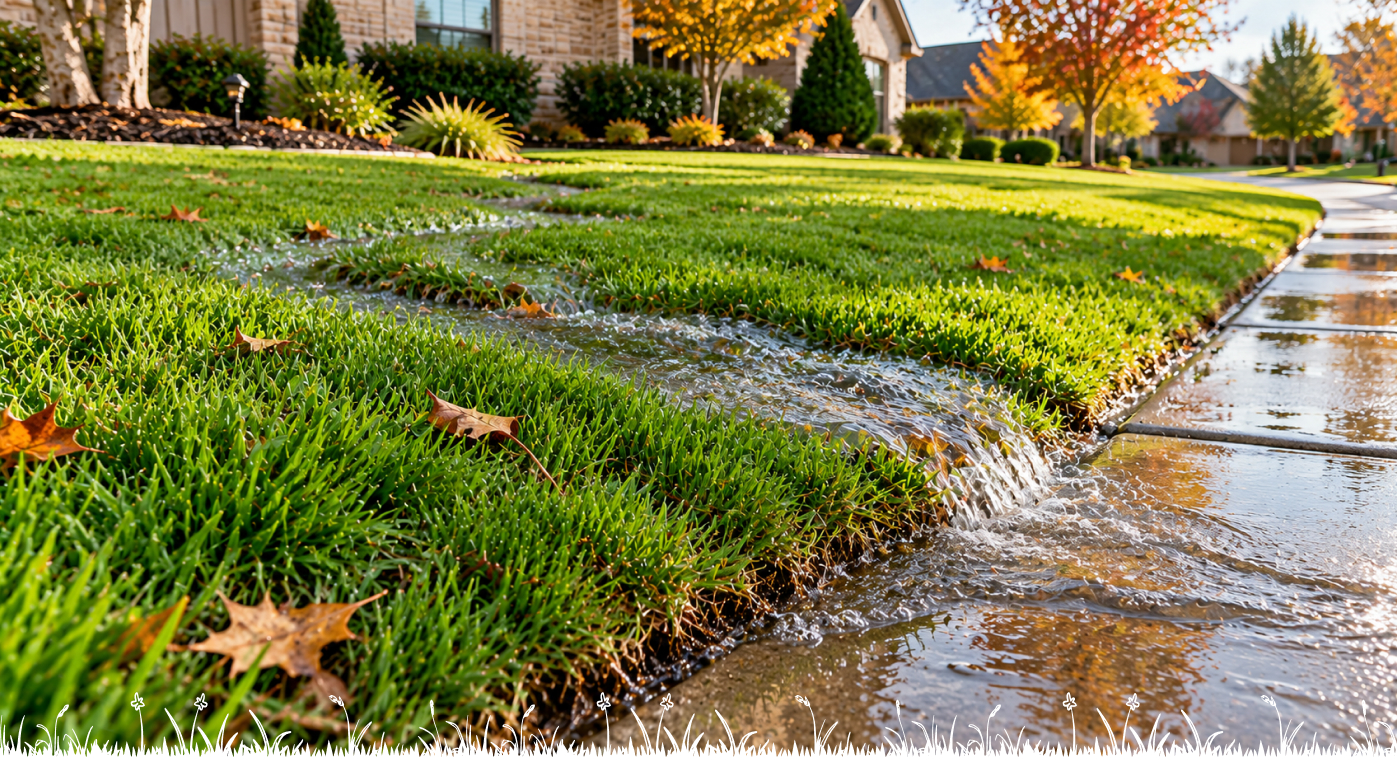
You may be watering your lawn regularly and still notice water flowing toward the sidewalk, driveway, or street instead of soaking into the ground. This can be frustrating because the lawn may remain dry even though plenty of water appears to be reaching the property.
In North Texas, soil conditions, compaction, slopes, watering duration, and irrigation setup can all affect how quickly water enters the ground. Understanding why runoff occurs can help homeowners use water more efficiently and identify whether adjustments or an irrigation startup service may be needed.
North Texas Clay Soil Can Absorb Water Slowly
Soil type is one of the first things to consider when water repeatedly runs off a lawn. Many North Texas properties have soil with a high clay content, which can behave differently from loose, sandy soil.
When the surface is dry and compacted, water may enter the ground slowly. If water is applied faster than the soil can absorb it, the excess begins moving across the surface.
This does not necessarily mean the lawn needs more water. In some cases, applying even more water at once simply creates additional runoff.
The goal should be to give moisture enough time to move into the soil rather than allowing large amounts of water to collect on the surface.
Compacted Soil Can Make the Problem Worse
Clay soil and compaction are not exactly the same issue, but they can create similar symptoms.
Foot traffic, lawn equipment, construction activity, and regular use of the yard can gradually compress the soil. When soil particles become tightly packed together, water and air may have more difficulty moving through the surface.
You may notice water collecting in certain areas while nearby sections absorb it more effectively.
Regular lawn care can help homeowners identify these problem areas before they become more noticeable. Consistent lawn maintenance services can also make it easier to monitor turf condition, mowing patterns, thin areas, and other signs of lawn stress.
Water May Be Applied Faster Than the Ground Can Absorb It
Long watering periods are not always the most efficient approach, particularly where soil absorbs moisture slowly.
Imagine pouring a large amount of water onto a hard surface all at once. Once the surface can no longer accept the water quickly enough, the excess has to move somewhere else. A similar situation can occur in the lawn.
Shorter watering periods separated by soaking time may allow moisture to penetrate more gradually. This approach is sometimes referred to as cycle-and-soak watering.
The appropriate schedule depends on soil conditions, turf type, weather, slope, and other property-specific factors.
If the system has been inactive or needs seasonal adjustment, an irrigation startup service can help homeowners evaluate operation and watering coverage before relying on the system for regular lawn watering.
Sloped Lawns Are More Vulnerable to Runoff
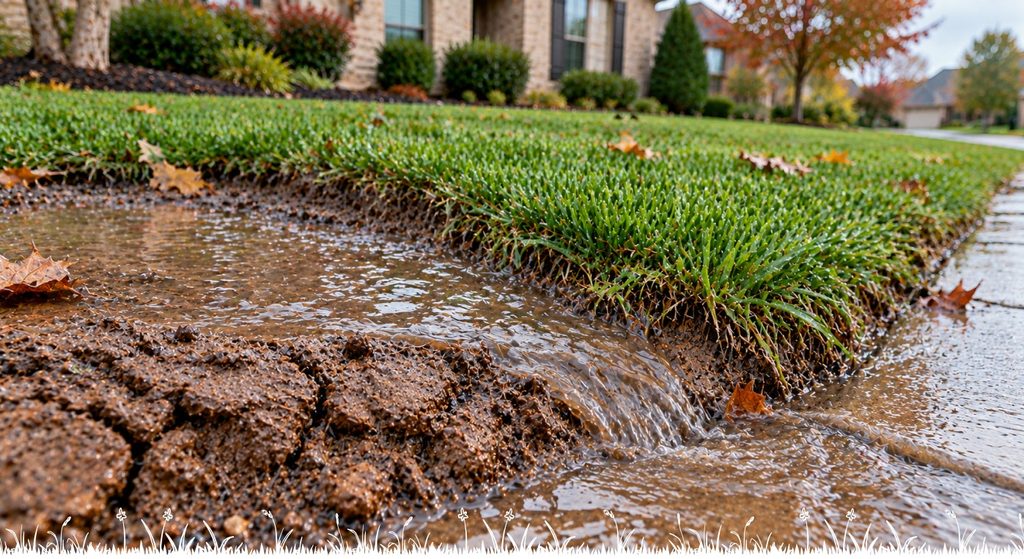
Even a properly watered lawn may experience runoff if the property has a noticeable slope.
Gravity naturally moves water downhill. If the soil cannot absorb moisture quickly enough, water may travel toward lower sections of the yard before it has time to reach the root zone.
Homeowners may notice the upper section of a slope becoming dry while the bottom remains consistently wet.
Landscape design can influence this problem as well. Soil levels, landscape beds, edging, grading, and other features can change how water moves across a property.
Our recent guide, Why Drainage Should Be Planned before You Redesign Your Landscape, explains why water movement should be considered before major landscape improvements are installed.
Uneven Irrigation Coverage Can Concentrate Too Much Water
Runoff does not always occur evenly across an entire lawn. Sometimes it develops in only one or two sections.
This can happen when irrigation coverage overlaps heavily in one area while another part of the lawn receives less water. The oversaturated section may begin producing runoff before the rest of the lawn has received enough moisture.
Changes to the property can also affect coverage. New landscape beds, sod, plants, walkways, or other improvements may alter the watering needs of different areas.
A professional irrigation installation should consider lawn layout, landscape areas, water distribution, and property conditions so that the system is designed around the actual space rather than applying water without regard to individual zones.
Landscape Changes Can Redirect Water
Homeowners sometimes notice new runoff after making landscape improvements.
Raised beds, additional soil, new edging, hardscape, sod, and changes to grading can redirect water from its previous path. A section that drained normally before a project may begin sending water toward the lawn or another low area afterward.
This is why irrigation, landscaping, and drainage should not always be treated as completely separate parts of a property.
Before making significant outdoor changes, consider where rainfall and irrigation water currently travel and how the proposed design might alter that path.
Professional landscape services can take existing grades, beds, lawn areas, and water movement into account when planning property improvements.
More Water Is Not Always the Solution
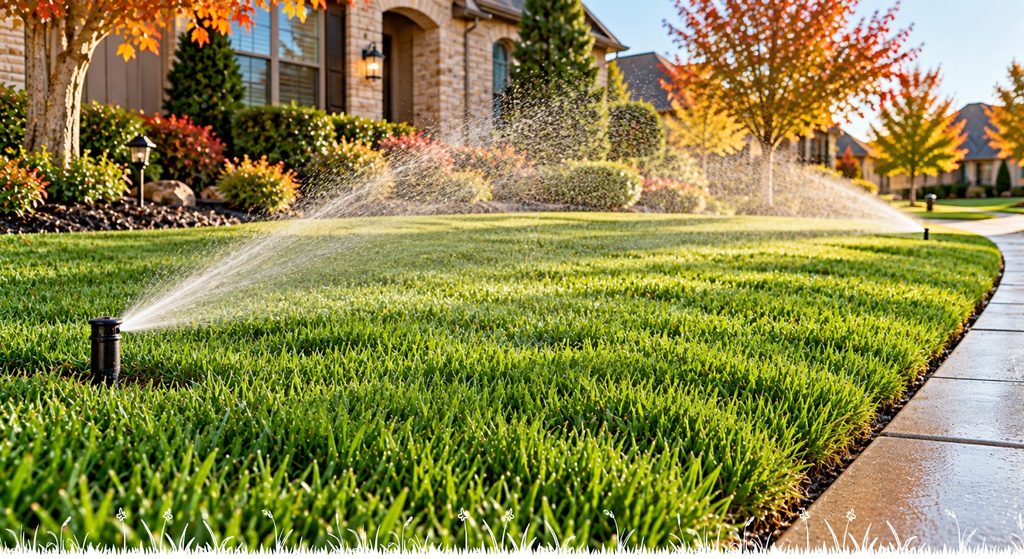
When grass looks dry, the natural reaction may be to increase watering time. However, if water is already running off the lawn, increasing the duration may simply waste more water.
The important question is whether moisture is actually reaching the soil where turf roots can use it.
Homeowners can watch for several clues, including water flowing onto pavement, puddles remaining after watering, consistently wet low areas, and dry sections that remain stressed despite regular irrigation.
Adjustments should be based on the cause of the problem rather than automatically increasing the amount of water being applied.
Watch How Your Lawn Responds Throughout the Year
North Texas lawns experience significant seasonal changes. Summer heat can increase water demand, while cooler temperatures and rainfall may reduce how much supplemental watering is necessary.
A schedule that worked during one part of the year may not be appropriate throughout every season.
Soil moisture, rainfall, turf condition, temperature, and signs of runoff should all be considered when evaluating lawn watering.
For homeowners looking for lawn maintenance Lewisville TX, combining consistent lawn care with appropriate irrigation management can help address the overall condition of the property rather than treating watering and turf maintenance as unrelated issues.
Frequently Asked Questions
Why does water run off my lawn so quickly?
Slow-absorbing soil, compaction, slopes, excessive watering duration, uneven water distribution, and grading can all contribute to surface runoff.
Is clay soil common in North Texas?
Clay-heavy soil conditions are common across many parts of North Texas. These soils can absorb water more slowly than sandy soils, particularly when the surface is dry or compacted.
Does runoff mean I need to water my lawn longer?
Not necessarily. If the soil cannot absorb water at the rate it is being applied, longer watering may simply increase runoff rather than delivering more moisture to the root zone.
What is cycle-and-soak watering?
Cycle-and-soak divides watering into shorter periods with breaks between them. The breaks give water additional time to soak into slower-draining soil before another watering cycle begins.
Can landscaping affect lawn runoff?
Yes. Grading, landscape beds, edging, hardscape, soil levels, and other property changes can influence where water travels.
Help Water Reach the Lawn Instead of the Street
Seeing water run down the driveway or sidewalk while the lawn remains dry can indicate that the issue is not simply how much water is being applied. Soil conditions, compaction, slopes, irrigation coverage, and landscape grading can all influence how effectively water reaches the root zone.
Cameron’s Pro Lawn Services provides professional irrigation, lawn maintenance, and landscaping services throughout Lewisville and surrounding North Texas communities.
Having trouble with water runoff or uneven lawn watering? Contact Cameron’s Pro Lawn Services today for a free quote.

Cameron's Lawn Care Service
Explore helpful lawn care, landscaping, irrigation, sod installation, seasonal maintenance, and outdoor property care tips from our team.
See All Blog