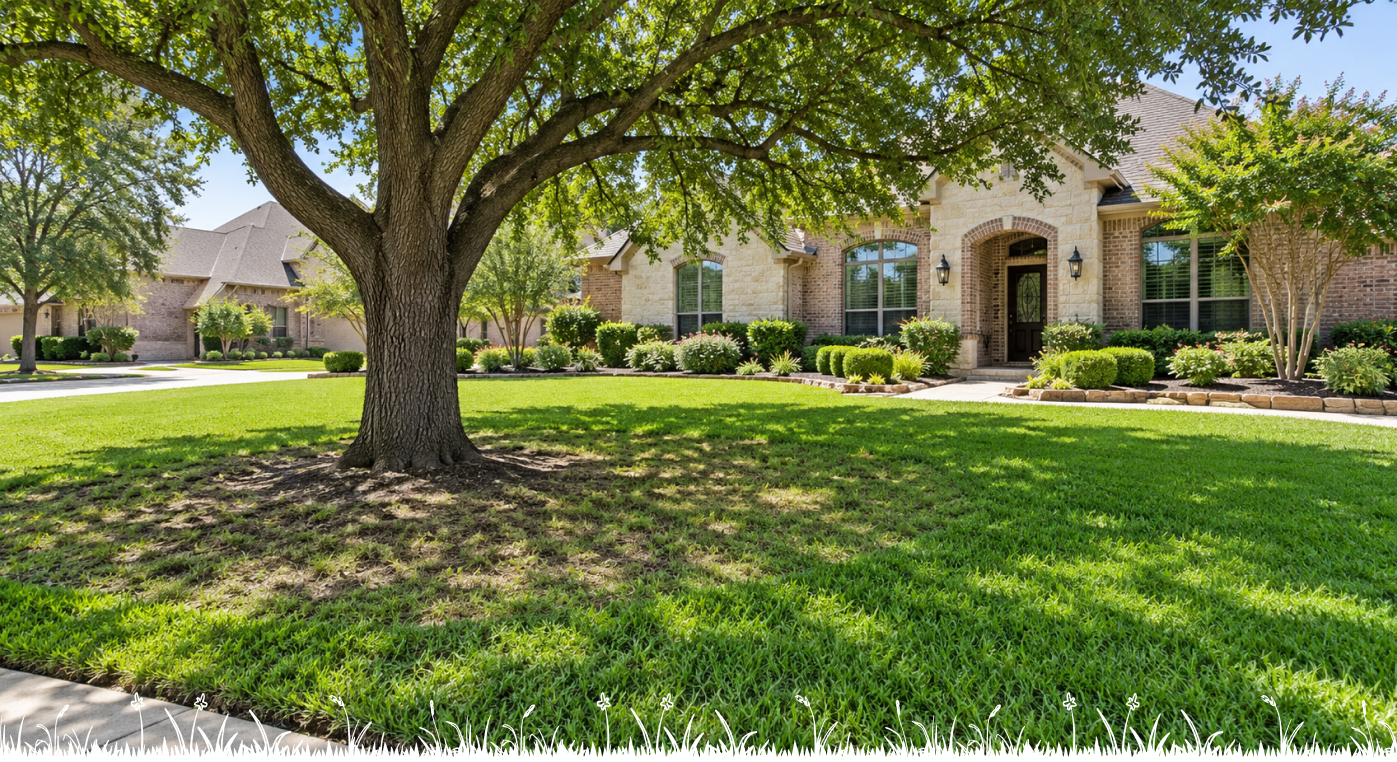
A healthy lawn can look completely different from one part of a property to another. One area may have thick, green turf while the grass beneath mature trees gradually becomes thin, weak, or patchy. In North Texas, this is a common landscape challenge because trees can significantly change the amount of sunlight, moisture, and growing space available to grass.
For homeowners looking to maintain a healthy and attractive property, professional lawn maintenance Lewisville TX services can help keep mowing, trimming, and routine turf care consistent throughout the year.
Homeowners sometimes assume that thinning grass automatically means the lawn needs more water or fertilizer. However, shade, tree roots, soil conditions, foot traffic, and mowing practices can all contribute to the problem. Understanding what is happening beneath the tree canopy is the first step toward choosing the right solution.
When comparing the best lawn service for a property with mature trees, homeowners should look for a maintenance approach that considers the entire lawn rather than treating every section exactly the same.
Why Grass Becomes Thin Beneath Trees
Trees provide shade and contribute greatly to the appearance of a residential landscape, but their canopies can create difficult growing conditions for turfgrass.
Grass generally needs adequate sunlight to produce the energy required for healthy growth. When a tree blocks a large portion of the sunlight reaching the lawn, the grass may gradually become thinner.
The amount of shade can also change during the year. A lawn that receives reasonable sunlight during one season may receive much less when a tree has a dense canopy.
Instead of immediately replacing the grass, homeowners should first determine whether insufficient sunlight is the underlying problem.
Limited Sunlight Can Reduce Turf Density
Sunlight is one of the most important factors affecting grass growth.
Areas beneath mature trees may receive filtered light for only part of the day. Dense canopies can reduce direct sunlight even further.
When grass consistently receives less light than it needs, it may produce fewer and weaker blades. Over time, this can leave the area looking noticeably thinner than nearby sections of the lawn.
Observing the lawn throughout the day can help homeowners understand how much direct and filtered sunlight reaches the affected area.
Tree Roots Compete for Available Resources
Tree roots can extend throughout the surrounding soil and compete with turfgrass for moisture and nutrients.
This does not necessarily mean that a tree is damaging the lawn. It simply means that grass growing close to mature trees may have more competition than grass growing in an open area.
Aggressive digging around established tree roots can create additional problems, so lawn improvements should be planned carefully around mature trees.
Soil Can Become Difficult for Grass to Grow In
Soil beneath trees can develop conditions that make turf establishment more challenging.
Foot traffic, compacted soil, surface roots, and years of landscape activity can reduce the quality of the growing environment. Compacted soil may also make it more difficult for water and air to move through the soil profile.
Before adding new grass, homeowners should consider whether the underlying soil needs attention. Simply placing new turf over an unsuitable growing environment may provide only temporary improvement.
Watering More Does Not Always Solve the Problem
When homeowners see thin or stressed grass, adding more water may seem like the easiest solution.
However, if insufficient sunlight is the primary issue, additional watering will not solve the underlying problem. Excess moisture can even create other lawn or soil concerns.
Watering should be based on the actual needs of the turf, soil, weather conditions, and landscape layout.
If several areas of the property have different moisture requirements, professional irrigation services can help evaluate whether the existing watering system is providing appropriate coverage.
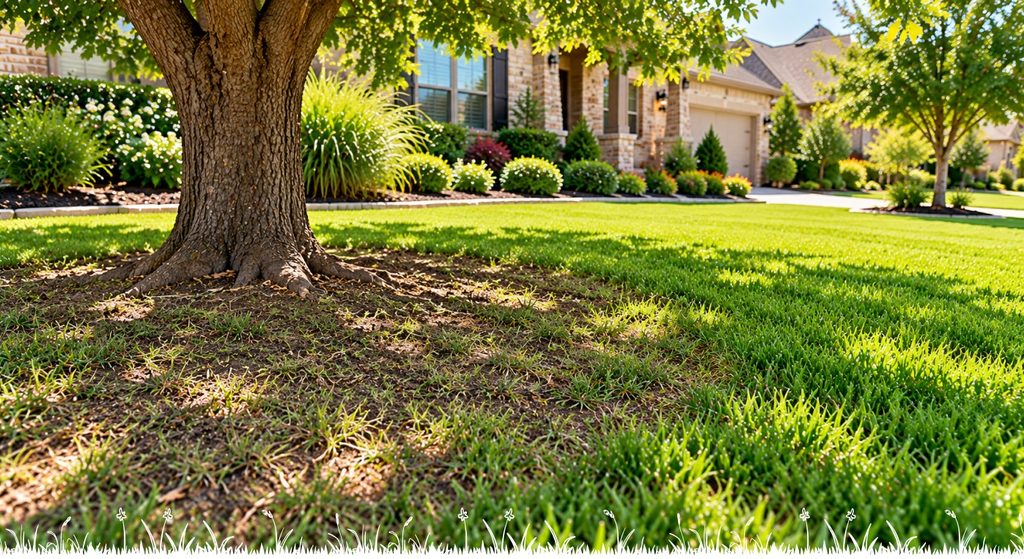
Mowing Practices Can Affect Shaded Grass
Grass growing in shade can respond differently to mowing than grass growing in full sunlight.
Cutting too aggressively can place additional stress on already limited turf growth. Maintaining a consistent mowing approach and avoiding excessive removal of grass height can help reduce unnecessary stress.
Mowing should also account for current lawn conditions rather than following exactly the same approach throughout the year.
Routine lawn maintenance can help homeowners monitor these differences before small problems become larger areas of declining turf.
Foot Traffic Can Make Thin Areas Worse
Grass beneath trees is sometimes located in naturally convenient areas for walking, playing, placing outdoor furniture, or accessing other parts of the yard.
Repeated foot traffic can compact the soil and damage already-thin turf.
If a particular area repeatedly struggles, homeowners should consider whether people, pets, or outdoor activities are contributing to the problem.
Reducing unnecessary traffic during periods of stress can give the remaining turf a better opportunity to recover.
Consider the Surrounding Landscape
A tree should not necessarily be viewed as an obstacle simply because grass struggles beneath it.
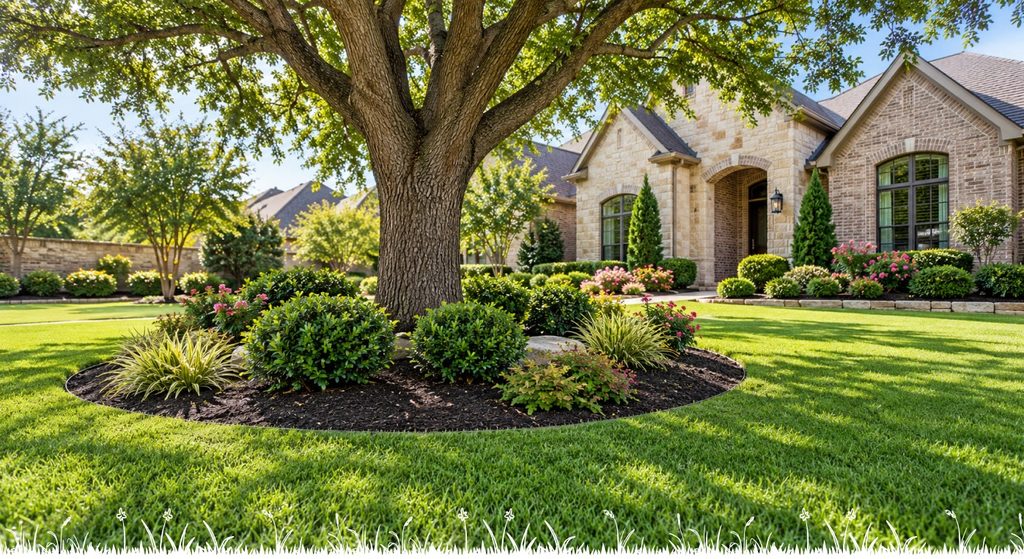
Instead, homeowners can consider whether the area would work better as a landscape bed containing plants, mulch, or other appropriate ground treatments. Choosing plants that match the available sunlight can also make these areas easier to maintain.
This can create a more intentional transition between the lawn and mature trees while reducing the need to maintain turf in an environment where it consistently struggles.
Professional landscaping services can help homeowners evaluate how these areas can be integrated into the overall property design.
Seasonal Changes Can Affect Shaded Lawn Areas
Shaded areas may respond differently as the seasons change.
Temperature, rainfall, sunlight duration, leaf coverage, and tree canopy density can all influence the conditions around the turf.
During fall, falling leaves can also block sunlight from reaching already-shaded grass. Regular leaf removal can therefore become an important part of maintaining the lawn.
Seasonal lawn care can help homeowners stay ahead of these changing conditions instead of waiting until the lawn becomes visibly stressed.
When Should You Consider Replacing Thin Grass?
Not every thin area needs complete replacement.
First, homeowners should determine why the grass is struggling. If the cause is excessive shade, compacted soil, heavy traffic, or competition from tree roots, replacing the turf without addressing the underlying condition may not produce lasting results.
A professional lawn assessment can help determine whether the area is suitable for turf or whether a different landscape solution would make more sense.
When homeowners compare options for the best local lawn service, they should consider whether the company evaluates the cause of lawn problems rather than simply treating visible symptoms.
How to Protect Grass Growing Near Trees
Homeowners can take several practical steps to help manage turf around mature trees:
- Observe how much sunlight reaches the grass.
- Avoid excessive watering when moisture is not the issue.
- Monitor soil compaction.
- Reduce unnecessary foot traffic.
- Keep leaves from accumulating heavily over turf.
- Adjust mowing practices when conditions require it.
- Protect mature tree roots from unnecessary disturbance.
- Consider landscape beds where turf consistently struggles.
These steps can help homeowners make better decisions based on the actual conditions of their property.
Frequently Asked Questions
Why is grass thinner under my trees?
Reduced sunlight, competition from tree roots, soil compaction, moisture differences, and foot traffic can all contribute to thinning grass beneath trees.
Should I water thin grass more often?
Not necessarily. First determine whether the problem is related to insufficient sunlight, soil conditions, or another factor. More water will not correct a lack of sunlight.
Can I grow grass under a mature tree?
It depends on the amount of available sunlight and the specific conditions beneath the tree. Some locations may be suitable for shade-tolerant turf, while others may be better suited to a landscape bed.
Should I remove tree roots to help the grass?
Avoid removing or aggressively cutting major roots from mature trees without professional guidance. Tree roots are important to the health and stability of the tree.
When should I replace thin grass?
Replacement should generally come after identifying why the turf is struggling. Otherwise, new grass may experience the same problem.
Give Your North Texas Lawn the Right Care
Thin grass beneath mature trees does not always mean the lawn is poorly maintained. In many cases, the surrounding growing conditions are simply different from those in open areas of the property.
By considering sunlight, soil, moisture, tree roots, foot traffic, and seasonal conditions together, homeowners can make better decisions about whether to maintain, improve, replace, or redesign the affected area.
Cameron’s Pro Lawn Services provides lawn maintenance, landscaping, irrigation, sod installation, and seasonal services for properties throughout Lewisville and surrounding North Texas communities.
Need help with a thin or struggling lawn? Contact Cameron’s Pro Lawn Services for a free quote.

Cameron's Lawn Care Service
Explore helpful lawn care, landscaping, irrigation, sod installation, seasonal maintenance, and outdoor property care tips from our team.
See All Blog