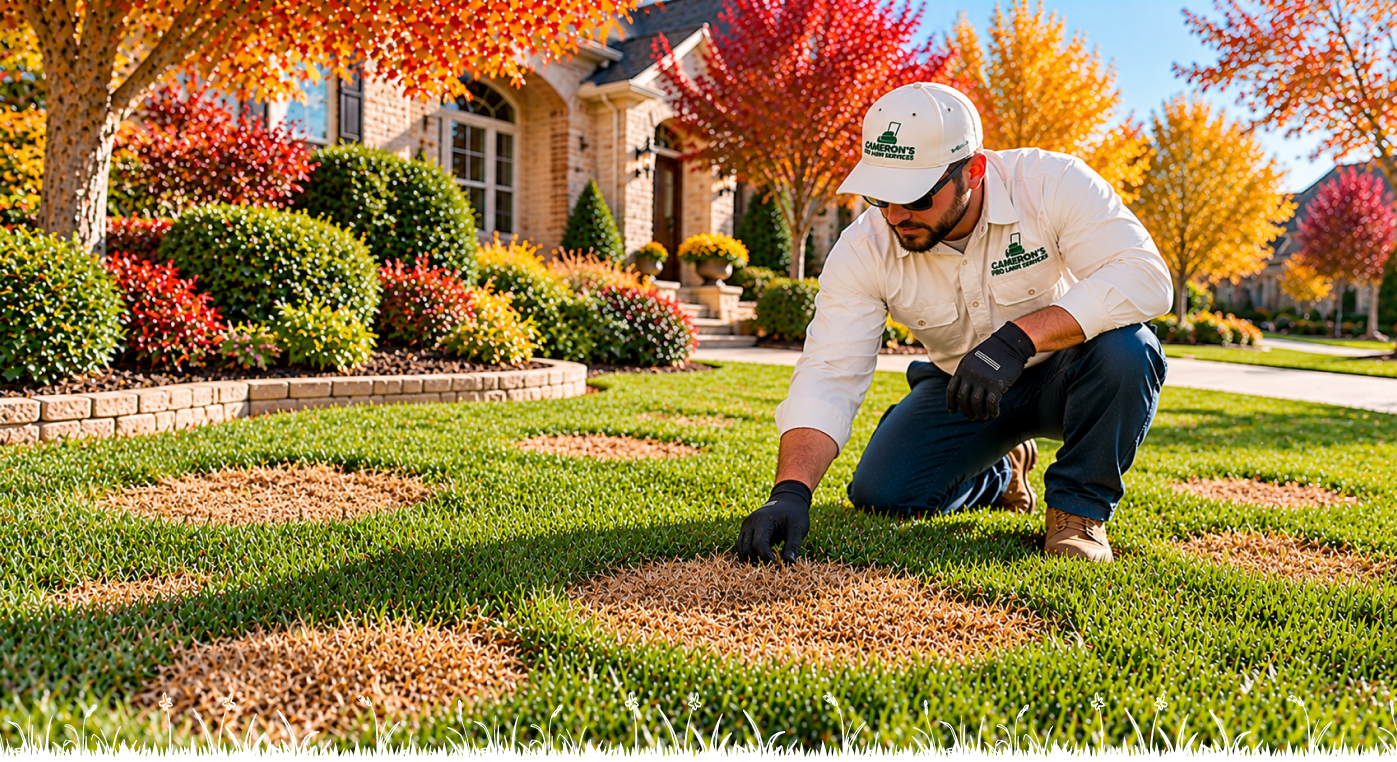
Brown patch North Texas homeowners can become more noticeable as fall temperatures change and lawns experience cooler nights, moisture, and slower growth. This fungal lawn disease is particularly common in St. Augustinegrass and can also affect other warm-season turfgrasses, including zoysia.
Brown patch can start as circular areas of discolored grass and may spread when conditions remain favorable for disease development. Knowing what to look for early can help homeowners address the conditions contributing to the problem before the lawn enters winter dormancy.
Regular lawn care becomes especially important as North Texas lawns move through seasonal changes. Homeowners should monitor turf condition, adjust maintenance practices, and address signs of stress before small problems become larger lawn issues.
Homeowners looking for professional lawn maintenance Lewisville TX can benefit from consistent seasonal care that includes mowing, lawn inspections, irrigation monitoring, and timely maintenance.
What Is Brown Patch?
Brown patch is a fungal disease that affects turfgrass blades and can create noticeable circular areas of damaged or brown grass.
Texas A&M AgriLife Extension describes brown patch as circular patterns of dead grass blades that can later develop a donut-like appearance as new leaves emerge in the center. It is particularly associated with St. Augustinegrass.
The disease is more likely to become active when nighttime temperatures fall while daytime temperatures remain relatively warm.
This makes the fall transition an important period for homeowners to watch their lawns.
What Does Brown Patch Look Like?
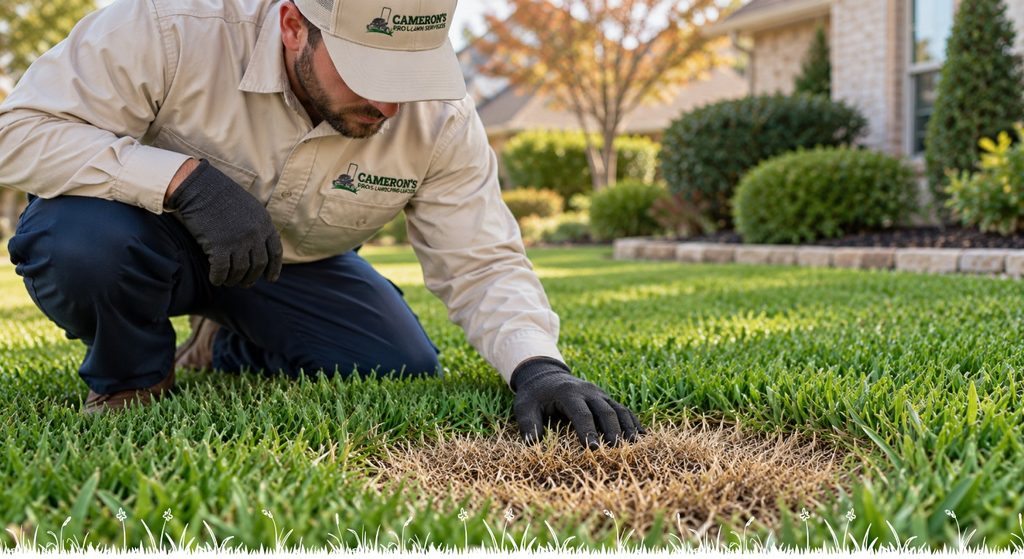
One of the easiest ways to recognize brown patch is by looking for circular or irregularly rounded areas of discolored turf.
Early symptoms can resemble other lawn problems, so homeowners should avoid assuming every brown spot is fungal disease.
Brown patch may begin with yellow, brown, or thinning grass and can gradually expand outward.
In some cases, the center of the affected area may begin showing new growth while the outer portion remains damaged, creating a noticeable ring or donut-shaped appearance.
Which North Texas Lawns Are Most at Risk?
St. Augustinegrass is especially susceptible to brown patch.
Zoysia can also experience large patch, which is closely related to the brown-patch disease complex. Texas turf guidance notes that large patch can affect zoysia as well as St. Augustine.
Grass type matters when diagnosing lawn problems because different diseases can affect different turf varieties.
If you are unsure what type of grass you have, identifying the turf before choosing a treatment can help prevent unnecessary applications.
Why Does Brown Patch Develop?
Environmental conditions play a major role.
Texas A&M AgriLife Extension notes that brown patch becomes active during cool-season conditions and is promoted by wet weather or frequent irrigation.
Several conditions can contribute to disease development:
- Frequent irrigation
- Wet grass that stays damp
- Heavy rainfall
- Poor drainage
- Excessive nitrogen
- Limited air movement
- Dense turf
- Cool nighttime temperatures
The disease is not simply caused by one mistake.
A combination of moisture, temperature, turf condition, and lawn-management practices can create an environment where fungal problems spread more easily.
Avoid Overwatering Your Lawn
One of the most important steps homeowners can take is avoiding unnecessary irrigation.
Watering a lawn simply because it is part of a regular schedule can keep grass unnecessarily wet.
During fall, cooler temperatures can reduce evaporation, so the lawn may not need the same amount of water it required during the hottest part of summer.
Instead, check the soil and consider recent rainfall before watering.
If irrigation is necessary, early morning is generally preferable because grass blades have more opportunity to dry during the day. Texas A&M AgriLife specifically recommends early-morning irrigation to help reduce fungal lawn problems.
Check Your Irrigation System
Uneven irrigation can create areas where turf stays excessively wet.
Inspect sprinkler heads for:
- Leaks
- Broken heads
- Blocked nozzles
- Overspray
- Uneven coverage
- Water pooling
A sprinkler that sprays the same area repeatedly can contribute to conditions favorable for fungal disease.
If your lawn has recurring wet areas, correcting irrigation or drainage problems may be more useful than repeatedly treating the symptoms.
Don’t Overfertilize in Fall
Excessive nitrogen can encourage conditions that make certain lawn diseases more difficult to manage.
Texas A&M AgriLife guidance specifically recommends avoiding overfertilization when managing brown patch.
Fertilizer should be selected and applied according to the grass type, soil conditions, and appropriate seasonal timing.
Applying more fertilizer does not automatically produce a healthier lawn.
A soil test can provide better information about what nutrients the lawn actually needs.
Keep Mowing Consistent
Proper mowing remains important even when warm-season grass begins slowing down.
Avoid cutting the lawn excessively short.
Removing too much of the grass blade can stress the turf and reduce its ability to maintain healthy growth.
Texas A&M AgriLife recommends maintaining appropriate mowing practices as part of overall disease prevention and turf management.
Keep mower blades sharp and avoid mowing when the lawn is excessively wet.
Improve Drainage Where Necessary
If certain parts of your lawn remain wet long after rainfall or irrigation, investigate the drainage.
Standing moisture can create an environment that encourages fungal problems.
Look for areas where water collects, slopes that direct runoff toward the lawn, compacted soil, or irrigation overspray.
Fixing the underlying drainage issue can be more effective for long-term lawn health than repeatedly treating affected areas.
Brown Patch Can Be Confused With Other Problems
Not every brown or thinning section of grass is brown patch.
Other issues can produce similar symptoms, including:
- Take-all root rot
- Insect damage
- Drought stress
- Poor irrigation
- Compacted soil
- Winter damage
- Pet damage
- Mowing stress
Texas A&M AgriLife notes that take-all patch can look different from brown patch because take-all primarily affects roots and typically creates irregular areas, while brown patch damages grass blades and is more circular.
Correct identification is important before choosing a treatment.
Look at the Pattern Before Treating
The shape and location of damaged grass can provide useful clues.
If several circular areas appear across St. Augustinegrass during cool, wet weather, fungal disease may be worth investigating.
If damage is concentrated around sprinkler heads, sidewalks, drainage areas, or places with heavy traffic, the cause may be different.
Take photographs as the problem develops.
Comparing the lawn over several days can help determine whether the affected areas are expanding.
Should You Use Fungicide?
Fungicides can be useful when brown patch is correctly identified, particularly when used at the appropriate stage.
Texas A&M AgriLife notes that fungicides are most effective when used at the first sign of disease.
However, homeowners should not automatically apply fungicide to every brown area.
First determine whether the symptoms are consistent with fungal disease.
Always follow the product label for the specific grass, application rate, timing, and safety requirements.
Prevention Is Better Than Repeated Treatment
A treatment may slow an existing disease problem, but lawn-management practices still matter.
If the same lawn continues to receive excessive irrigation, remains wet overnight, or receives inappropriate fertilizer applications, the conditions that encouraged the disease may remain.
A better long-term approach combines proper watering, mowing, drainage, fertilization, and monitoring.
Give the Lawn Room to Dry
Dense, constantly wet turf can create favorable conditions for fungal problems.
Avoid watering late in the evening when possible.
Instead, schedule necessary irrigation early enough for grass blades to dry during daylight hours.
Also avoid unnecessary irrigation after rainfall.
This simple change can help reduce prolonged leaf wetness.
Monitor Your Lawn During the Fall Transition
Late October is a good time to pay closer attention to lawn changes.
Warm-season grasses are slowing down as temperatures decline, but disease problems can still develop.
Walk the property regularly and look for:
- New circular patches
- Yellowing grass
- Expanding brown areas
- Thin turf
- Wet sections
- Poor sprinkler coverage
Finding a problem early gives you more opportunity to determine the cause before winter dormancy.
Keep Irrigation and Lawn Care Working Together
Irrigation should support healthy turf without keeping the lawn unnecessarily wet.
If you notice recurring disease in the same areas every year, inspect the irrigation pattern.
Professional irrigation services can help identify sprinkler coverage problems, leaks, overspray, and areas receiving excessive water.
Your Latest Cameron’s Pro Lawn Services Guide
Our latest blog, Can You Install Sod in Late October in North Texas?, explains how late-season sod installation depends on grass type, soil conditions, watering, rooting time, and the approaching winter.
Understanding seasonal lawn conditions is important whether you are maintaining existing turf or establishing a new lawn.
Related Reading
For more information about preparing lawns during the seasonal transition, How to Prevent Winter Weeds in North Texas Lawns explains how homeowners can manage thin turf, leaves, irrigation, and seasonal lawn conditions before winter.
Frequently Asked Questions
What does brown patch look like?
Brown patch commonly appears as circular areas of brown or discolored grass. In some cases, new growth can develop in the center, creating a ring or donut-like appearance.
Is brown patch common in St. Augustinegrass?
Yes. St. Augustinegrass is particularly susceptible to brown patch, especially during favorable cool and wet conditions.
Can zoysia get brown patch?
Zoysia can be affected by large patch, which is closely related to brown patch and can produce similar circular areas of damaged turf.
Does overwatering cause brown patch?
Frequent irrigation and wet conditions can encourage brown patch development. Avoid unnecessary watering and allow grass blades to dry during the day.
What time of day should I water my lawn?
When irrigation is needed, early morning is generally preferable because the grass has time to dry during daylight hours.
Can fertilizer make brown patch worse?
Excessive fertilization, particularly excessive nitrogen, can contribute to conditions that favor disease. Follow soil-test recommendations and appropriate fertilizer rates.
Should I use fungicide for brown patch?
Fungicide can be appropriate when brown patch has been correctly identified. Texas A&M AgriLife notes that fungicides are most effective when used at the first sign of disease.
Is every brown spot on my lawn brown patch?
No. Brown areas can result from several causes, including insects, drought, irrigation problems, root diseases, and mowing stress. Proper identification should come before treatment.
Can brown patch damage my lawn permanently?
Brown patch can cause significant turf damage, but affected grass may recover depending on the severity of the disease and the condition of the lawn. Prompt management can help limit further spread.
How can I prevent brown patch next year?
Focus on proper mowing, appropriate irrigation, good drainage, avoiding excessive fertilizer, and monitoring the lawn when cool and wet conditions return.
Keep Your North Texas Lawn Healthy Through Fall
Brown patch is easier to manage when homeowners recognize the early warning signs and understand the conditions that encourage it.
For North Texas lawns, fall brings changing temperatures, shorter days, and different watering requirements. St. Augustine and other susceptible turfgrasses should be monitored closely when cool, wet conditions develop.
Avoid unnecessary irrigation, keep mowing practices consistent, maintain good drainage, and avoid excessive fertilizer. If circular brown areas continue spreading, identifying the cause early can help determine the appropriate response.
Cameron’s Pro Lawn Services provides lawn maintenance, landscaping, irrigation, sod installation, seasonal services, and holiday lighting for homeowners and property managers throughout Lewisville and surrounding North Texas communities.
Ready to keep your lawn healthy through the changing season? Contact Cameron’s Pro Lawn Services for a free quote.

Cameron's Lawn Care Service
Explore helpful lawn care, landscaping, irrigation, sod installation, seasonal maintenance, and outdoor property care tips from our team.
See All Blog