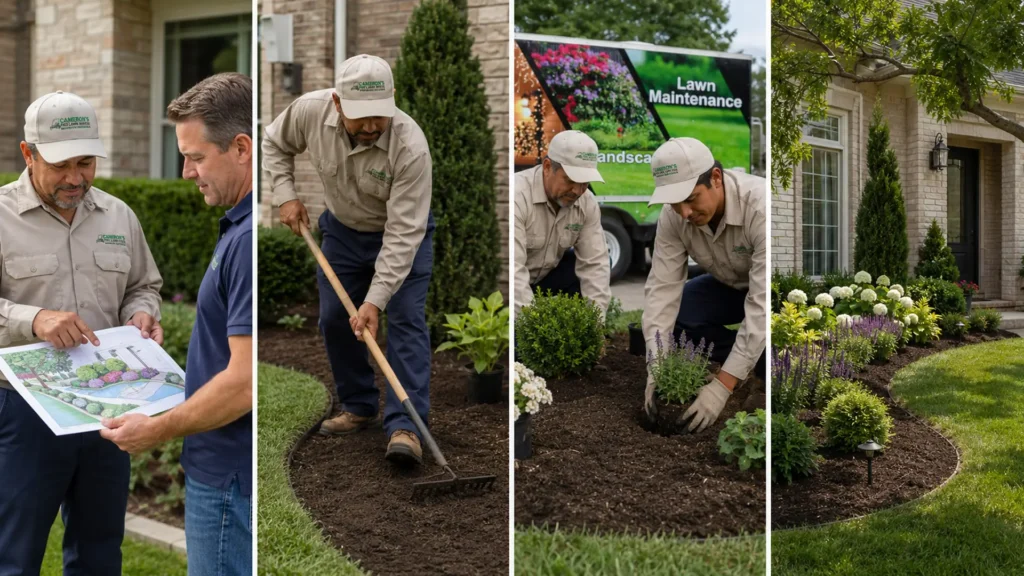
As October comes to an end, North Texas properties begin transitioning into a different phase of outdoor maintenance. Cooler temperatures, falling leaves, changing plant growth, and shorter days can all affect the appearance of landscape beds.
November is a good time to inspect planting areas, remove accumulated debris, refresh mulch where needed, define bed edges, and identify plants or areas that may need attention before winter.
Landscape beds are often one of the most visible parts of a property. Keeping them organized and maintained can improve curb appeal while also making it easier to monitor the health of plants, shrubs, and trees throughout the cooler months.
Clear Leaves and Seasonal Debris
Falling leaves can quickly cover landscape beds during October and November.
A small amount of leaf material may be useful when properly managed, but heavy accumulation can hide plants, cover bed edges, trap excessive moisture, and make it harder to identify weeds or other problems.
Regular cleanup keeps landscape beds easier to inspect and maintains a more organized appearance.
Homeowners should also pay attention to diseased or heavily damaged plant material. Removing problematic debris can help prevent it from remaining around healthy plants.
Texas A&M AgriLife’s November gardening guidance recommends continuing to manage fallen leaves through mulching or composting and monitoring landscapes as cooler weather arrives.
Redefine Landscape Bed Edges
Landscape bed edges can gradually become less defined because of grass growth, soil movement, foot traffic, and regular maintenance.
A clean edge creates a visible separation between turf and planting areas.
This can make an outdoor space appear more structured without requiring a complete landscape redesign.
Walk around the property and look for areas where grass has started growing into the beds or where the original shape of the planting area is no longer clear.
Defining these boundaries can also make mowing and trimming around the beds easier.
Inspect Existing Plants Before Winter
November is a useful time to look closely at shrubs, ornamental plants, and other vegetation.
Check for:
- Dead or damaged branches
- Broken stems
- Excessive weed growth
- Crowded planting areas
- Plants showing signs of stress
- Exposed roots
- Soil erosion
- Areas holding excessive moisture
Not every plant needs to be pruned immediately.
Texas A&M AgriLife specifically advises against rushing to prune woody plants, noting that late December through February is generally a better pruning window for many woody plants.
The appropriate timing can vary by plant type, so avoid treating every shrub or tree the same way.
Refresh Mulch Without Overdoing It
Mulch can give landscape beds a cleaner finished appearance while helping regulate soil temperature, retain moisture, and reduce weed competition.
However, adding more mulch is not always better.
Texas A&M Forest Service recommends keeping mulch around two to three inches deep and avoiding piles against tree trunks.
Before adding fresh material, inspect the existing layer.
If the mulch is still adequately covering the soil, simply redistributing it may be enough.
If it has become thin or uneven, a controlled refresh can improve the appearance of the bed.
Avoid creating large piles around the base of trees or shrubs.
Check for Weeds Before They Become Established
Landscape beds can develop weeds even when they appear well maintained.
Small weeds are generally easier to address than large, established growth that has already spread throughout the bed.
Inspect the areas around shrubs, ornamental plants, borders, and open sections of soil.
Removing weeds early can help reduce competition for available moisture and nutrients.
Maintaining an appropriate mulch layer can also help reduce weed emergence by limiting exposed soil.
Look at the Overall Landscape Design
Fall is a good time to evaluate whether landscape beds still work with the rest of the property.
Look at the relationship between:
- Lawn areas
- Planting beds
- Walkways
- Trees
- Shrubs
- Entry areas
- Outdoor features
Ask whether the beds still provide the visual structure you want.
Some properties may only need cleanup and maintenance, while others may benefit from a broader update.
For homeowners considering landscape bed preparation North Texas, professional landscaping can help evaluate existing beds and determine whether targeted improvements or a larger landscape update makes sense.
Maintain the Space around Trees and Shrubs
Trees and shrubs often form the foundation of landscape beds.
Keep surrounding areas free from excessive debris and make sure mulch is not piled directly against trunks.
Properly maintained mulch can help conserve moisture and moderate soil temperature, but poor application can create problems.
Inspect tree and shrub areas for exposed roots, damaged branches, compacted soil, and competing weeds.
If a plant appears stressed, determine the underlying issue before simply adding more water or fertilizer.
Don’t Overwater Landscape Beds
Cooler weather can change how quickly soil dries.
Homeowners should not automatically continue the same watering routine used during the hottest summer months.
Check soil moisture and recent rainfall before adding additional water.
Overwatering can create problems for some landscape plants, particularly when cooler conditions slow evaporation.
This is especially important when landscape beds contain plants with different water requirements.
If your property has both lawn and landscape areas, watering needs may not be identical across the entire yard.
Keep Lawn and Landscape Maintenance Connected
Landscape beds do not exist separately from the rest of the property.
Mowing, edging, trimming, leaf removal, and bed maintenance all contribute to the overall appearance.
For homeowners searching for lawn maintenance Lewisville TX, coordinating routine lawn care with landscape-bed cleanup can create a more consistent appearance across the entire property.
Regular lawn maintenance also helps prevent grass from gradually spreading into defined planting areas.

Refresh Beds Before Holiday Decorations
November is also when many North Texas homeowners begin preparing their properties for the holiday season.
Before installing outdoor decorations or holiday lighting, landscape beds can benefit from basic cleanup.
Removing leaves, defining edges, trimming appropriate plant material, and refreshing visible planting areas can make the entire property look more polished.
This is particularly useful around entryways and other areas that will become focal points during the holiday season.
Use Seasonal Services for Larger Cleanup Needs
Some landscape beds require more than a quick homeowner cleanup.
Large properties may have extensive leaf accumulation, overgrown edges, tired mulch, neglected planting beds, or several areas that need attention at the same time.
Professional seasonal services can combine tasks such as leaf removal, garden bed edging, mulching, landscape bed refreshing, yard waste removal, and appropriate seasonal plant care.
Cameron’s Pro Lawn Services currently offers these types of seasonal property services based on the condition and needs of each property.
Consider New Plants Carefully
November can be an appropriate time to evaluate whether certain landscape areas need new plants or replacements.
However, plant selection should consider the property’s sunlight, shade, drainage, soil conditions, and long-term maintenance requirements.
Instead of choosing plants based only on appearance, consider whether they are appropriate for the location where they will be installed.
A landscape that is designed around the property’s actual conditions can be easier to maintain over time.
Check Drainage Around Landscape Beds
Fall and winter rainfall can reveal drainage issues that may not have been obvious during summer.
After rainfall, walk around the property and look for areas where water remains for extended periods.
Pay particular attention to low areas within landscape beds.
Standing water can create problems for plants and may indicate that grading or drainage needs further evaluation.
Drainage should be considered before adding new plants, changing bed layouts, or installing additional landscape features.
Coordinate Landscape Improvements With Sod
Landscape beds and lawn areas should work together visually.
If a property is being renovated, it may make sense to coordinate landscape improvements with new turf.
Cameron’s Pro Lawn Services offers sod installation for properties where damaged, thin, or incomplete lawn areas need replacement.
Coordinating the lawn and planting beds can create cleaner transitions between grass, mulch, plants, walkways, and other outdoor features.

Prepare Your Landscape for the Cooler Months
Landscape bed maintenance in November is not about completing every possible project at once.
The goal is to identify what the property actually needs and address the most important seasonal issues.
Start with leaves and debris, then inspect plants, redefine edges, check mulch, remove weeds, monitor moisture, and evaluate drainage.
These simple steps can make landscape beds easier to maintain throughout winter and give the property a cleaner appearance heading into the next growing season.
Latest Blog
Our latest guide, How to Prepare Your North Texas Lawn for Winter Dormancy, explains how homeowners can prepare warm-season lawns for cooler temperatures through proper mowing, leaf management, moisture monitoring, and seasonal maintenance.
Related Reading
For another seasonal property-care topic, Fall Tree and Shrub Care Tips for North Texas Homeowners covers the inspection and maintenance considerations that can help protect trees and shrubs as temperatures change.
Frequently Asked Questions
When should I clean my landscape beds for winter?
Late fall is a good time to remove accumulated leaves and debris, inspect plants, refresh bed edges, and evaluate mulch before colder weather becomes more consistent.
How much mulch should I put in landscape beds?
The appropriate depth depends on the material and application, but Texas A&M Forest Service recommends around two to three inches for tree mulching and advises keeping mulch away from tree trunks.
Should I remove all leaves from landscape beds?
Heavy accumulation should be managed, particularly when leaves are covering plants or creating excessive moisture. Some properly managed leaf material can be shredded or composted rather than simply discarded.
Should I prune shrubs in November?
Not necessarily. Pruning timing depends on the plant. Texas A&M AgriLife advises not rushing to prune woody plants and notes that late December through February is generally a better time for many woody plants.
How often should landscape beds be maintained?
There is no single schedule for every property. Maintenance depends on plant growth, leaf accumulation, weeds, mulch condition, weather, and the overall landscape design.
Can landscape bed maintenance be combined with lawn care?
Yes. Combining lawn maintenance with seasonal landscape care can help keep turf, planting beds, edges, and other outdoor areas looking consistent.
Can you refresh existing landscape beds without redesigning them?
Yes. Existing beds can often benefit from cleanup, edging, mulching, weed removal, and selective plant care without requiring a complete redesign.
Keep Your North Texas Landscape Looking Its Best
Landscape beds contribute significantly to the appearance of a property, especially around entrances, walkways, lawns, and outdoor living areas.
As November arrives, taking time to remove seasonal debris, inspect plants, manage mulch, define bed edges, monitor moisture, and identify drainage issues can make the property easier to maintain through winter.
Cameron’s Pro Lawn Services provides lawn maintenance, landscaping, seasonal services, sod installation, irrigation, and other outdoor property services for homeowners and businesses in Lewisville and surrounding North Texas communities.
Ready to refresh your landscape beds for the cooler season? Contact Cameron’s Pro Lawn Services for a free quote.

Cameron's Lawn Care Service
Explore helpful lawn care, landscaping, irrigation, sod installation, seasonal maintenance, and outdoor property care tips from our team.
See All Blog