North Texas lawns go through a noticeable transition as October moves toward November. Warm-season grasses begin slowing their growth as temperatures fall, mowing becomes less frequent, and the lawn gradually prepares for winter dormancy.
This seasonal change does not mean lawn care should stop. Fall is an important time to inspect the property, remove debris, monitor turf conditions, adjust mowing practices, and identify areas that struggled during the summer.
North Texas lawn winter preparation can help homeowners maintain their property’s appearance while making it easier to address problems when active growth returns.
Understand What Winter Dormancy Means
Many North Texas properties contain warm-season grasses such as Bermuda, Zoysia, or St. Augustine.
As temperatures become cooler, these grasses naturally slow their growth. Depending on the grass type and weather conditions, the lawn may gradually lose its green color and enter a dormant period.
This change does not automatically mean the lawn is unhealthy.
Homeowners should avoid trying to maintain the same growth and watering routine used during the hottest part of summer. Instead, the focus should shift toward maintaining healthy turf and preparing the property for the next active growing season.
Continue Mowing While Grass Is Growing
Cooler temperatures do not mean mowing should stop immediately.
If the grass is still actively growing, continue mowing as necessary. However, mowing frequency will normally decrease as growth slows.
Avoid removing too much of the grass blade at one time. Maintaining an appropriate mowing height can help reduce unnecessary stress while the lawn transitions toward dormancy.
Mower blades should also remain sharp. Clean cuts can help reduce unnecessary damage to the turf and keep the lawn looking cleaner during the seasonal transition.
Remove Leaves and Lawn Debris
Fall leaves can accumulate quickly across North Texas properties.
A thick layer of leaves can block sunlight, restrict airflow, trap moisture, and make it difficult to see the actual condition of the lawn.
Regular leaf removal also makes it easier to identify thin turf, bare areas, drainage problems, weed growth, and sections affected by summer stress.
Keeping the lawn clear as it approaches dormancy creates a cleaner foundation for the winter months.
Inspect Areas That Struggled During Summer
North Texas summers can place considerable stress on warm-season turf.
By late fall, homeowners can often identify which sections of the lawn performed well and which areas struggled.
Walk around the property and look for areas that are noticeably thinner than the surrounding turf.
Pay particular attention to areas affected by:
· Heavy foot traffic
· Excessive shade
· Poor soil conditions
· Drainage problems
· Uneven irrigation coverage
· Pet activity
· Summer heat stress
Identifying these areas before winter gives homeowners a better idea of what may need attention once the lawn begins actively growing again.
Keep Your Lawn Maintenance Consistent
Seasonal lawn care should focus on what the turf actually needs rather than following the same routine throughout the year.
For homeowners searching for lawn maintenance Lewisville TX, regular mowing, edging, leaf removal, turf monitoring, and seasonal adjustments can help keep the property in better condition as temperatures change.
The goal is not to force the lawn to maintain its summer appearance. Instead, consistent maintenance helps the property transition into dormancy without allowing small problems to become harder to manage later.
Check Watering Before Winter
As temperatures cool, the lawn generally requires less supplemental water than it did during summer.
Homeowners should consider recent rainfall, soil moisture, grass condition, and local watering requirements before running additional irrigation cycles.
Continuing a peak-summer watering schedule when the lawn no longer needs that much moisture can create unnecessary runoff and overly wet conditions.
The current watering needs of the property should be reviewed rather than relying entirely on a schedule that was created for hotter weather.
Be Careful With Fertilizer
Fertilizer should not automatically be applied simply because the lawn is beginning to lose some of its summer color.
Warm-season grasses naturally slow their growth as temperatures fall. Late applications may not provide the same benefit they would during active growing periods.
Before applying fertilizer, consider the grass type, current growth, soil conditions, previous applications, and expected temperatures.
If the lawn is already approaching dormancy, forcing additional growth may not be the best approach.
A soil test can also provide useful information when homeowners are unsure whether additional nutrients are actually needed.
Don’t Try to Preserve Summer Color
One common mistake is trying to keep a warm-season lawn looking exactly as it did during July or August.
Seasonal color changes are normal.
As temperatures fall, warm-season grasses can naturally lose their deep green appearance. Adding excessive water or unnecessary fertilizer simply to maintain summer color can create other problems.
Instead, focus on maintaining the lawn properly and allowing it to follow its natural seasonal cycle.
Watch for Winter Weed Opportunities
As warm-season grass slows down, thin or exposed areas can provide opportunities for winter weeds.
Inspect areas where turf became weak during summer or where soil is exposed.
Dense, healthy turf generally leaves fewer open areas for weeds to establish.
Regular mowing, appropriate watering, leaf removal, and seasonal maintenance can all contribute to stronger turf going into winter.
Homeowners should also monitor areas where weeds repeatedly appear so those locations can be addressed when conditions are appropriate.
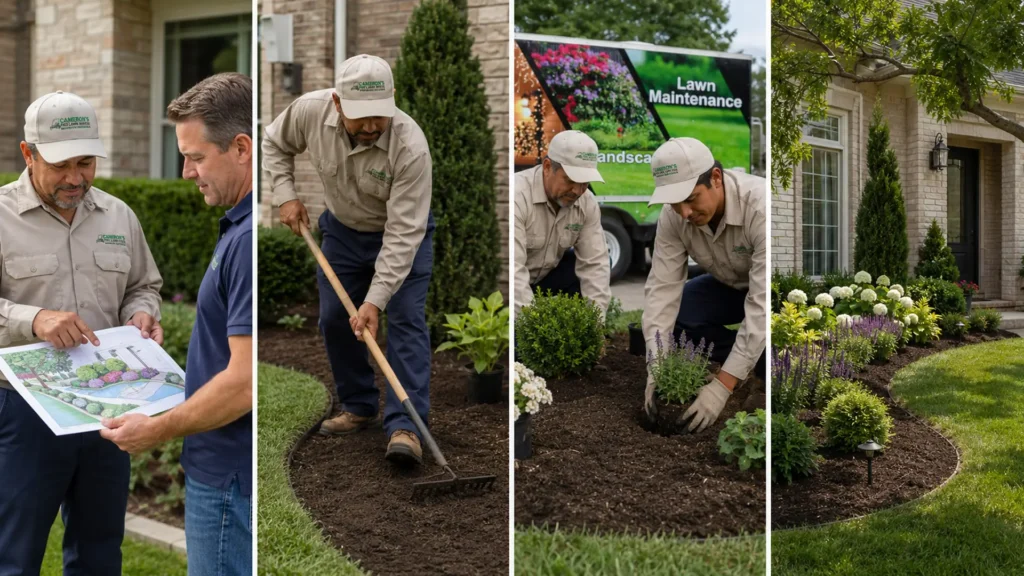
Prepare Landscape Beds Along With the Lawn
The lawn is only one part of the property’s outdoor appearance.
Leaves and debris can also accumulate inside landscape beds, around shrubs, and near trees.
Cleaning these areas helps maintain curb appeal while making it easier to identify weed growth, damaged plants, drainage problems, and other conditions.
Professional landscaping services can also help maintain planting beds, shrubs, lawn edges, and other outdoor areas as the property moves through the seasonal transition.
Check Drainage Before Winter
Fall and winter rainfall can expose drainage problems that may not have been obvious during dry summer conditions.
Walk around the property after rainfall and look for areas where water remains for an extended period.
Standing water can create problems for turf and landscape plants.
Also check whether water is flowing toward the lawn from driveways, walkways, downspouts, or other areas.
Identifying drainage problems before winter can help homeowners plan improvements before the next active growing season.
Review Thin or Bare Areas
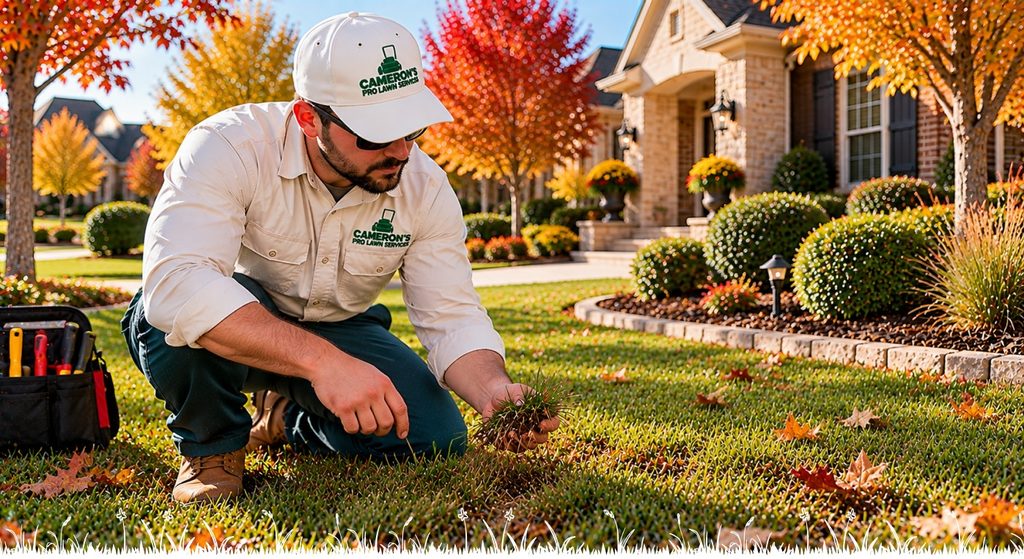
Fall is also a useful time to document areas where the lawn became thin or bare.
Do not automatically assume every bare area requires new grass.
The underlying cause should be considered first.
Shade, traffic, compacted soil, drainage, irrigation coverage, and summer stress can all contribute to weak turf.
If an area requires new turf, sod installation can provide an option for restoring sections of a property when the timing and conditions are appropriate.
Protect High-Traffic Areas
Grass can become more vulnerable to damage as its growth slows.
Areas around walkways, entrances, outdoor seating, and frequently used sections of the property may receive considerably more foot traffic than the rest of the lawn.
Try to avoid unnecessary traffic on weak or thinning sections.
This can be particularly important as the grass becomes less capable of recovering quickly from repeated wear.
Use Seasonal Maintenance to Prepare the Property
Winter lawn preparation works best when it is coordinated with the rest of the property.
Leaf removal, landscape cleanup, shrub maintenance, lawn care, and general outdoor preparation can all contribute to a cleaner property heading into winter.
Professional seasonal services can help homeowners address these tasks together instead of treating the lawn as an isolated part of the property.

Your Latest Cameron’s Pro Lawn Services Guide
Our latest blog, How to Prepare Your North Texas Irrigation System for Winter, explains how homeowners can adjust irrigation, inspect sprinkler components, check exposed equipment, and prepare their systems before freezing temperatures arrive.
Related Reading
For more information about preparing North Texas lawns for seasonal changes, Why Winter Weeds Start in fall: A North Texas Lawn Guide explains why weeds can become more noticeable as warm-season turf slows down and how homeowners can prepare their lawns before winter.
Frequently Asked Questions
Does a North Texas lawn need maintenance during winter?
Yes. Maintenance may become less frequent, but leaf removal, property inspections, debris cleanup, irrigation monitoring, and preparation for spring can still be important.
Should I stop mowing when temperatures cool?
Not immediately. Continue mowing while the grass is actively growing, then gradually reduce mowing frequency as growth slows.
Why does my lawn lose its green color in winter?
Warm-season grasses naturally lose some of their green color as temperatures fall and the grass enters dormancy. This does not automatically indicate that the lawn is unhealthy.
Should I continue watering during winter?
Watering requirements generally decrease as temperatures cool. Monitor soil moisture, rainfall, turf condition, and applicable local watering requirements rather than automatically following a summer schedule.
Should I fertilize before winter?
Not automatically. Fertilizer decisions should consider grass type, current growth, soil conditions, previous applications, and seasonal timing.
What should I do with fallen leaves?
Remove accumulated leaves regularly so they do not block sunlight, trap moisture, or hide lawn problems.
Should I repair bare spots before winter?
First determine why the area became bare. Shade, irrigation problems, traffic, drainage, soil conditions, and summer stress can all contribute to thin turf. The appropriate repair timing depends on the grass type and seasonal conditions.
Is winter dormancy normal for North Texas grass?
Yes. Warm-season grasses commonly slow their growth and can become dormant as temperatures decline.
Prepare Now for a Better Spring
Winter preparation is not about forcing a North Texas lawn to remain green throughout the colder months.
It is about entering dormancy with the property in good condition.
Continue mowing while grass is actively growing, remove leaves, monitor moisture, inspect weak areas, watch drainage, maintain landscape beds, and avoid unnecessary treatments simply to preserve summer conditions.
A little attention during the fall transition can make the property easier to manage when warmer temperatures return.
Cameron’s Pro Lawn Services provides lawn maintenance, landscaping, irrigation, seasonal services, sod installation, and holiday lighting for homeowners and property managers throughout Lewisville and surrounding North Texas communities.
Ready to prepare your lawn for the changing season? Contact Cameron’s Pro Lawn Services for a free quote.

Cameron's Lawn Care Service
Explore helpful lawn care, landscaping, irrigation, sod installation, seasonal maintenance, and outdoor property care tips from our team.
See All Blog