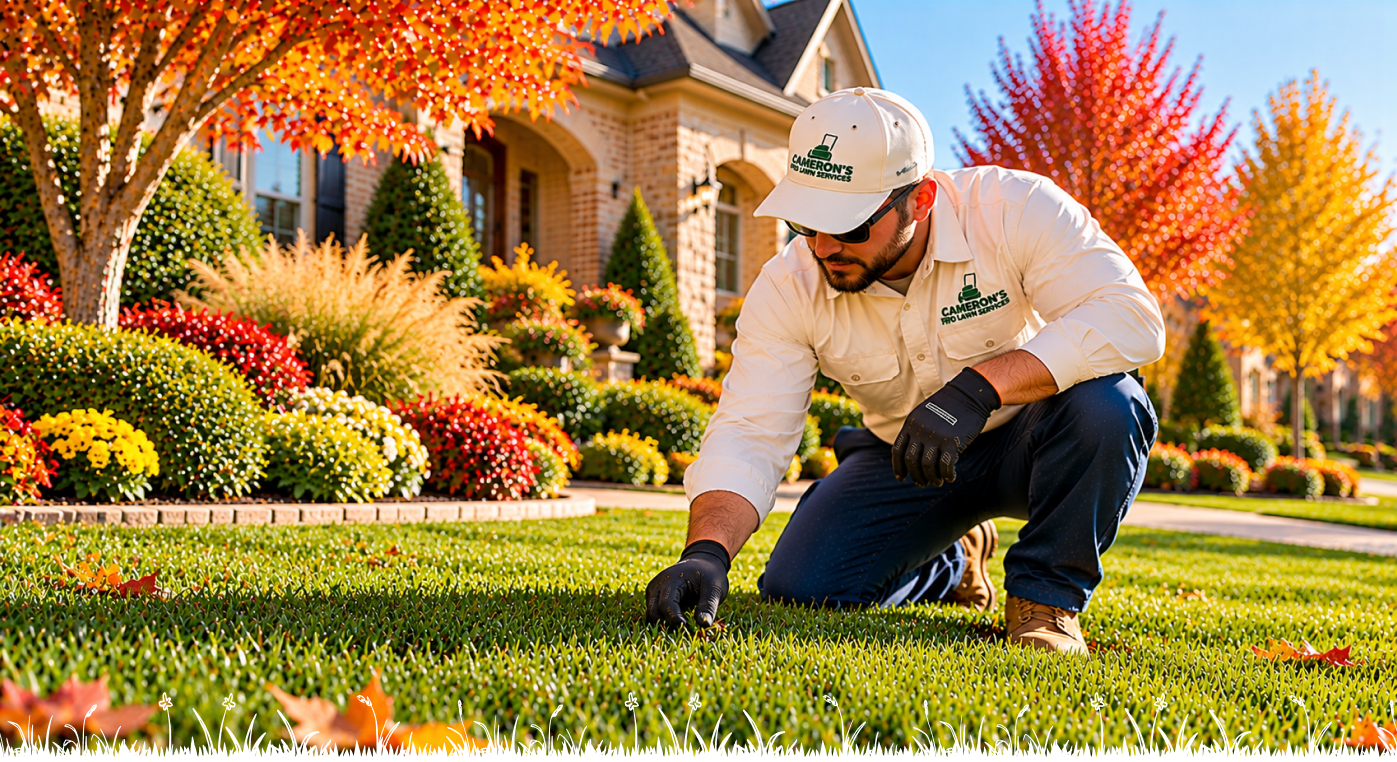
Winter weed control is an important part of preparing a North Texas lawn for the cooler months. As warm-season grasses slow down and eventually become dormant, winter weeds can take advantage of open spaces, thin turf, and changing soil conditions. Common winter weeds such as annual bluegrass, henbit, and chickweed can establish during fall and become much more noticeable as the season progresses.
For homeowners in Lewisville and surrounding North Texas communities, October is a good time to inspect the lawn carefully and determine whether weed prevention, lawn maintenance, or other seasonal work is needed before winter.
Why Winter Weeds Become a Problem
Many homeowners associate weeds primarily with spring and summer.
However, some weeds begin their life cycle during the cooler months.
As warm-season turf slows its growth, weeds can find opportunities to establish in thin or exposed areas of the lawn. Texas A&M AgriLife Extension specifically identifies winter annual weeds such as annual bluegrass and henbit as problems that should be addressed before they emerge.
Once weeds become established, they can compete with the existing turf for sunlight, water, nutrients, and growing space.
This is why prevention is generally easier than waiting until a lawn is covered with weeds.
Understand Your Grass Type
Before taking action, homeowners should understand what type of grass is growing on the property.
North Texas lawns commonly include warm-season grasses such as Bermuda, Zoysia, and St. Augustine.
These grasses respond differently as temperatures fall.
Warm-season turf gradually slows down and can enter dormancy, while many winter weeds remain active during cooler weather.
Knowing your turf type is important because some weed-control products and lawn treatments are not appropriate for every grass variety.
Always follow the product label and consider professional guidance when you are unsure which treatment is suitable for your lawn.
Timing Matters More Than the Calendar
Fall weed prevention is not simply about choosing a date on the calendar.
Soil temperature plays an important role in determining when winter weed seeds begin to germinate.
Texas A&M AgriLife guidance notes that the fall pre-emergent window for winter annual weeds is generally around September to early October, with soil temperature being an important factor.
That means homeowners should not assume that applying a product at any random time in fall will provide the same result.
By late October, the timing may already be different depending on local conditions and the specific weed.
If you have not addressed prevention yet, evaluate the current condition of your lawn and consider getting professional advice rather than applying a product blindly.
Common Winter Weeds to Watch For
Several weeds can become noticeable during North Texas winters.
Annual bluegrass, also known as Poa annua, is one of the common concerns in warm-season lawns.
Henbit and chickweed can also appear during cooler periods.
These weeds may remain relatively small at first, making them easy to overlook.
By the time they become obvious across the lawn, they may already be well established.
Regular inspections make it easier to notice changes before the problem spreads.
Start With a Lawn Inspection
Walk the entire property rather than checking only the areas that are easiest to see.
Look closely at:
- Thin sections of turf
- Bare soil
- Shaded areas
- Edges around landscape beds
- Areas with heavy foot traffic
- Places where water collects
- Areas that stayed stressed during summer
These locations can provide opportunities for weeds to establish.
A lawn with dense, healthy turf generally gives weeds fewer open spaces to occupy.
Keep the Lawn Healthy
One of the best long-term defenses against weeds is healthy turf.
A dense lawn leaves less room for unwanted plants to establish.
That means regular mowing, appropriate watering, proper nutrition, and seasonal maintenance all play a role in reducing weed pressure.
Fall should not be treated as a period when lawn care stops completely.
Warm-season grasses may be slowing down, but the condition of the lawn going into dormancy can influence how it looks when active growth returns.
Continue Mowing as Needed
North Texas weather can remain mild during parts of October.
If the grass is still actively growing, mowing may still be necessary.
The goal is to maintain the appropriate mowing height for the grass rather than cutting extremely low simply because winter is approaching.
Recent lawn-care guidance also recommends continuing to mow during fall while grass is actively growing and avoiding removal of more than one-third of the blade at a time.
Keeping the lawn properly maintained can also make weeds easier to identify.
Be Careful With Fertilization
Fall fertilization needs to be approached carefully, particularly with warm-season grasses.
Texas A&M AgriLife’s current North Texas guidance notes that the first two weeks of October were the final recommended window for fertilizer applications in its current guidance, and it cautions against high amounts of nitrogen as frost becomes more likely.
By October 21, homeowners should not automatically add fertilizer simply because the lawn looks tired.
Instead, consider the grass type, current growth, soil conditions, weather, and previous applications.
When in doubt, professional evaluation or a soil test can provide better information than guessing.
Check for Thin and Bare Areas
Thin turf creates opportunities for weeds.
After a demanding North Texas summer, inspect areas that lost density because of heat, drought, foot traffic, shade, or irrigation problems.
However, homeowners with warm-season grasses should be cautious about fall seeding or overseeding.
Different turf types have different repair windows, and pre-emergent treatments can interfere with desired seed germination.
Recent guidance specifically warns that pre-emergent applications should not be used where homeowners are planning to seed because the treatment can prevent desirable grass seed from germinating as well.
Check Your Irrigation
Watering problems can contribute to an uneven lawn.
Dry areas may become thin and provide opportunities for weeds, while constantly wet areas can create other lawn problems.
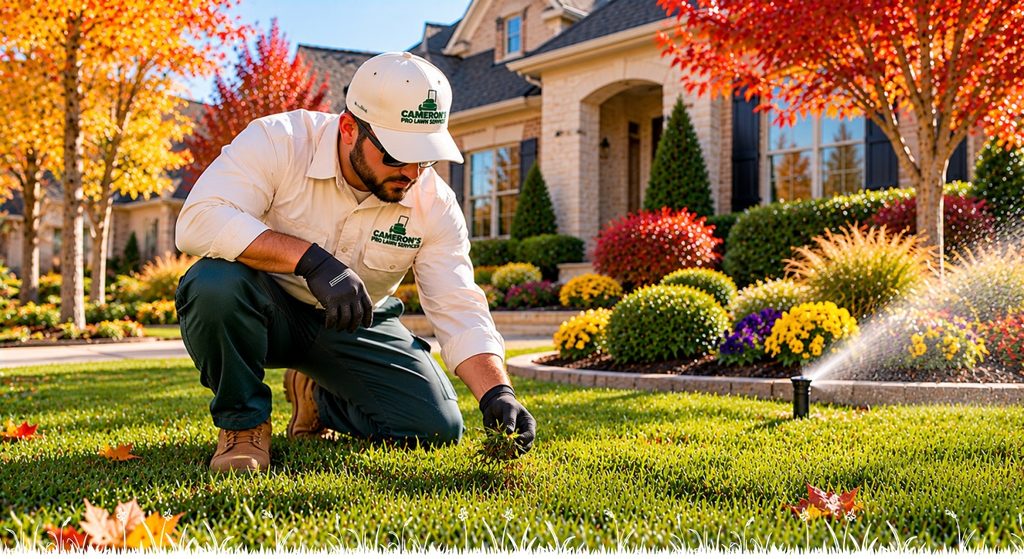
Walk through the property while the irrigation system is operating and check whether water is reaching the intended areas.
Look for broken sprinkler heads, blocked spray patterns, leaks, and overspray onto sidewalks or driveways.
For homeowners who need professional irrigation services, a seasonal inspection can help identify problems before they become larger maintenance issues?
Don’t Ignore Shaded Areas
Winter weeds can be particularly noticeable in areas where turf is already thin.
Shaded locations beneath trees, beside fences, and around structures may receive less sunlight than open lawn areas.
If grass struggles to remain dense in these locations, weeds may have more opportunities to establish.
Rather than repeatedly treating the symptoms, homeowners should consider why the grass is struggling.
Shade, drainage, soil compaction, irrigation coverage, and foot traffic can all influence turf density.
Keep Leaves Under Control
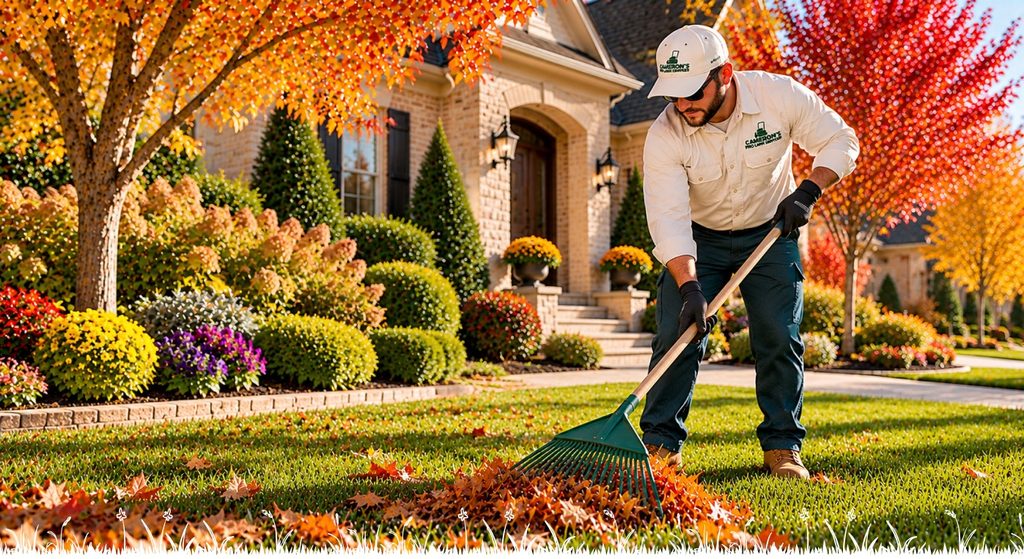
Fall leaves are a natural part of the season, but thick layers should not be allowed to remain on the lawn for extended periods.
Heavy leaf coverage can block sunlight and airflow.
It can also make it more difficult to inspect the grass for weeds, thin areas, or other problems.
Recent fall cleanup guidance recommends removing excessive leaf buildup while noting that some leaves can be mulched into the lawn when conditions allow.
Regular cleanup keeps the lawn easier to inspect and maintain.
Avoid Treating Every Weed the Same
Different weeds require different approaches.
Some appear during fall and winter, while others are warm-season weeds that behave differently.
Before applying any treatment, identify the weed and understand whether it is already established or still at the germination stage.
Pre-emergent products are designed to prevent certain weed seeds from establishing, while post-emergent treatments are intended for weeds that are already growing.
Using the wrong approach can waste time and money.
What If Winter Weeds Are Already Growing?
If weeds have already emerged, prevention alone may not solve the problem.
The appropriate response depends on the weed species, turf type, size of the infestation, and current weather conditions.
Homeowners should avoid randomly applying herbicides without confirming that the product is appropriate for their lawn.
A professional lawn-care evaluation can help determine what is actually happening and what treatment, if any, makes sense.
Protect Your Lawn before Winter Dormancy
North Texas warm-season grasses can enter dormancy as temperatures continue to decline.
During this period, the lawn may not actively compete with winter weeds in the same way it does during the growing season.
That makes fall preparation important.
The goal is to enter winter with healthy, dense turf and fewer opportunities for weeds to establish.
Current Texas A&M guidance emphasizes recovering stressed lawns before winter dormancy and completing appropriate fall care while the grass is still actively growing.
Keep Landscape Areas Maintained
Winter weeds are not limited to the lawn.
Landscape beds can also develop unwanted growth during cooler weather.
Keeping beds clean, removing invasive weeds, maintaining mulch, and monitoring shrubs can help the entire property look more organized.
Professional seasonal services can help homeowners coordinate lawn and landscape tasks as North Texas transitions from fall into winter.
Don’t Forget the Landscape Around the Lawn
Trees, shrubs, planting beds, and turf all affect the appearance of the property.
If the lawn is healthy but surrounding beds are overgrown or neglected, the property can still look unfinished.
Professional landscape maintenance can help keep these areas coordinated with the lawn throughout the changing seasons.
Use Fall to Plan Ahead
Even if the ideal prevention window has passed for a particular treatment, October is still a useful time to evaluate the lawn.
Document areas where weeds appeared.
Note locations with thin turf.
Check irrigation coverage.
Look at drainage.
Identify places where summer stress caused damage.
These observations can help you make better decisions for the remainder of fall and prepare a more effective lawn-care plan for next year.
Your Latest Cameron’s Pro Lawn Services Guide
Our latest blog, When Should You Install Holiday Lights in North Texas?, explains how homeowners can plan holiday lighting around October and November scheduling, roofline designs, landscape features, safety, and the holiday season.
Related Reading
For more information about maintaining outdoor spaces during the fall season, Fall Yard Cleanup: What North Texas Homeowners Should Do Before Winter covers leaf removal, landscape-bed cleanup, lawn care, irrigation checks, and other seasonal preparation tasks.
Keep Your Lawn Looking Good Through Fall
For homeowners looking for lawn maintenance Lewisville TX, consistent care can help identify thin turf, weeds, irrigation problems, and other changes before they become larger issues.
Fall maintenance is not about making the lawn look perfect overnight. It is about keeping the property in good condition while preparing it for the months ahead.
Frequently Asked Questions
When do winter weeds start appearing in North Texas?
Winter annual weeds generally begin germinating as soil temperatures cool during fall. The exact timing varies with weather, soil conditions, and weed species.
What are common winter weeds in North Texas?
Annual bluegrass, henbit, and chickweed are among the winter weeds commonly discussed for North Texas lawns.
Is October a good time to prevent winter weeds?
Fall is an important prevention period, but timing depends on soil temperature and the specific weed. Texas A&M guidance identifies September to early October as a typical window for winter-weed pre-emergent applications.
What if I missed the fall prevention window?
Do not automatically apply a treatment late. First determine whether weeds have already germinated and identify the grass and weed species. Professional evaluation can help determine the appropriate next step.
Can I use pre-emergent if I want to seed my lawn?
Pre-emergent treatments can also prevent desirable grass seed from germinating, so they should not be used indiscriminately when seeding is planned.
Should I keep mowing in October?
If your grass is still actively growing, mowing may still be necessary. Avoid removing more than one-third of the grass blade in a single mowing.
Does irrigation affect winter weed problems?
Uneven irrigation can contribute to weak or thin turf, which can create opportunities for weeds. Checking sprinkler coverage can help identify these issues.
Should I fertilize my lawn in late October?
Not automatically. Current North Texas guidance cautions against late high-nitrogen applications as frost becomes more likely. Consider grass type, growth, weather, and soil conditions before fertilizing.
Give Your Lawn a Fall Check
Winter weeds are easier to manage when homeowners pay attention before the problem becomes widespread.
Inspect thin areas, maintain appropriate mowing, manage leaves, check irrigation coverage, monitor landscape beds, and understand the needs of your specific turf.
For North Texas homeowners, fall is an important transition period. A little attention now can help the lawn enter winter in better condition and make spring maintenance easier.
Cameron’s Pro Lawn Services provides lawn maintenance, landscaping, irrigation, seasonal services, sod installation, and holiday lighting for homeowners and property managers throughout Lewisville and surrounding North Texas communities.
Ready to get your lawn prepared for the changing season? Contact Cameron’s Pro Lawn Services for a free quote.

Cameron's Lawn Care Service
Explore helpful lawn care, landscaping, irrigation, sod installation, seasonal maintenance, and outdoor property care tips from our team.
See All Blog