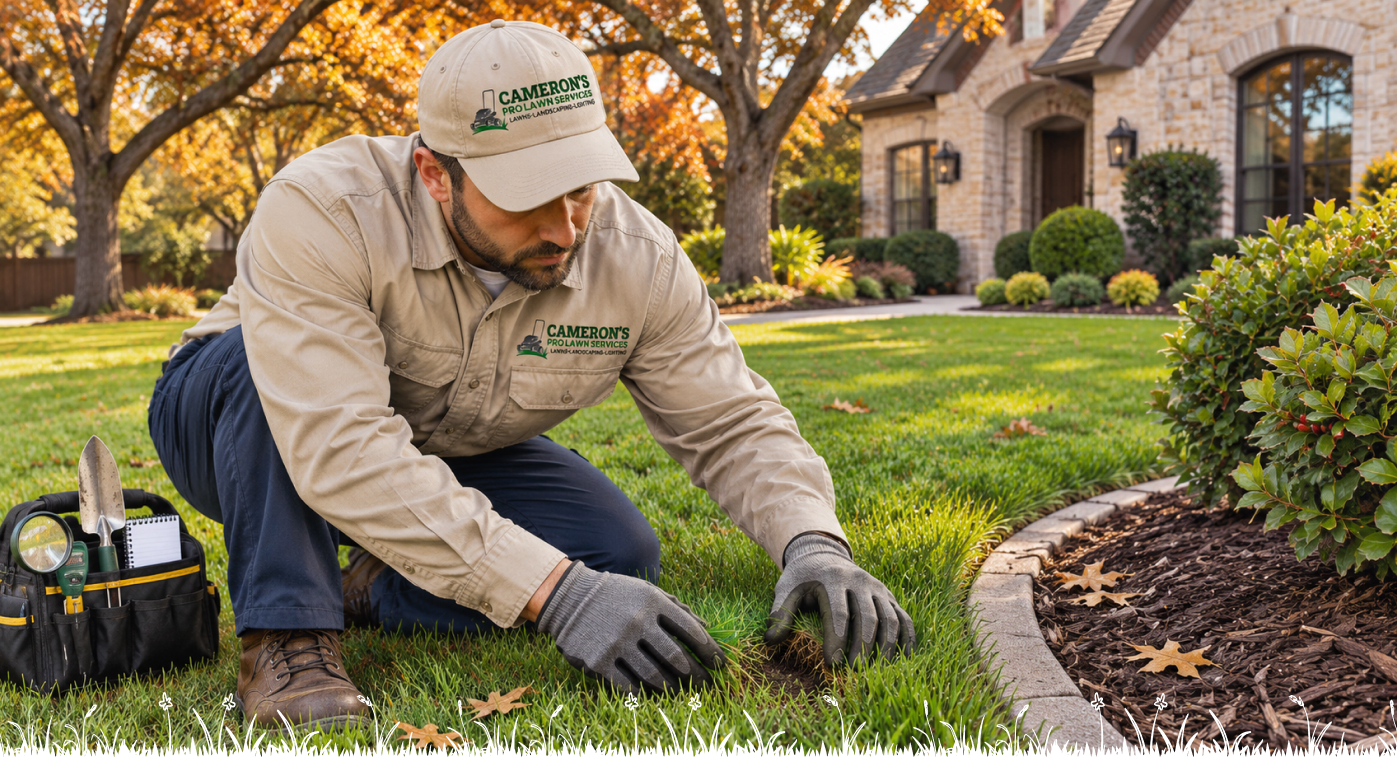
As North Texas moves from fall toward winter, warm-season lawns begin slowing down and preparing for dormancy. Cooler nights can change how grass grows, how often the property needs mowing, and how homeowners should monitor the condition of their turf.
Although pest activity changes with the seasons, homeowners should not assume that every lawn problem disappears when temperatures fall. Insects, disease, moisture problems, and weak turf can sometimes create similar-looking symptoms.
A careful inspection during the fall transition can help homeowners identify unusual areas before they become more difficult to evaluate.
Why Inspect Your Lawn Before Winter?
A lawn that experienced heat, drought, excessive moisture, heavy traffic, or uneven watering during summer may enter winter with weak or thin areas.
Those areas deserve closer attention because healthy, dense turf generally provides better coverage than sections where grass has already declined.
Texas A&M AgriLife identifies white grubs, chinch bugs, and fire ants among the notable insect pests found in Texas lawns. It also emphasizes that proper watering, fertilization, and mowing can help prevent or minimize many turf pest problems.
The goal of a fall inspection is not to treat every lawn simply because an insect is present. Instead, homeowners should look for actual signs of damage and determine whether the condition requires further investigation.
A careful fall inspection can help homeowners identify winter lawn pests North Texas before they become more difficult to manage. Looking for unusual discoloration, thinning turf, root damage, or spreading patches can help determine whether the lawn needs closer attention.
Look for Changes in Grass Color
Start by walking the entire property and looking for areas that look noticeably different from the surrounding turf.
Watch for:
- Yellow or brown sections
- Thinning grass
- Small areas of damaged turf
- Irregular patches
- Grass that does not recover after watering
- Areas that remain unusually wet
- Turf that lifts or separates easily from the soil
Color changes can have many causes.
Pests are only one possibility. Poor irrigation, drought stress, disease, compacted soil, drainage problems, and seasonal changes can also affect the appearance of grass.
That is why homeowners should avoid automatically assuming that brown grass means insects.
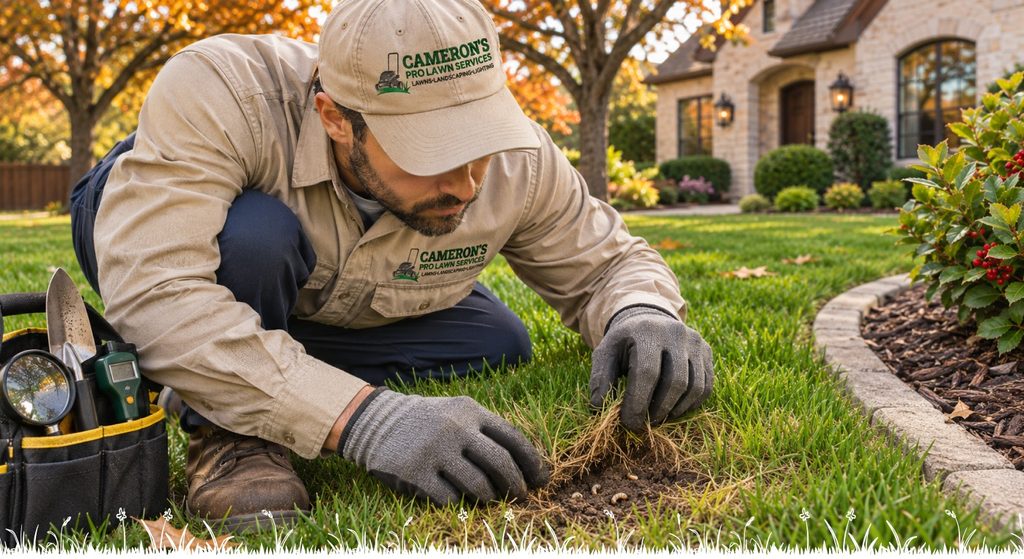
Check for White Grubs
White grubs are among the most widespread and damaging turfgrass pests in Texas.
They are larvae of certain beetles and feed below the soil surface around grass roots.
Damage can appear as weakened or thinning turf, and in some situations sections of grass may lift more easily than healthy turf because roots have been damaged.
If you notice an area that appears unusually weak, inspect the condition of the turf and soil rather than immediately applying an insecticide.
The presence of one insect does not automatically mean the entire lawn requires treatment.
Watch for Chinch Bug Damage
Chinch bugs are another important lawn pest, particularly for St. Augustinegrass.
Their damage can sometimes resemble drought stress, making identification more difficult.
Look for areas of declining grass that do not seem to respond normally to appropriate watering.
Pay attention to locations where turf has already been stressed by heat, drought, or poor growing conditions.
Because symptoms can overlap with other lawn problems, proper identification is important before treatment.
Texas A&M guidance notes that chinch bug damage is particularly associated with St. Augustinegrass.
Don’t Confuse Pests With Lawn Disease
One of the biggest mistakes homeowners can make is treating every damaged area as an insect problem.
North Texas lawns can experience both insect damage and fungal or other turf diseases.
Brown patch, for example, can produce noticeable brown or thinning areas during favorable fall conditions. Cameron’s Pro Lawn Services already has a dedicated guide explaining the signs and contributing conditions associated with brown patch in North Texas lawns.
The visual appearance of a damaged lawn should therefore be evaluated carefully before choosing a treatment.
If the pattern does not clearly indicate an insect problem, investigate other possible causes.
Check Soil and Root Conditions
A lawn inspection should not stop at the grass blades.
If you find a weak area, gently inspect the surrounding soil and turf condition.
Consider whether the soil is:
- Extremely dry
- Consistently wet
- Compacted
- Bare in places
- Poorly drained
- Showing signs of root disturbance
Root problems can sometimes create symptoms that look similar to insect damage.
Understanding what is happening below the surface can help narrow down the potential cause.
Inspect Areas With Previous Problems
If a section of your lawn had problems during summer, give it additional attention during the fall transition.
Make a note of locations that experienced:
- Repeated dry conditions
- Standing water
- Heavy foot traffic
- Shade
- Poor sprinkler coverage
- Thin turf
- Previous pest activity
Recurring problems can provide useful clues.
For example, if the same area repeatedly becomes weak, the cause may be related to irrigation, drainage, shade, soil compaction, or another underlying condition rather than a seasonal insect infestation.
Check Irrigation Coverage
Watering and pest management are closely connected because weak turf can be more vulnerable to environmental stress.
Run irrigation zones when appropriate and observe whether water reaches the intended areas.
Look for:
- Broken sprinkler heads
- Blocked nozzles
- Uneven spray patterns
- Leaking components
- Overspray
- Areas receiving too much or too little water
Excessive moisture can also contribute to disease problems, while insufficient moisture can weaken turf.
The goal is balanced irrigation rather than simply increasing the watering schedule.
Keep Leaves From Hiding Lawn Problems
November can bring substantial leaf accumulation across North Texas properties.
A thick layer of leaves can make it harder to see the condition of the turf.
It can also hide damaged areas, standing water, and other conditions that deserve attention.
Regular leaf cleanup allows homeowners to inspect the actual lawn surface more easily.
North Texas seasonal guidance also recommends managing leaves and checking watering systems as the weather changes.
Know When a Pest Problem Needs Professional Attention
Not every insect requires treatment.
A few insects may be present without causing meaningful damage to the lawn.
The more important question is whether you are seeing a pattern of turf decline that could be connected to pest activity.
Consider professional evaluation when:
- Damage continues spreading
- Multiple sections are affected
- Grass becomes noticeably thin
- The same area repeatedly develops problems
- You cannot identify the cause
- Several possible causes appear at the same time
Correct identification should come before treatment.
Texas A&M AgriLife specifically recommends identifying lawn pests and diseases correctly because different problems can produce similar symptoms and inappropriate treatment can waste money or harm the landscape.
Keep the Lawn Properly Maintained
Healthy turf does not guarantee that pests will never appear, but consistent maintenance can help the lawn handle seasonal stress more effectively.
For homeowners searching for lawn maintenance Lewisville TX, regular mowing, edging, trimming, cleanup, and seasonal monitoring can make it easier to notice unusual changes before they become larger problems.
Cameron’s Pro Lawn Services provides professional lawn maintenance in Lewisville, including mowing, edging, string trimming, blowing, cleanup, and recurring maintenance based on property needs.
Don’t Automatically Apply Insecticide
Seeing an insect does not automatically mean an insecticide should be applied.
Before using a treatment, identify the pest and determine whether the level of damage justifies action.
Different insects affect different parts of the plant and may require different management approaches.
Product labels also contain specific application rates, target pests, turf restrictions, and safety instructions.
Avoid applying a product simply because a lawn has a brown or yellow area.
The underlying cause should be understood first.
Monitor Stressed Areas Through Winter
Warm-season grasses gradually enter dormancy as temperatures decline.
During this period, normal color changes can make it harder to distinguish seasonal dormancy from other problems.
Document areas that appear unusual before the lawn becomes fully dormant.
Taking a few photographs can help you compare the same locations later.
This is particularly useful for sections that repeatedly experience damage.
Keep Landscape Beds and Lawn Areas Connected
Pest and turf problems do not always stay neatly within the lawn.
Landscape beds, shrubs, trees, and turf can all influence the outdoor environment.
Overgrown vegetation, excessive moisture, poor drainage, and accumulated debris can affect the conditions around the lawn.
Keeping the entire property maintained can therefore make lawn inspections easier.
Professional seasonal services can help homeowners combine leaf removal, landscape-bed cleanup, mulching, dormant plant care, and other seasonal maintenance tasks. Cameron’s current seasonal service offering includes these types of property-care services.
Use the Latest Seasonal Information
North Texas lawn care changes as temperatures fall, so homeowners should avoid treating summer maintenance routines as permanent.
Our latest guide, How to Prepare Your Lewisville Property for the First Freeze, covers outdoor faucets, hoses, sensitive plants, landscape beds, drainage, exposed components, and other areas homeowners should review before freezing temperatures arrive.
That guide is a useful next step for homeowners who have completed their lawn inspection and want to prepare the rest of the property for colder weather.
Related Reading
For more information about another common North Texas lawn problem, How to Prevent Winter Weeds in North Texas Lawns explains how winter annual weeds can establish as warm-season turf slows down and how homeowners can inspect thin, bare, shaded, and stressed areas before winter.
The two topics work together because a fall lawn inspection can reveal both unwanted insects and conditions that create opportunities for winter weeds.
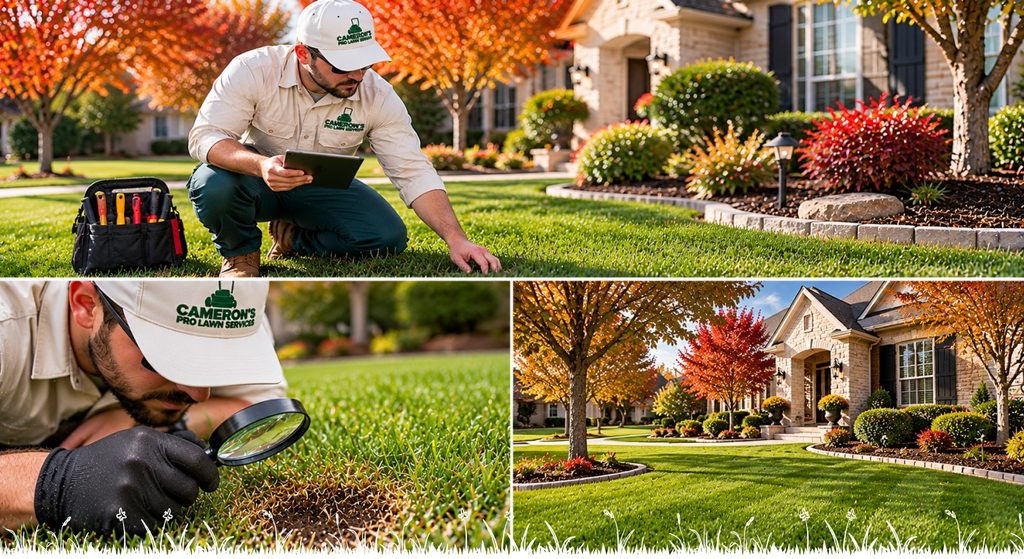
Prepare Your Lawn for the Cooler Months
Fall is a transition period for North Texas lawns.
Warm-season grass begins slowing down, leaves accumulate, watering needs change, and some lawn problems become easier to overlook.
A simple inspection can help homeowners identify weak areas, unusual discoloration, possible pest damage, irrigation problems, and other conditions before winter dormancy.
The key is not to treat every problem the same way.
Identify the symptom, consider the possible causes, and address the underlying issue when possible.
Frequently Asked Questions
What are common lawn pests in North Texas?
Texas A&M AgriLife identifies white grubs, chinch bugs, and fire ants among the notable insect pests found in Texas lawns.
Are lawn pests still a concern in November?
Pest activity changes as temperatures cool, and not every pest remains equally active. However, homeowners should continue monitoring existing damage and unusual turf conditions rather than assuming all lawn problems stop with cooler weather.
How can I tell if brown grass is caused by pests?
You cannot always determine the cause from color alone. Brown or thinning turf can result from insects, disease, drought stress, irrigation problems, drainage, shade, or other conditions.
Are white grubs harmful to lawns?
White grubs can damage turf by feeding around grass roots. If you notice weak or easily lifted sections of turf, further inspection may help determine whether grubs are involved.
Can chinch bugs affect St. Augustinegrass?
Yes. Chinch bugs are an important pest of St. Augustinegrass, and their damage can sometimes resemble drought stress.
Should I apply insecticide every fall?
No. Treatment should be based on correct pest identification and an actual need for control. Applying products without identifying the problem can waste money and may damage the landscape.
Can irrigation problems look like pest damage?
Yes. Areas receiving too much or too little water can become stressed and may develop symptoms that resemble other lawn problems.
Should I remove leaves before inspecting my lawn?
Yes. Excessive leaf buildup can hide turf damage, wet areas, thin sections, and other problems. Managing leaves makes the lawn easier to inspect.
Can professional lawn maintenance help identify pest problems?
Routine professional maintenance can make it easier to notice changes in turf condition, although identifying a specific pest or disease may require a more focused evaluation.
Keep an Eye on Your Lawn Before Winter
A healthy-looking lawn deserves regular observation even as growth begins to slow.
Walk the property, inspect weak areas, monitor unusual discoloration, check irrigation coverage, manage leaves, and avoid applying treatments without first understanding the problem.
For North Texas homeowners, the transition into winter is a good opportunity to document lawn conditions and address problems before the next active growing season.
Cameron’s Pro Lawn Services provides lawn maintenance, landscaping, irrigation, sod installation, seasonal services, and holiday lighting throughout Lewisville and surrounding North Texas communities.
Ready to have your lawn inspected and maintained for the changing season? Contact Cameron’s Pro Lawn Services for a free quote.

Cameron's Lawn Care Service
Explore helpful lawn care, landscaping, irrigation, sod installation, seasonal maintenance, and outdoor property care tips from our team.
See All Blog