North Texas weather can change quickly as November progresses. A mild fall afternoon can be followed by a much colder night, making it important for homeowners to look beyond routine lawn care and prepare the entire outdoor property for freezing temperatures.
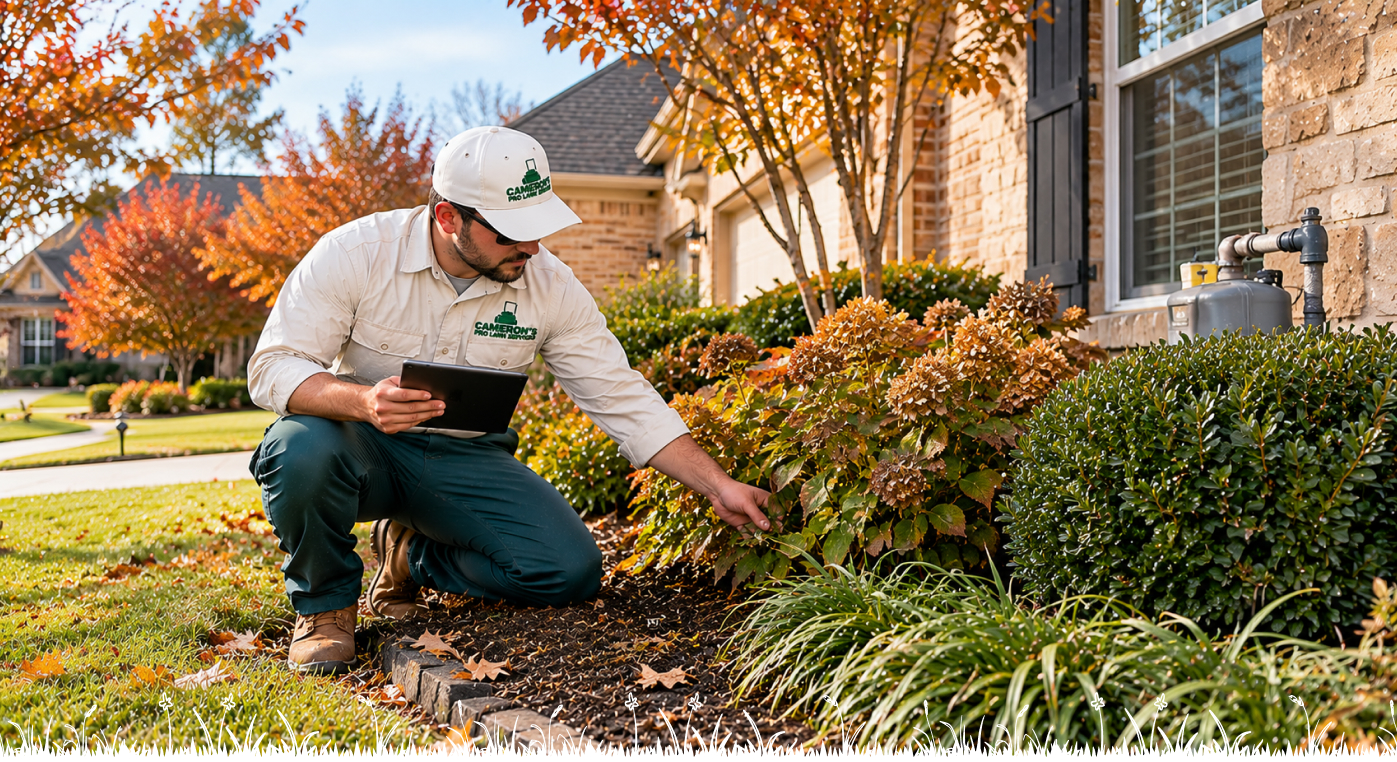
The first freeze can affect outdoor faucets, exposed irrigation components, sensitive plants, landscape beds, hoses, and other areas around the property. Taking time to inspect these areas before temperatures drop can help homeowners identify potential problems early.
Preparing for a freeze does not mean stopping outdoor maintenance. It means adjusting seasonal care to match changing weather and protecting the parts of the property that are most vulnerable to cold conditions.
Check Outdoor Faucets and Hoses
Outdoor water connections are among the first areas homeowners should inspect before freezing weather arrives.
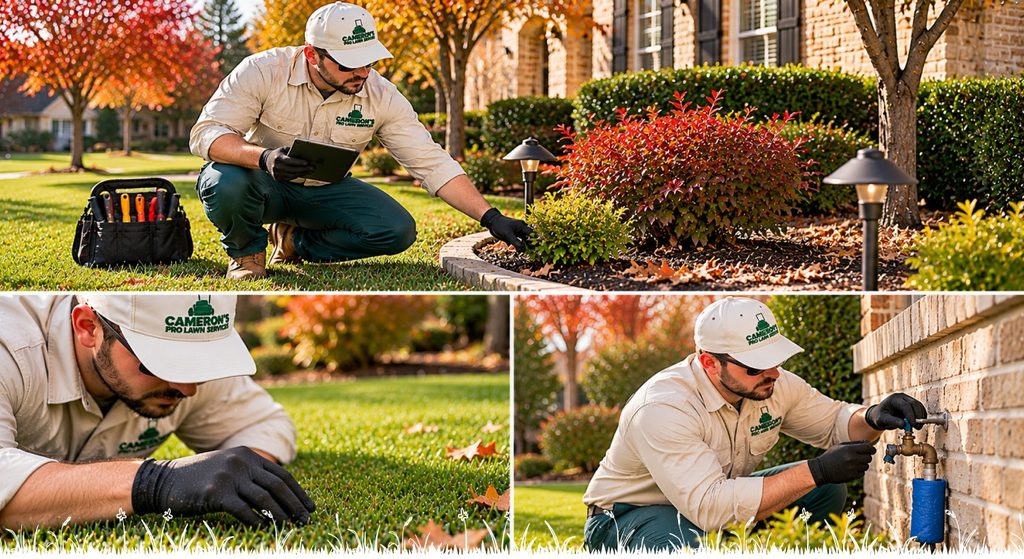
Garden hoses should be disconnected from outdoor faucets and stored properly. Leaving a hose connected can leave water trapped around the faucet and connected plumbing.
Inspect outdoor faucets for visible leaks or damage as well.
If the property has an interior shutoff for an exterior faucet, homeowners should understand how it operates and follow the plumbing system’s recommended winterization procedure.
A simple inspection before freezing temperatures arrive can help prevent avoidable problems.
Inspect Exposed Irrigation Components
Irrigation systems deserve attention before the first hard freeze.
Above-ground backflow prevention assemblies, exposed pipes, valves, and fittings can be vulnerable when water inside them freezes.
The appropriate winterization process depends on the irrigation system’s design. Some systems may require specific draining procedures, while others may require professional winterization.
Homeowners should avoid making assumptions about how their particular system should be drained or protected.
For properties with complex irrigation equipment, professional inspection can help identify exposed components that may require attention before freezing temperatures arrive.
Protect Plants That Are Sensitive to Cold
Not every plant on a North Texas property responds to freezing temperatures in the same way.
Some established landscape plants can handle occasional cold weather, while newly planted or cold-sensitive plants may require additional attention.
Before a freeze, walk around the property and identify plants that may be more vulnerable.
Pay particular attention to:
· Newly planted shrubs
· Young plants
· Container plants
· Tropical or cold-sensitive varieties
· Plants located in exposed areas
· Plants already showing signs of stress
Avoid assuming that every plant requires the same protection.
The appropriate approach depends on the plant variety, its location, maturity, and the severity of the expected freeze.
Prepare Landscape Beds Before Temperatures Drop
Landscape beds should be cleaned and inspected before freezing weather arrives.
Remove excessive leaves and debris that may be covering plants or hiding potential problems.
Check mulch levels and make sure mulch is distributed appropriately around plants.
Mulch can help moderate soil temperature and retain moisture, but it should not be piled directly against tree trunks or plant stems.
For homeowners considering seasonal landscape maintenance, preparing planting beds before colder weather can be an important part of keeping the property organized and easier to maintain throughout the winter.
Don’t Overwater Before a Freeze
A common mistake is assuming that plants always need extra water immediately before freezing weather.
Water requirements depend on the plant, soil conditions, recent rainfall, and the weather forecast.
Overwatering can create its own problems, particularly when cooler temperatures slow evaporation.
Instead of automatically running the irrigation system, check soil moisture and current conditions first.
Homeowners should also follow their local watering requirements and adjust watering based on seasonal conditions.
Inspect Trees and Shrubs
Trees and shrubs should also be checked before a significant temperature drop.
Look for:
· Broken branches
· Dead limbs
· Damaged stems
· Weak growth
· Excessive debris
· Plants showing signs of stress
This inspection is particularly useful after a long North Texas summer because heat, drought conditions, pests, or other stress can weaken certain plants.
Do not automatically perform major pruning immediately before a freeze. Pruning timing depends on the plant species and the type of work required.
Keep Leaves Under Control
November can bring substantial leaf accumulation across North Texas properties.
Leaves should be managed before they form thick layers over lawns, planting beds, walkways, and drainage areas.
Heavy leaf buildup can block sunlight, restrict airflow, hide drainage problems, and make it harder to inspect the property.
Removing leaves also makes it easier to see whether plants, lawn areas, landscape beds, or other outdoor features need additional attention.
Regular cleanup can also help maintain a cleaner appearance as the property transitions into winter.
Check Drainage Before Cold Weather
Rainfall and cooler weather can expose drainage problems that were less noticeable during summer.
Walk around the property after rainfall and look for areas where water remains for extended periods.
Pay particular attention to:
· Low areas
· Landscape beds
· Areas around downspouts
· Walkways
· Lawn depressions
· Areas near foundations
Standing water can create problems for turf and landscape plants.
If a drainage problem is persistent, it should be evaluated rather than simply adding more water or changing the planting arrangement.
Review Your Lawn Before the Freeze
The lawn may not require the same level of attention once warm-season grass enters dormancy, but homeowners should still inspect it before winter.
Look for thin areas, bare spots, heavy leaf accumulation, standing water, excessive traffic, and sections with poor coverage.
This is a useful time to document problems that may need attention when active growth returns.
For homeowners looking for lawn maintenance Lewisville TX, regular seasonal maintenance can help keep the property clean while making it easier to identify areas that need attention.
Protect Outdoor Containers
Container plants can be more vulnerable to freezing temperatures than established plants growing directly in the ground.
The smaller amount of soil inside a container can cool more quickly, potentially exposing the plant’s roots to colder conditions.
If freezing temperatures are expected, homeowners should identify sensitive container plants and determine whether they need to be moved to a protected location.
The appropriate protection depends on the plant species and expected weather.
Check Walkways and Entry Areas
The first freeze can also affect areas around entrances and walkways.
Remove leaves and debris from walking surfaces so they do not become slippery when moisture and cold temperatures arrive.
Keep pathways clear around landscape beds and outdoor features.
A clean entry area also improves the property’s appearance as homeowners begin preparing for the holiday season.
Coordinate Outdoor Maintenance Before Winter
Preparing for a freeze is easier when the property is maintained as a whole.
Lawn areas, landscape beds, shrubs, trees, walkways, and other outdoor spaces all contribute to the condition and appearance of the property.
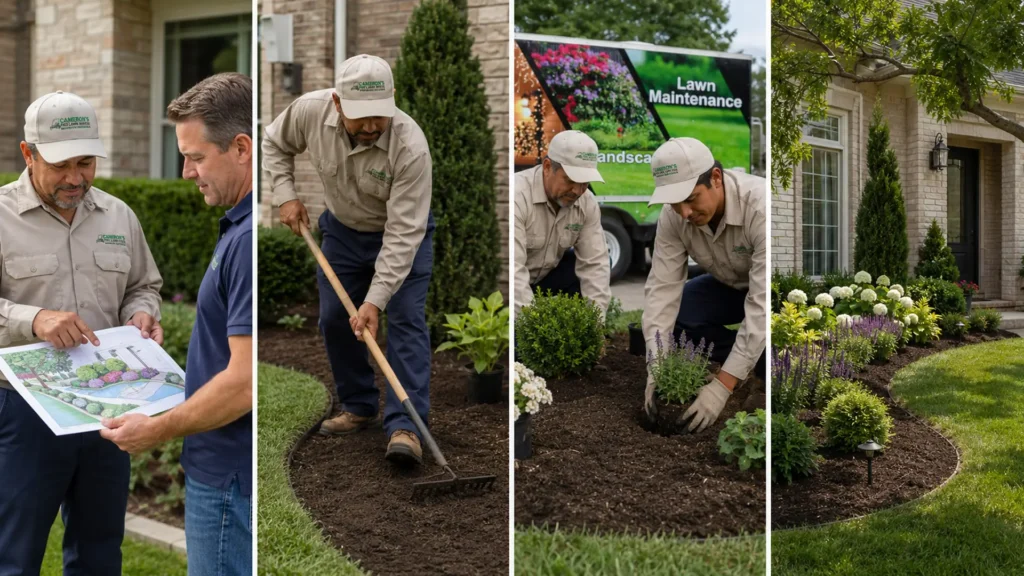
Professional landscaping services can help homeowners maintain planting beds, lawn edges, shrubs, and other outdoor areas while preparing the property for seasonal changes.
Prepare for Holiday Lighting
November is also the time when many North Texas homeowners begin getting their properties ready for holiday displays.
Before installing lights, inspect the areas around rooflines, trees, entryways, landscape beds, and walkways.
A clean and organized property can provide a better foundation for a professional holiday display.
Our latest guide, Permanent vs. Seasonal Holiday Lighting for North Texas Homes, explains the differences between traditional seasonal lighting and permanent systems, including design flexibility, installation, warm-white lighting, feature trees, and landscape accents.
That latest holiday-lighting guide is particularly useful for homeowners who are deciding what type of display they want before the season gets underway.
Coordinate Seasonal Property Care
Some properties need more than a quick cleanup before colder weather arrives.
Large amounts of leaves, overgrown planting areas, tired landscape beds, weak turf, or several areas requiring attention can make seasonal preparation more time-consuming.
Professional seasonal services can bring multiple outdoor maintenance tasks together, helping homeowners prepare the property before winter weather becomes more consistent.

What to Do Before a Freeze
When freezing temperatures are forecast, perform a final walk around the property.
Check outdoor faucets, hoses, exposed irrigation equipment, sensitive plants, containers, landscape beds, and walkways.
Make sure anything that requires protection has been addressed according to its specific requirements.
Avoid making unnecessary last-minute changes to the landscape simply because a freeze is approaching.
The goal is to protect vulnerable areas while allowing the property to transition naturally into the colder season.
Related Reading
For another seasonal outdoor-maintenance guide, Fall Tree and Shrub Care Tips for North Texas Homeowners explains important considerations for inspecting trees and shrubs, managing seasonal changes, and preparing landscape plants as temperatures change.
This related guide can be especially useful for homeowners who want to evaluate their trees and shrubs as part of the same winter-preparation process.
Prepare Your Property Before Cold Weather Arrives
The first freeze does not have to create a major disruption for homeowners who prepare ahead of time.
Inspect outdoor faucets, disconnect hoses, review exposed irrigation components, monitor sensitive plants, clean landscape beds, manage leaves, check drainage, and keep walkways clear.
The most important step is understanding that different parts of the property have different cold-weather needs.
A seasonal approach allows homeowners to make practical adjustments without overwatering, over-pruning, or applying unnecessary treatments.
Cameron’s Pro Lawn Services provides lawn maintenance, landscaping, irrigation, seasonal services, sod installation, and holiday lighting throughout Lewisville and surrounding North Texas communities.
Ready to prepare your property for colder weather? Contact Cameron’s Pro Lawn Services for a free quote.
Frequently Asked Questions
When should I start preparing my Lewisville property for a freeze?
November is a good time to begin reviewing outdoor faucets, hoses, plants, landscape beds, irrigation components, and other vulnerable areas before freezing temperatures arrive.
Should I disconnect my garden hose before a freeze?
Yes. Disconnect and properly store garden hoses before freezing conditions. Outdoor faucet protection should follow the requirements of the property’s plumbing system.
Do all plants need protection from freezing temperatures?
No. Cold tolerance varies significantly between plant species, plant age, location, and weather conditions.
Should I water my landscape before a freeze?
Not automatically. Check soil moisture, recent rainfall, plant requirements, and the forecast before watering. Avoid unnecessary irrigation.
What should I do with container plants?
Cold-sensitive container plants may need to be moved to a protected location when freezing temperatures are expected.
Should I prune trees before a freeze?
Major pruning should not be done automatically before every freeze. Proper timing depends on the tree or shrub species and the reason for pruning.
Does my irrigation system need to be winterized?
Exposed irrigation components can be vulnerable to freezing. The correct winterization procedure depends on the system, so follow manufacturer or installer guidance or use a qualified professional when necessary.

Cameron's Lawn Care Service
Explore helpful lawn care, landscaping, irrigation, sod installation, seasonal maintenance, and outdoor property care tips from our team.
See All Blog