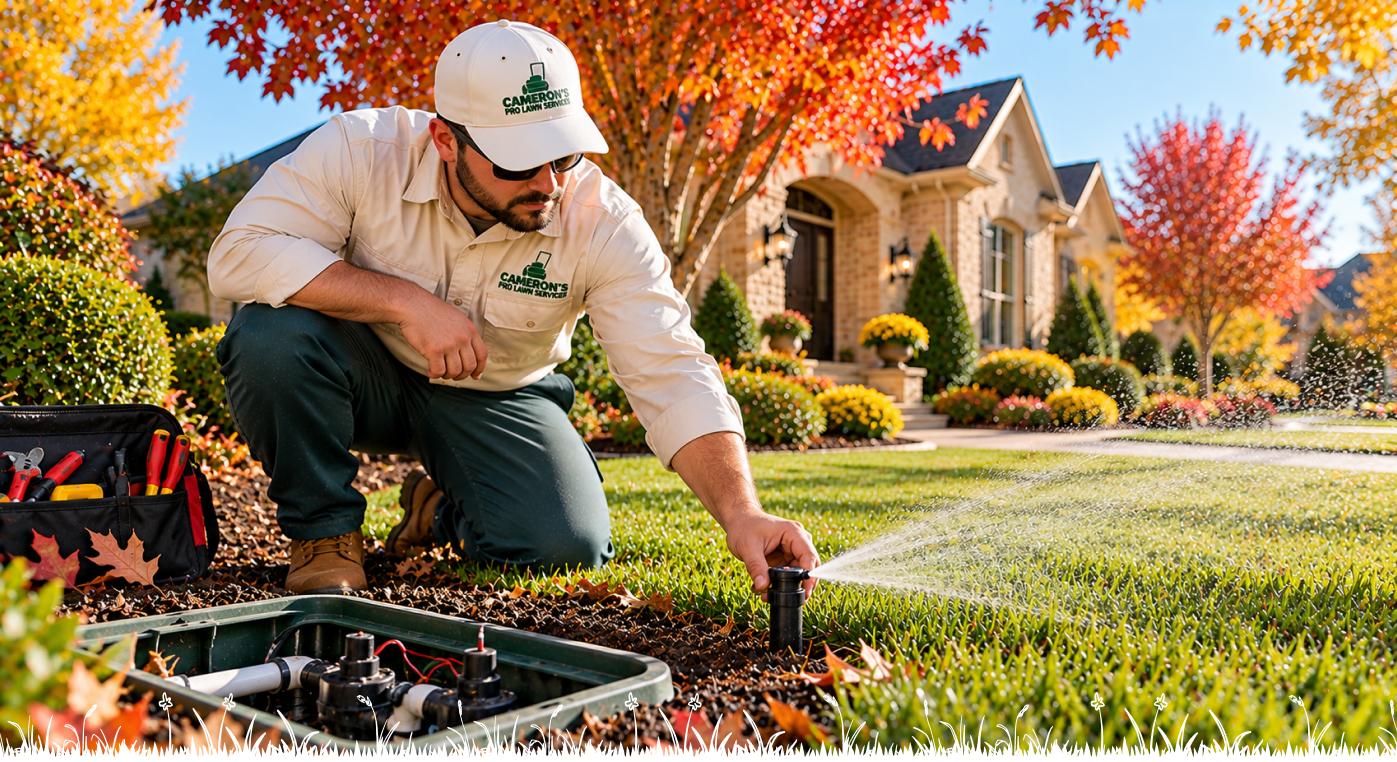
As October comes to an end, North Texas homeowners should begin thinking about how changing temperatures will affect their irrigation systems. The watering schedule that worked during the hottest part of summer may no longer be appropriate as temperatures cool and rainfall patterns change.
Preparing an irrigation system for winter is not simply about turning the controller off. Homeowners should review watering needs, inspect sprinkler components, check exposed equipment, and make sure the system is ready before a hard freeze.
North Texas Municipal Water District guidance changes to a winter watering schedule beginning November 1, when spray irrigation is limited to no more than one day per week, with less frequent watering often being sufficient depending on conditions.
Why Winter Requires a Different Irrigation Approach
Summer heat causes water to leave soil more quickly through evaporation and plant use.
As temperatures fall, lawns and landscape plants generally require less supplemental irrigation.
North Texas clay soils can also hold moisture for extended periods, meaning homeowners may not need to water as frequently during cooler weather.
Instead of allowing the summer irrigation schedule to continue automatically, check recent rainfall, soil moisture, grass condition, and the current weather before running another cycle.
The goal is to provide enough moisture when the landscape actually needs it without keeping the soil unnecessarily wet.
Check the Soil before Watering
One of the easiest ways to avoid unnecessary irrigation is to check the soil.
Walk through several areas of the property and determine whether the soil is still holding moisture.
If the soil is damp in the root zone and the lawn is not showing signs of stress, another irrigation cycle may not be necessary.
This is particularly important after periods of fall rainfall.
Watering simply because the controller says it is time can result in unnecessary runoff and excessive moisture.
Review Your Irrigation Controller
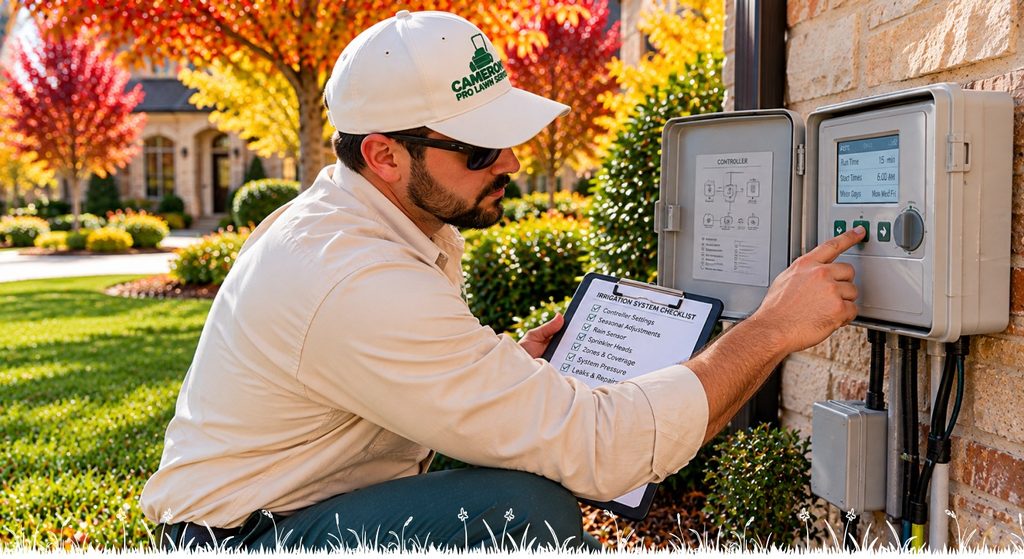
The irrigation controller should be one of the first things homeowners check before winter.
Review the programmed days, start times, run times, and seasonal settings.
If the system has a rain sensor or freeze sensor, make sure it is working correctly.
A controller that continues running a summer schedule during cooler, wetter conditions can waste water and leave areas of the landscape excessively wet.
Inspect Sprinkler Heads
Fall is also a good time to inspect the physical condition of the irrigation system.
Look for sprinkler heads that are:
- Broken
- Clogged
- Misaligned
- Covered by grass
- Leaking
- Spraying hard surfaces
- Providing uneven coverage
A damaged sprinkler head can cause one section of the property to receive too much water while another area remains dry.
Run each zone and watch the spray pattern.
Make sure water is reaching the intended lawn or landscape area rather than the driveway, sidewalk, street, or other hard surfaces.
Check for Leaks and Unusual Water Flow
Leaks can become easier to identify when the system is inspected before the winter season.
Look for water pooling around sprinkler heads, valves, exposed pipes, or other irrigation components.
Pay attention to zones that appear to lose pressure or take longer than usual to operate.
A small irrigation problem may become more expensive if it remains unnoticed until spring.
Professional irrigation services Lewisville TX can help homeowners identify leaks, damaged components, uneven coverage, and other system problems before they become larger maintenance issues.
Protect Exposed Irrigation Components
Freezing temperatures can damage irrigation components that contain trapped water.
Texas A&M’s irrigation guidance recommends turning off the irrigation controller, shutting off the irrigation water supply, insulating exposed PVC piping, and draining above-ground irrigation components such as backflow prevention assemblies when preparing for freezing conditions.
Homeowners should follow the requirements and design of their specific irrigation system rather than applying a generic winterization procedure.
Do You Need to Blow Out the Entire System?
This is an important question for North Texas homeowners.
A compressed-air blowout is commonly associated with irrigation winterization in colder regions, but it is not automatically required for every North Texas irrigation system.
The appropriate preparation depends on the system design, exposed components, drainage, pipe installation, and expected freezing conditions.
Using compressed air incorrectly can also damage irrigation components.
For homeowners who are unsure whether their system requires a more extensive winterization procedure, professional inspection is a safer option.
Pay Attention to the Backflow Preventer
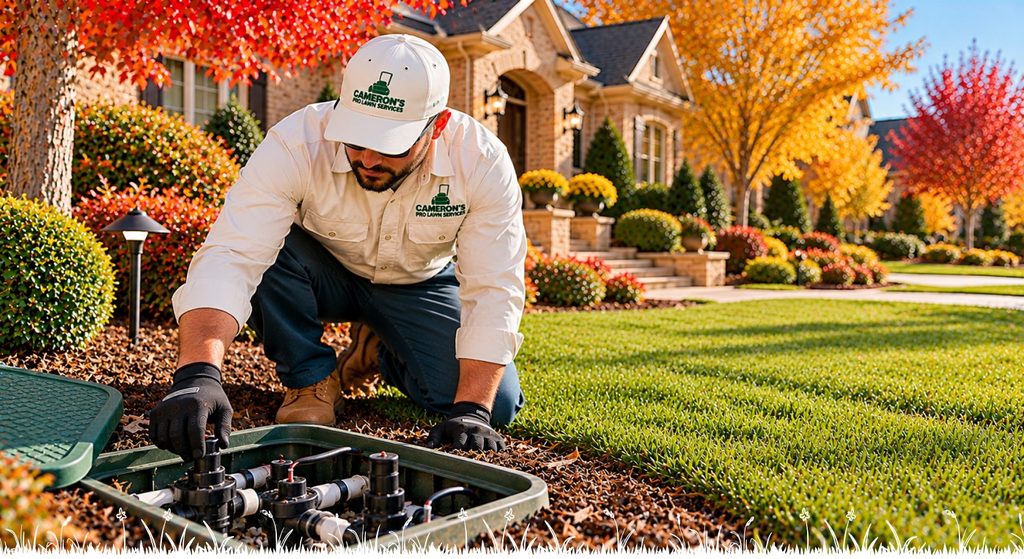
The backflow prevention assembly deserves particular attention because it may contain water in above-ground components.
Inspect the area for visible damage, leaks, exposed piping, or missing insulation.
If freezing temperatures are expected, the system should be prepared according to the manufacturer’s requirements and the specific configuration of the irrigation system.
Do not block vents, test points, or drainage components when protecting the equipment.
Adjust Your Watering Schedule
North Texas watering requirements change as winter approaches.
The North Texas Municipal Water District’s winter schedule runs from November 1 through March 31 and limits spray irrigation to no more than one day per week. The district also notes that less frequent watering or no irrigation may often be sufficient depending on conditions.
Local watering rules can vary, so homeowners should always check the requirements of their specific city or water provider.
The most important point is to stop treating the summer schedule as a permanent setting.
Watch the Weather before a Freeze
North Texas weather can change quickly.
A mild afternoon does not necessarily mean the following night will remain mild.
Before a forecast freeze, check the irrigation controller and make sure the system will not automatically run during freezing conditions.
Running sprinklers during freezing temperatures can create icy sidewalks and driveways in addition to exposing the irrigation system to unnecessary cold-weather operation.
Keep Your Lawn and Irrigation Working Together
Irrigation is only one part of seasonal lawn care.
For homeowners looking for lawn maintenance Lewisville TX, regular mowing, edging, leaf removal, turf monitoring, and seasonal adjustments can make it easier to identify irrigation problems before they become serious.
A healthy lawn also makes it easier to recognize areas that are receiving too much or too little water.
Prepare the Rest of the Property for Winter
Irrigation preparation works best when it is coordinated with the rest of the property’s seasonal maintenance.
Leaves should be removed from important areas, landscape beds should remain accessible, and overgrown vegetation should not hide sprinkler heads or irrigation components.
Professional seasonal services can help homeowners prepare their outdoor spaces as North Texas moves from fall toward winter.
Don’t Wait Until Spring to Find Problems
One of the benefits of inspecting the irrigation system before winter is that problems can be identified while the system is still accessible and operational.
If a sprinkler head is broken, a valve is leaking, or a zone has poor coverage, addressing the problem before spring can make the next growing season easier.
A quick fall inspection can also provide a useful record of what needs attention when the system is activated again.
Your Latest Cameron’s Pro Lawn Services Guide
Our latest blog, How to Design Holiday Lighting for North Texas Homes, explains how homeowners can create balanced holiday displays using rooflines, feature trees, entryways, landscape features, and professional installation.
Related Reading
For another guide to common irrigation problems, why are Some Sprinkler Zones Not Working? Common Irrigation Problems to Check explains how damaged sprinkler heads, pressure issues, leaks, and uneven coverage can affect different areas of a property.
Frequently Asked Questions
Should I turn off my irrigation system in winter?
Automatic irrigation often needs to be reduced significantly during winter, but homeowners should consider current weather, rainfall, soil moisture, plant needs, and local watering requirements before shutting the system off completely.
When should I prepare my irrigation system for winter?
Late October and November are good times to review irrigation settings and prepare exposed components before freezing temperatures arrive.
Does North Texas require irrigation winterization?
Preparation is recommended because freezing temperatures can damage exposed irrigation components. The exact winterization steps depend on the system and the expected freezing conditions.
Do I need to blow out my sprinkler system?
Not necessarily. A full compressed-air blowout is not automatically required for every North Texas system. The appropriate approach depends on the system’s design and exposure to freezing conditions.
What irrigation components are most vulnerable to freezing?
Above-ground components such as backflow prevention assemblies, exposed pipes, valves, and fittings can be vulnerable when water inside them freezes.
Should I change my irrigation controller settings?
Yes. Review the controller as temperatures cool and rainfall changes. A summer watering schedule may provide more water than the landscape needs during late fall and winter.
How often should I water during winter?
There is no single schedule for every property. North Texas Municipal Water District’s winter schedule limits spray irrigation to no more than one day per week, while actual landscape needs may be less frequent depending on rainfall and soil conditions.
How can I tell if my sprinkler system has a problem?
Look for broken heads, leaks, poor pressure, uneven coverage, water pooling, dry patches, or sprinklers spraying sidewalks and driveways.
Keep Your Irrigation Ready for North Texas Winter
Winter irrigation preparation does not have to be complicated.
Start by reviewing the controller, checking soil moisture, monitoring rainfall, inspecting sprinkler heads, looking for leaks, and protecting vulnerable exposed components.
As temperatures continue to fall, reduce unnecessary irrigation and follow the watering requirements that apply to your property.
Preparing the system before a hard freeze can help reduce the risk of damage and make it easier to return to normal irrigation when warmer weather arrives.
Cameron’s Pro Lawn Services provides irrigation, lawn maintenance, landscaping, seasonal services, sod installation, and holiday lighting for homeowners and property managers throughout Lewisville and surrounding North Texas communities.
Ready to prepare your irrigation system for winter? Contact Cameron’s Pro Lawn Services for a free quote.

Cameron's Lawn Care Service
Explore helpful lawn care, landscaping, irrigation, sod installation, seasonal maintenance, and outdoor property care tips from our team.
See All Blog