
A landscape redesign can completely change how a property looks, but appearance should not be the only consideration. Before installing new plants, mulch, edging, sod, or other landscape features, homeowners should understand how water moves across the property.
This is especially important in North Texas, where heavy rainfall and dense soil can create drainage challenges. Poor drainage planning may lead to standing water, washed-out mulch, soil erosion, struggling plants, and wet areas in the lawn. Professional landscape services should therefore consider both the appearance of an outdoor space and how the property handles water.
Understand Where Water Currently Flows
Before changing a landscape, it is important to understand the property’s existing drainage pattern. Water naturally follows low areas and slopes, so even relatively small changes to grading can influence where rainfall travels.
Homeowners can often learn a lot by inspecting their property during or shortly after heavy rain. Areas where water collects, soil washes away, or mulch moves repeatedly may indicate drainage concerns.
When planning professional landscape services, these existing conditions should be considered before new beds, plants, borders, or other features are installed.
North Texas Soil Can Affect Drainage
Soil conditions play an important role in how quickly water moves through a property. Dense soil may absorb water more slowly than expected, particularly during periods of heavy rainfall.
When rainfall arrives faster than the soil can absorb it, water can begin moving across the surface or collecting in lower areas.
This can become an important consideration when creating new landscape beds. Simply adding plants or mulch to a consistently wet area may not solve the underlying issue.
A landscape redesign should therefore take existing soil and drainage conditions into account instead of focusing only on plant selection and visual layout.
New Landscape Beds Can Change Water Movement
Adding or expanding landscape beds may change the direction water takes across a yard. Raised soil, edging, borders, and other materials can sometimes redirect runoff toward another section of the property.
This is why drainage should be considered before construction begins rather than after the landscape is completed.
Thoughtful maintenance landscape services can also help homeowners monitor landscape beds over time for signs of erosion, mulch displacement, weed growth, or other changes that may indicate water is not moving through the area as intended.
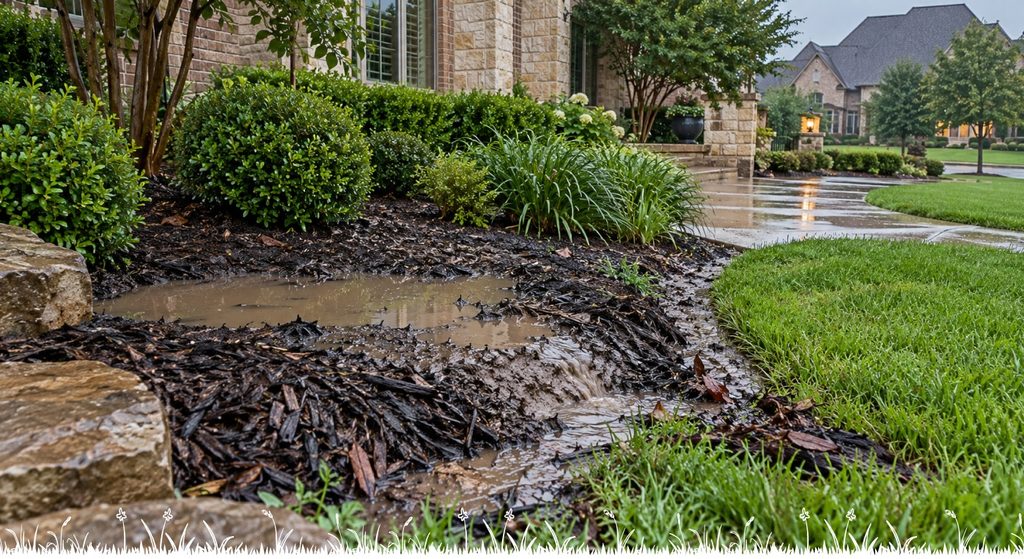
Poor Drainage Can Wash Mulch Out of Beds
If mulch repeatedly disappears from the same part of a landscape bed, water movement may be contributing to the problem.
Heavy rain or irrigation runoff can carry lightweight landscape material downhill, especially where beds are located on slopes or near areas that receive concentrated water.
Replacing the mulch may improve appearance temporarily, but the same problem can return if the underlying water flow remains unchanged.
Drainage planning can help determine whether grading, edging, water direction, or another landscape element needs attention before the bed is refreshed again.
Irrigation Should Work With the Landscape Design
Rainfall is not the only source of water that needs to be considered. Sprinkler systems can also influence moisture levels around landscape beds, lawns, and other outdoor features.
When a landscape is redesigned, sprinkler coverage may need to be evaluated. New plants, expanded beds, changed borders, or other features can alter where water is needed.
Existing sprinkler heads may also spray directly onto hardscape, oversaturate a new bed, or provide insufficient coverage to newly landscaped areas.
Coordinating landscaping with irrigation services can help ensure that the watering system better matches the updated outdoor layout.
Standing Water Can Affect Lawn and Plant Areas
A small low spot may not seem important during dry weather, but it can become much more noticeable after heavy rainfall.
Repeated standing water can leave sections of a lawn wet while surrounding turf dries normally. Landscape plants may also experience very different conditions depending on where water collects.
Before selecting plants or installing new turf, homeowners should consider whether each area receives appropriate sunlight and moisture.
If a section of the yard regularly stays wet, choosing plants based only on appearance without considering drainage conditions may lead to unnecessary maintenance later.
Fall Is a Useful Time to Observe Drainage Problems
Seasonal changes can reveal landscape issues that were less obvious during summer. Falling leaves may collect in drainage paths, rainfall patterns change, and cooler conditions can affect how quickly wet areas dry.
This is also a good time to inspect landscape beds, lawn edges, low areas, and places where water moves toward walkways or other parts of the property.
Seasonal maintenance and drainage planning can work together. In our latest guide, Why Winter Weeds Start in Fall: A North Texas Lawn Guide, we explain how changing fall conditions can also influence weeds, turf, moisture, and overall seasonal lawn care.

Plan Drainage Before Installing New Sod
If a landscape redesign also includes new turf, drainage becomes even more important. Sod needs good soil contact and consistent moisture during establishment, but consistently waterlogged areas can create different problems.
Correcting obvious low areas after sod has already been installed may require disturbing newly established turf. That is why grading and water movement should be considered earlier in the project.
When new turf is part of a larger landscape improvement, professional sod installation services can be coordinated with grading, irrigation, and landscape preparation.
Why Drainage Planning Should Come Before Appearance
Homeowners often begin a landscape project by thinking about plants, colors, mulch, borders, and the overall style they want. Those decisions are important, but the property also needs to function properly.
A beautiful landscape may become difficult to maintain if rainfall repeatedly washes mulch away, creates standing water, erodes soil, or leaves some sections much wetter than others.
Planning water movement first provides a stronger foundation for decisions about beds, turf, plants, irrigation, and other landscape features.
For homeowners researching lawn maintenance Lewisville TX, it is also worth remembering that lawn appearance is connected to the larger property. Drainage, landscaping, irrigation, and ongoing maintenance can all influence how turf performs.
Frequently Asked Questions
Should drainage be checked before landscaping?
Yes. Understanding where water currently flows can help identify low areas, runoff paths, erosion, and other conditions that may influence the new landscape design.
Can landscaping cause drainage problems?
Changes to grading, raised beds, edging, soil levels, and other landscape features can affect how water moves through a yard. That is why drainage should be considered during the planning stage.
Why does mulch keep washing out of my landscape beds?
Heavy rainfall, slopes, concentrated runoff, irrigation, insufficient edging, or drainage patterns can contribute to mulch displacement.
Can irrigation affect landscape drainage?
Yes. Sprinkler coverage and watering schedules affect how much moisture different areas receive. Landscape changes may also require existing irrigation coverage to be reviewed.
Should drainage be considered before sod installation?
Yes. Grading and water movement are important considerations before new sod is installed because correcting low areas later may require disturbing the turf.
Build Your Landscape on a Better Foundation
A successful landscape redesign should do more than improve curb appeal. Considering drainage, soil conditions, grading, irrigation, and water movement before installation can help create an outdoor space that is easier to maintain over time.
Cameron’s Pro Lawn Services provides professional landscaping services throughout Lewisville and surrounding North Texas communities, helping homeowners improve and maintain their outdoor spaces.
Planning a landscape update? Contact Cameron’s Pro Lawn Services today for a free quote.

Cameron's Lawn Care Service
Explore helpful lawn care, landscaping, irrigation, sod installation, seasonal maintenance, and outdoor property care tips from our team.
See All Blog