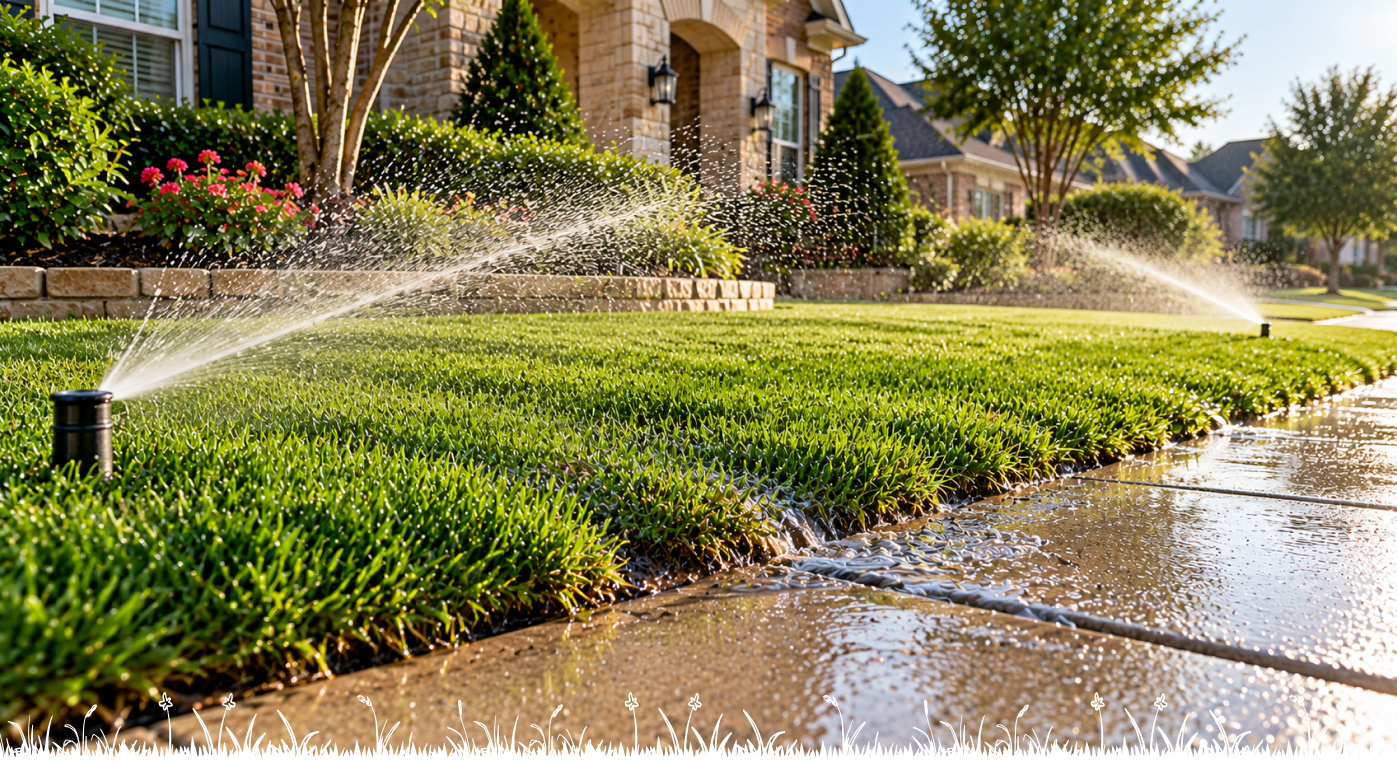
Keeping a lawn green in North Texas does not necessarily mean watering it every day. In fact, watering too frequently can create problems just as easily as not watering enough. High summer temperatures, changing rainfall, soil conditions, grass type, shade, and the efficiency of your irrigation system all influence how much water a lawn actually needs.
The goal is not simply to run the sprinklers more often. A better approach is to make sure water reaches the root zone efficiently without creating unnecessary runoff, consistently wet soil, or dry sections.
Combining professional irrigation and lawn service can also make it easier to evaluate both sides of the problem: how water is being delivered and how the grass is responding.
There Is No Single Watering Schedule for Every Lawn
Two homes on the same street can have different watering requirements.
One property may receive full sun throughout the day, while another has significant tree coverage. Soil drainage, grass type, slope, irrigation design, and recent rainfall can also change how quickly a lawn dries.
This is why copying a neighbor’s sprinkler schedule may not produce the same results.
Instead, homeowners should look at how their own lawn responds between watering cycles and adjust irrigation accordingly.
Deep Watering Can Be More Useful Than Frequent Light Watering
Running an irrigation system for a short period every day may wet the surface without delivering enough moisture deeper into the soil.
When conditions allow, deeper and less frequent watering can encourage moisture to reach farther into the root zone.
However, simply increasing sprinkler runtime is not always the answer. If the soil cannot absorb water quickly enough, longer watering cycles can result in runoff instead of deeper watering.
A professional irrigation service and repair can help identify coverage, pressure, controller, sprinkler-head, or system issues that may prevent water from reaching the lawn efficiently.
North Texas Soil Can Change How You Should Water
Soil conditions matter because they influence how quickly water enters and moves through the ground.
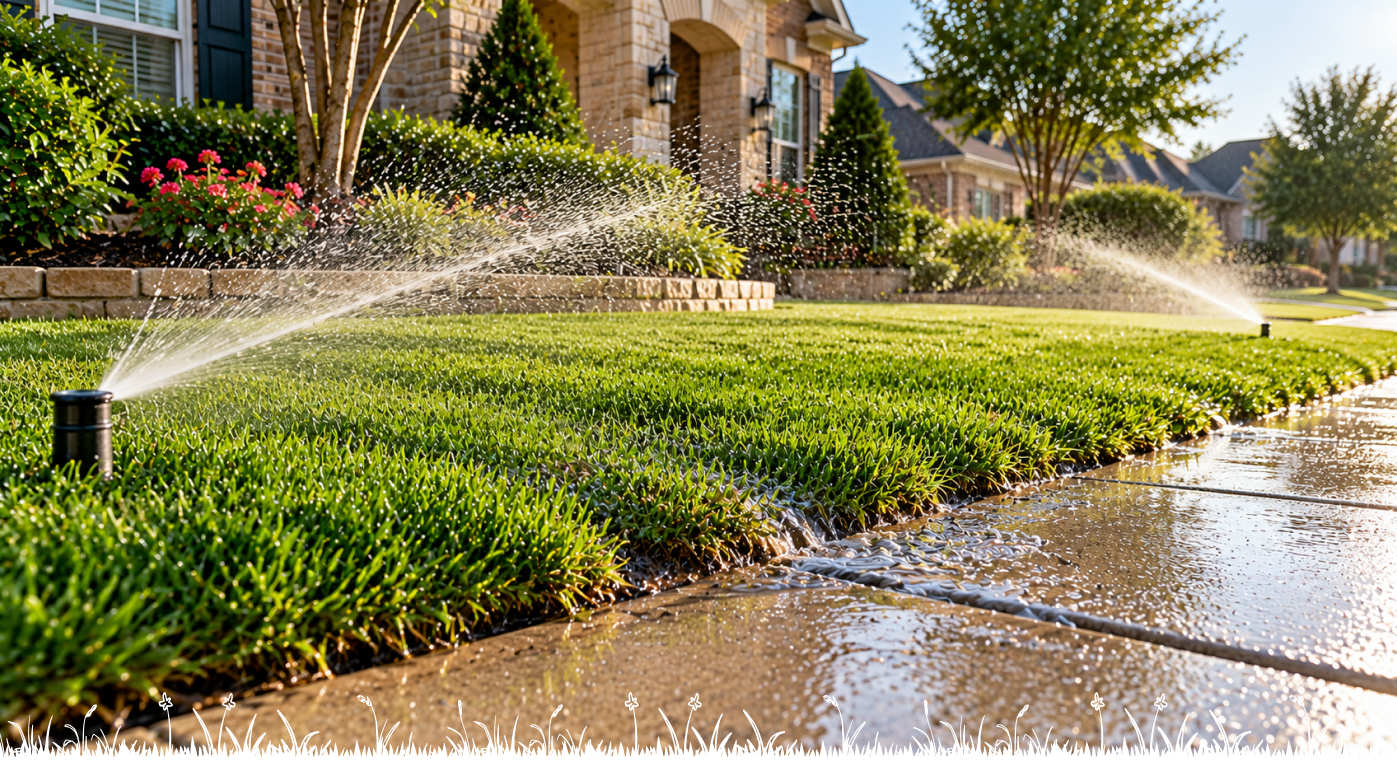
When soil absorbs water slowly, applying too much at once can cause water to collect on the surface or move toward sidewalks, driveways, and streets.
In these situations, dividing watering into shorter cycles with time between them may allow more moisture to soak into the ground instead of running away from the lawn.
The objective should be efficient absorption rather than simply increasing total sprinkler runtime.
Watch the Lawn Instead of Relying Only on the Controller
An automatic controller is useful, but the lawn itself can provide important information.
Grass that repeatedly looks dry, loses color, or struggles in the same locations may not be receiving water effectively. On the other hand, constantly wet soil, standing water, or unusually soft areas can indicate excessive watering or another irrigation issue.
Regular lawn maintenance services can make these changes easier to notice because the condition of the turf is being observed consistently rather than only when a serious problem develops.
Rainfall Should Change Your Irrigation Routine
One of the easiest ways to waste water is allowing the irrigation system to follow the same schedule regardless of recent weather.
After meaningful rainfall, the soil may already contain enough moisture for the lawn. Continuing the normal irrigation schedule immediately afterward can result in unnecessary watering.
North Texas weather can change quickly, so irrigation schedules should not always remain identical throughout the entire season.
Homeowners should consider recent rainfall, current temperatures, and visible lawn conditions when deciding whether additional watering is necessary.
Morning Is Usually a Practical Time to Water
Timing can affect how efficiently irrigation water is used.
Watering during the hotter part of the day can increase evaporation. Watering when temperatures are lower generally gives moisture more opportunity to reach the soil before intense daytime heat arrives.
Early watering also gives homeowners an opportunity to observe the system occasionally and identify unusual spray patterns, damaged components, or water flowing where it should not.
The most important point is consistency and efficiency rather than assuming that simply adding more watering time will improve the lawn.
Uneven Coverage Can Make Your Watering Schedule Misleading
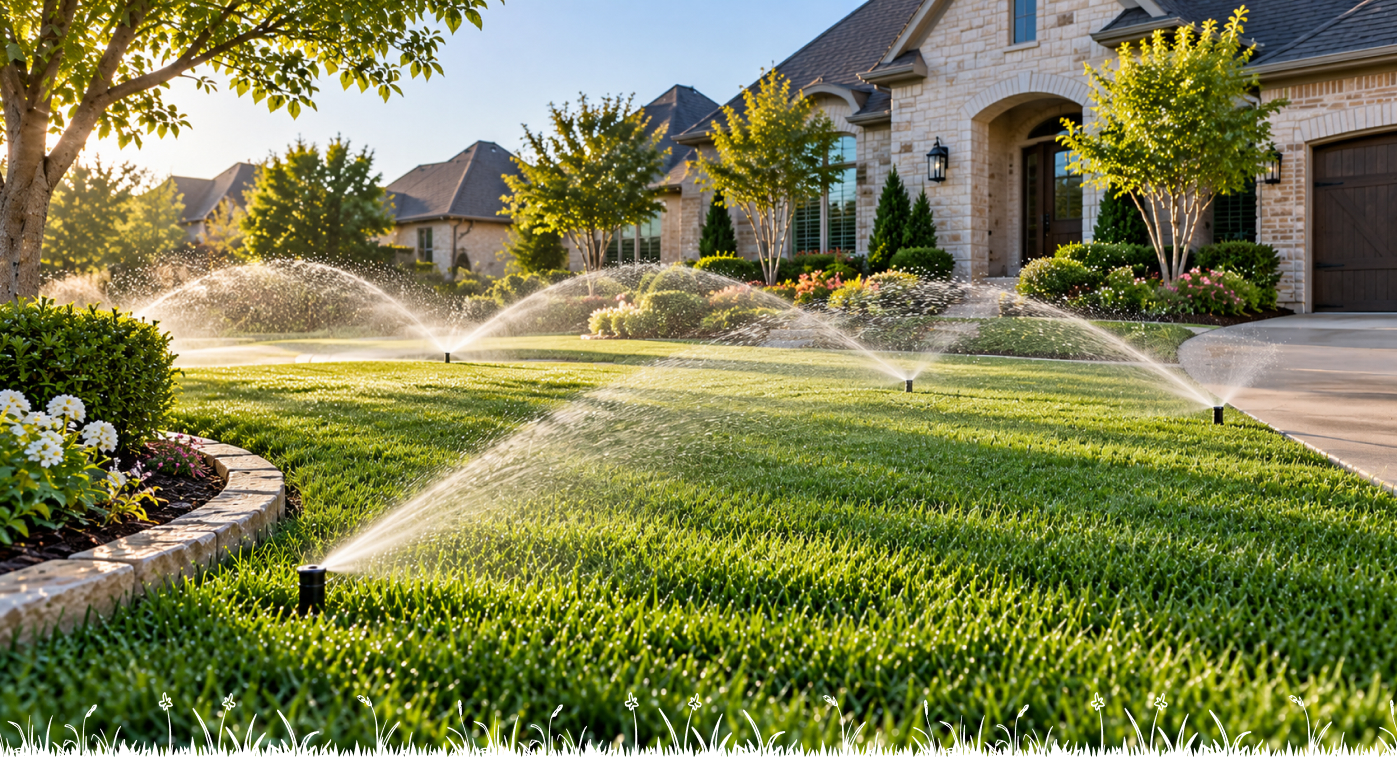
Imagine that most of the lawn receives adequate water, but one section consistently receives less.
Increasing the watering time for the entire system may give the healthy areas more water while the original dry section still struggles. The real issue may be sprinkler placement, spray pattern, pressure, obstruction, or another coverage problem.
This is where irrigation and turf care should be considered together. A healthy-looking landscape depends not only on how long the sprinklers run but also on where the water actually goes.
Professional landscaping services can also help maintain surrounding beds, shrubs, and landscape areas whose watering requirements may differ from those of the lawn.
More Water Is Not Always Better for Your Lawn
When grass begins looking stressed, increasing sprinkler runtime can seem like the obvious solution. But appearance alone does not prove that the lawn needs more water.
Our recent guide, Why Does Your Lawn Have Bare Spots? 7 Common Causes in North Texas, explains that irrigation is only one possible cause of poor turf growth. Compacted soil, traffic, shade, mowing practices, and seasonal stress can also contribute to thin or bare areas.
That is why identifying the cause is more useful than automatically increasing watering.
Adjust Watering as Conditions Change
A schedule that works during one part of the year may not be appropriate throughout every season.
Temperature, rainfall, daylight, grass growth, and soil moisture can all change. Periodically reviewing the irrigation schedule can help prevent unnecessary watering while still supporting healthy turf.
Seasonal changes can also affect the rest of the property. Professional seasonal services can help keep lawns and landscapes maintained as outdoor conditions change throughout the year.
Irrigation and Lawn Health Should Be Evaluated Together
A sprinkler system can appear to be running correctly while the lawn still develops dry areas. Likewise, stressed grass does not automatically mean the irrigation system is malfunctioning.
Looking at sprinkler coverage, soil conditions, lawn appearance, weather, and maintenance together provides a clearer picture.
For homeowners looking for dependable lawn maintenance Lewisville TX services, Cameron’s Pro Lawn Services can help with ongoing lawn care while also addressing irrigation and other outdoor maintenance needs.
Frequently Asked Questions
How often should I water my lawn in North Texas?
There is no single schedule that works for every property. Weather, grass type, soil, shade, rainfall, and irrigation efficiency can all affect watering needs.
Is it better to water a lawn every day?
Not necessarily. Frequent light watering may only wet the upper portion of the soil. The appropriate frequency depends on lawn and soil conditions as well as local watering restrictions.
Why does water run off my lawn before the sprinklers finish?
Runoff can occur when water is applied faster than the soil can absorb it. Slopes, compacted soil, sprinkler output, and watering duration can all contribute.
Should I run my sprinklers after it rains?
Additional irrigation may not be necessary when rainfall has already provided sufficient moisture. Check soil and lawn conditions before automatically continuing the regular schedule.
Why is part of my lawn dry even though I water regularly?
Uneven sprinkler coverage, obstructions, pressure problems, soil conditions, shade, or other turf issues can cause certain areas to respond differently.
Get More from Every Watering Cycle
Healthy lawn care is not about using the most water. It is about delivering water efficiently and adjusting lawn care to the conditions of the property.
Cameron’s Pro Lawn Services provides professional irrigation and lawn maintenance services throughout Lewisville and surrounding North Texas communities. Whether you need help with irrigation performance, routine lawn maintenance, landscaping, sod installation, or seasonal property care, our team can help keep your outdoor space properly maintained.
Contact Cameron’s Pro Lawn Services today to request a free quote.

Cameron's Lawn Care Service
Explore helpful lawn care, landscaping, irrigation, sod installation, seasonal maintenance, and outdoor property care tips from our team.
See All Blog