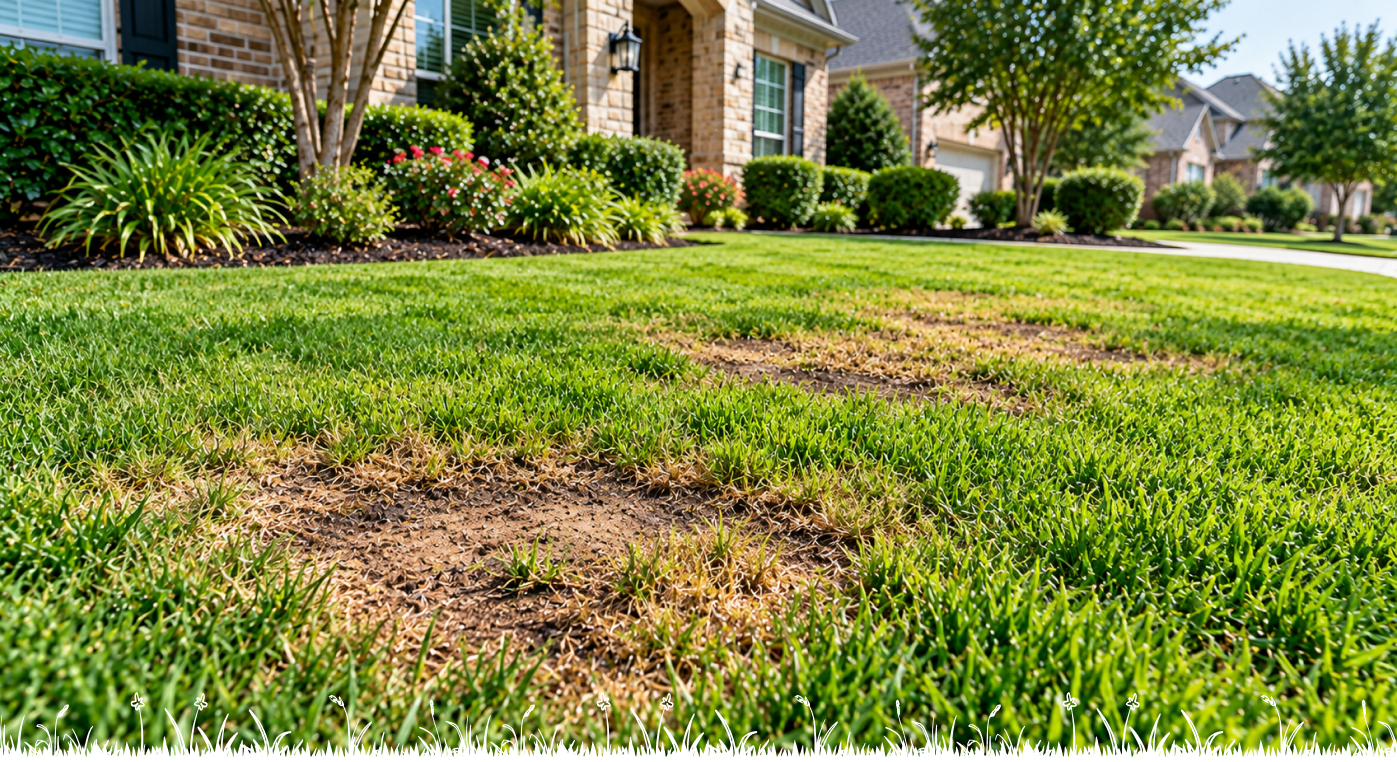
A lawn can look healthy overall while still developing thin or completely bare areas. In North Texas, high temperatures, inconsistent watering, compacted soil, heavy foot traffic, and other environmental conditions can make it difficult for grass to grow evenly across the property.
Bare spots are not always caused by a single problem. Understanding what is affecting the grass is the first step toward improving its appearance and preventing the same areas from becoming thin again.
For homeowners who want more consistent care throughout the growing season, a professional full lawn service care approach can help address mowing, lawn condition, seasonal needs, and other factors that influence healthy growth.
Uneven Watering Across the Lawn
One of the first things to check when bare spots appear is irrigation coverage. Some areas of the lawn may receive plenty of water while others remain consistently dry.
Sprinkler heads that are blocked, damaged, poorly positioned, or operating with insufficient pressure can leave sections without adequate moisture. Over time, grass in those areas may become stressed, thin out, and eventually disappear.
Professional irrigation services can help identify coverage problems and determine whether the sprinkler system is distributing water properly.
Compacted Soil Can Restrict Grass Growth
Soil becomes compacted when it is repeatedly walked on, driven over, or exposed to other heavy activity. Compacted soil contains less space for air, water, and roots to move through.
Grass growing in compacted areas may struggle to develop a strong root system. This is why bare patches often appear near sidewalks, driveways, gates, play areas, and frequently used sections of the yard.
Seasonal lawn practices can help address changing soil and turf conditions throughout the year.
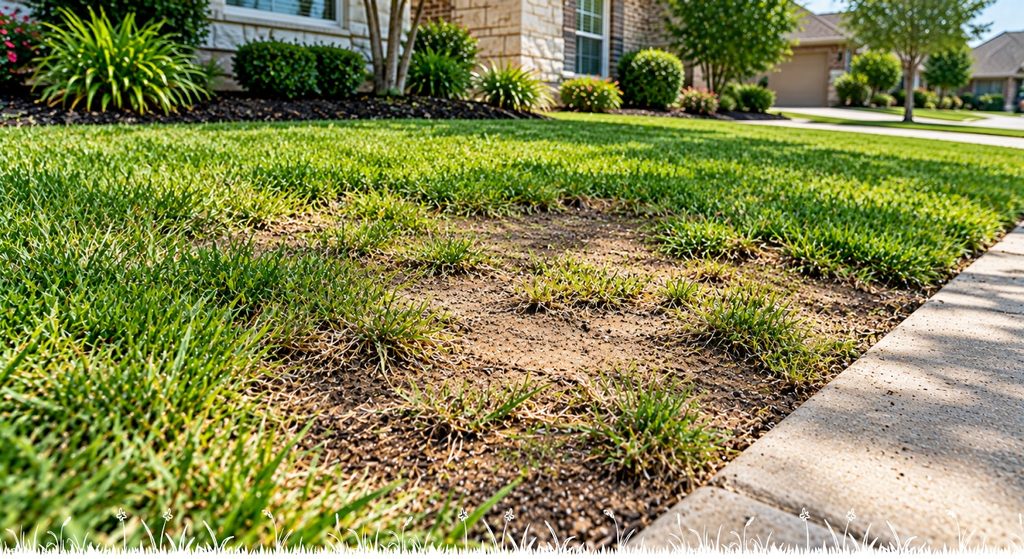
Heavy Foot Traffic Damages the Turf
Repeated foot traffic can gradually weaken healthy grass. Children playing in the same area, pets following a regular path, or people repeatedly crossing the lawn can place continuous stress on the turf.
Once grass becomes damaged, compacted soil can make recovery even more difficult.
A consistent home lawn care service can help homeowners monitor problem areas and maintain the lawn before small patches develop into larger bare sections.
Too Much Shade Can Thin the Grass
Grass needs sufficient sunlight to produce healthy growth. Areas beneath mature trees, beside fences, or near the shaded side of a home may receive significantly less sunlight than the rest of the lawn.
When sunlight is limited, grass can gradually become thinner even when watering and mowing practices are consistent.
Nearby trees and shrubs can also expand over time, creating more shade than the lawn received in previous seasons. Professional landscaping services can help keep surrounding landscape areas maintained while considering how plant growth affects the lawn.
Mowing the Grass Too Short
Cutting grass extremely short may seem like an easy way to reduce mowing frequency, but it can place additional stress on the lawn.
Grass blades help the plant produce energy. Removing too much of the blade at once can weaken the turf, particularly during hot North Texas weather. Repeatedly mowing stressed grass too low may eventually contribute to thinning or bare areas.
The correct mowing approach can vary depending on grass type, season, weather, and current lawn condition.
Heat and Seasonal Stress
North Texas lawns experience significant seasonal changes. Extended heat, dry periods, changing rainfall, and periods of heavy rain can all affect turf health.
An area that is already struggling because of compacted soil, insufficient irrigation, or heavy traffic may show damage more quickly during periods of environmental stress.
Our recent article, Why Is Your New Sod Turning Yellow after Installation?, also explains how watering, heat, soil contact, and establishment conditions can affect newly installed turf. Many of those same environmental factors are important when evaluating stressed areas of an established lawn.
Lawn Problems Can Spread When Left Unaddressed
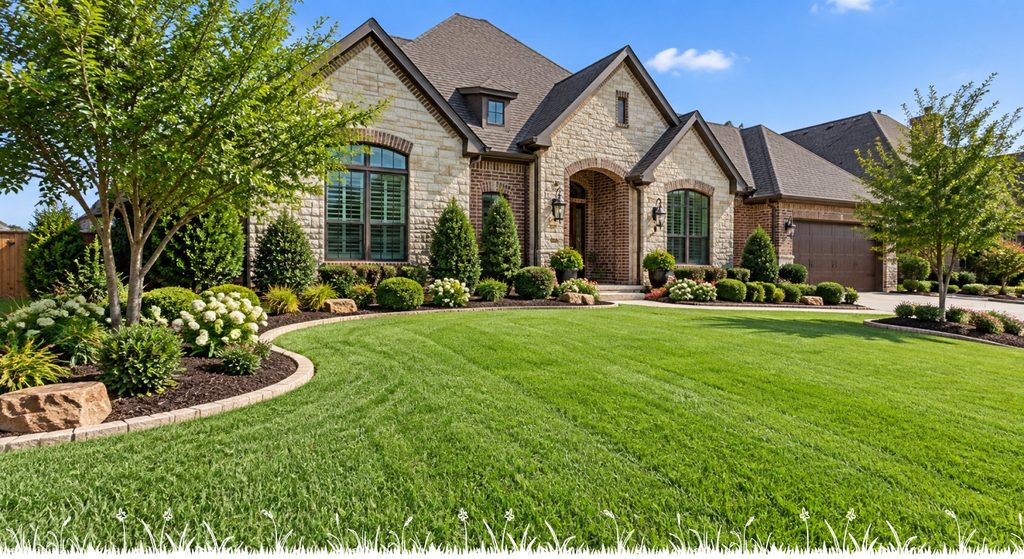
A small bare patch may initially seem minor, but leaving the underlying cause unresolved can allow the affected area to become larger.
For example, poor sprinkler coverage may continue drying the same section, while regular traffic may continue compacting already stressed soil. Simply adding seed or sod without addressing the original problem may only provide temporary improvement.
Consistent lawn maintenance services make it easier to monitor changes across the property and address routine lawn needs throughout the growing season.
Look at the Pattern of the Bare Spots
The location and shape of bare areas can provide useful clues.
Bare sections along walkways may point toward traffic or compaction. Dry patches in specific sprinkler zones may indicate irrigation coverage problems. Thin grass beneath trees may be related to shade, while widespread thinning can suggest that several lawn conditions are contributing at the same time.
Instead of treating every bare area the same way, identifying the likely cause can help determine the most appropriate next step.
Consistent Lawn Care Can Help Prevent Future Bare Areas
Healthy turf requires more than occasional mowing. Watering, mowing height, seasonal conditions, soil health, traffic, and surrounding landscaping can all influence how evenly grass grows.
Homeowners searching for dependable lawn maintenance Lewisville TX services can work with Cameron’s Pro Lawn Services to keep their lawns maintained throughout the season and identify developing problem areas before they become more noticeable.
Frequently Asked Questions
Why is my lawn getting random bare spots?
Bare spots can develop because of inconsistent watering, compacted soil, excessive traffic, shade, mowing stress, seasonal weather, or a combination of several conditions.
Will grass grow back in a bare spot?
It depends on why the grass disappeared. If the underlying problem is corrected and growing conditions are suitable, the area may recover or can be repaired using an appropriate lawn restoration method.
Can poor irrigation cause bare patches?
Yes. Areas that consistently receive too little water can become stressed and thin. Checking sprinkler coverage can help determine whether irrigation is contributing to the problem.
Why is grass thin under my trees?
Tree canopies can limit sunlight, while tree roots may also compete with grass for water and nutrients. These conditions can make maintaining dense turf beneath mature trees more difficult.
Should I put new sod over every bare area?
Not necessarily. The cause of the bare spot should be identified first. Installing new turf without correcting irrigation, soil, shade, or traffic problems may allow the same issue to return.
Need Help Maintaining Your Lawn?
Bare spots can make an otherwise healthy property look uneven and unfinished. Cameron’s Pro Lawn Services provides professional lawn maintenance for homeowners throughout Lewisville and surrounding North Texas communities.
From routine lawn care to irrigation, landscaping, seasonal services, and sod installation, our team can help keep your outdoor space clean, healthy, and well maintained.
Contact Cameron’s Pro Lawn Services today to request a free quote.

Cameron's Lawn Care Service
Explore helpful lawn care, landscaping, irrigation, sod installation, seasonal maintenance, and outdoor property care tips from our team.
See All Blog