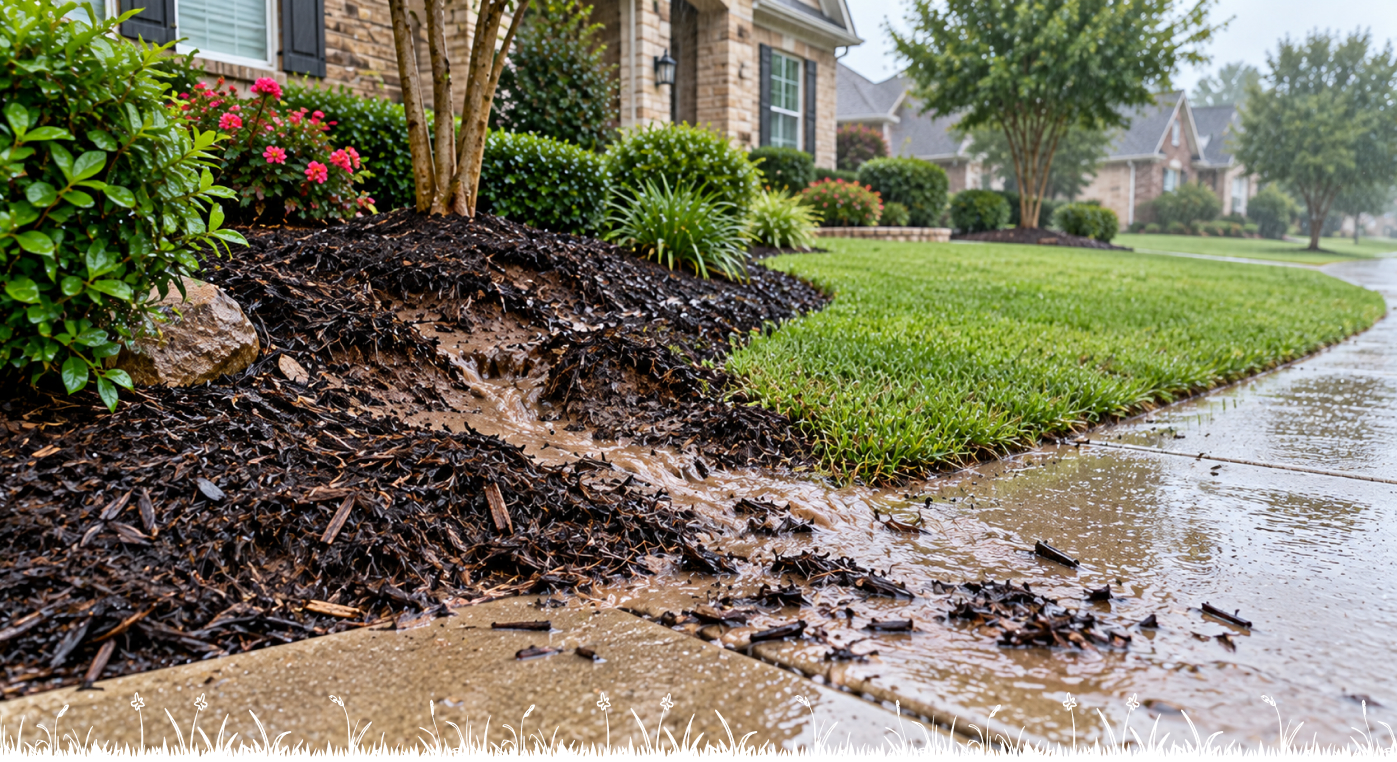
Mulch can give landscape beds a clean, finished appearance while helping cover exposed soil around shrubs, plants, and other landscape features. But after heavy rain or irrigation, homeowners may notice mulch collecting on sidewalks, spreading into the lawn, or disappearing from certain sections of the bed.
Repeated mulch washout is often a sign that water is moving through the landscape bed too quickly. Drainage, slopes, irrigation runoff, edging, and bed design can all contribute. Professional landscape maintenance services can help identify these conditions while keeping landscape beds clean and properly maintained.
Here are seven common reasons mulch may keep washing out of your landscape beds.
Heavy Rain Can Move Mulch Quickly
North Texas properties can experience periods of heavy rainfall that send a large amount of water across landscape beds in a short time.
When water moves faster than the soil can absorb it, runoff may carry loose mulch toward the lowest part of the property.
After heavy rain, inspect the beds and look for:
- Mulch collecting along sidewalks
- Exposed soil
- Small channels through the bed
- Mulch gathering in low areas
- Water flowing from the lawn into beds
The location of displaced mulch can often help show which direction the water is traveling.
Sloped Landscape Beds Encourage Runoff
Landscape beds located on slopes are naturally more vulnerable to mulch movement.
Water follows gravity, so mulch on an inclined bed can gradually move downhill during rain or irrigation. The steeper the slope, the more noticeable the problem may become.
Professional maintenance landscaping services can help keep sloped beds, edges, mulch, shrubs, and surrounding landscape areas maintained while recurring runoff problems are identified.
Simply replacing the missing mulch without addressing why it keeps moving may result in the same problem after the next heavy rain.
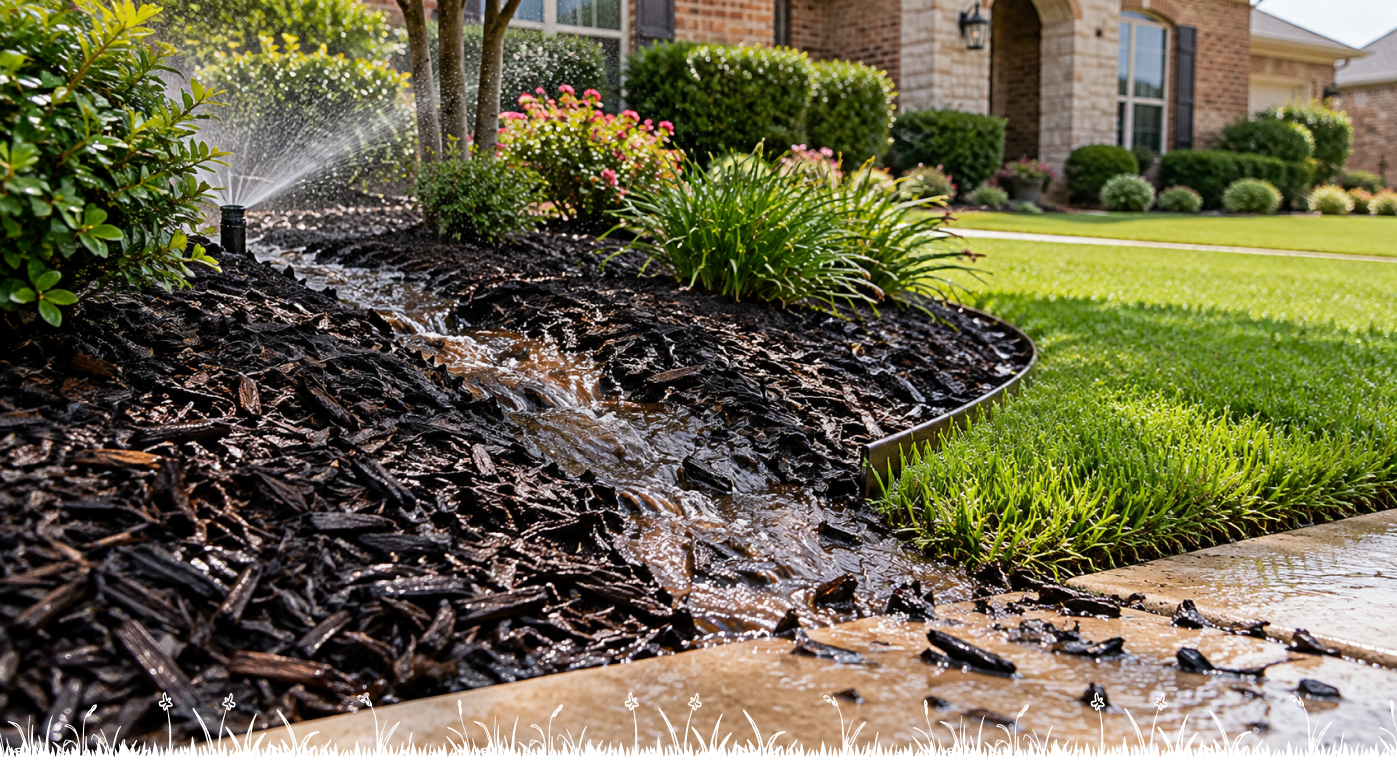
Irrigation May Be Spraying Too Much Water Into the Bed
Your sprinkler system may also contribute to mulch washout.
A sprinkler head aimed directly into a landscape bed can move lightweight mulch, especially when the spray is strong or the watering cycle creates runoff.
Run each irrigation zone and watch how water interacts with the landscape beds.
Look for:
- Sprinklers spraying directly onto mulch
- Water pooling in beds
- Strong streams hitting exposed soil
- Runoff flowing toward sidewalks
- Mulch moving while sprinklers operate
Professional irrigation services can help identify sprinkler coverage or watering issues that may be contributing to repeated mulch movement.
Landscape Edging May Not Be Holding the Mulch
Defined edges help separate landscape beds from lawns, sidewalks, and other surrounding areas.
When an edge becomes shallow, damaged, or poorly defined, mulch can spread beyond the bed more easily during rainfall or irrigation.
Check whether mulch consistently escapes from the same section. If it does, the condition of the edge may be contributing to the problem.
Clean, maintained edges also improve the overall appearance of the property and make it easier to identify when mulch begins moving outside its intended area.
Drainage Problems May Be Directing Water Through the Bed
Sometimes the mulch is not the main problem at all.
Water may be entering the landscape bed from another part of the property. Roof runoff, lawn grading, nearby hard surfaces, or low areas can direct larger amounts of water through a bed than it can reasonably handle.
After rainfall, observe where the water comes from rather than only looking at where the mulch ends up.
Signs of a possible drainage issue include:
- Standing water
- Soil erosion
- Repeated channels through mulch
- Extremely wet areas
- Mulch consistently collecting in one location
Understanding the water path can make it easier to determine why the same bed keeps losing mulch.
Too Much or Too Little Mulch Can Create Problems
Mulch depth also affects how a landscape bed performs.
A very thin layer may expose soil quickly when material shifts. On the other hand, simply adding large amounts of mulch every time washout occurs does not correct drainage, irrigation, or slope problems.
The condition of the existing bed should be evaluated before additional material is added.
Our recent guide, Why Are Your Sprinkler Heads Not Popping up Properly?, explains how pressure, damaged components, valves, leaks, and surrounding landscape growth can affect irrigation performance.
If mulch movement appears after sprinkler operation rather than rainfall, inspecting the irrigation system can be especially useful.

Landscape Beds Need Regular Seasonal Attention
Landscape beds change throughout the year.
Mulch breaks down, plants grow, edges lose definition, leaves and debris accumulate, and seasonal weather can alter how water moves through the property.
Regular seasonal services can help address cleanup, bed maintenance, debris, and changing property conditions before smaller issues become more noticeable.
Watch What Happens During Rain and Irrigation
One of the easiest ways to understand recurring mulch washout is to observe the property while water is actually moving through it.
During safe conditions, look at the direction of runoff and note where water enters and leaves each bed. Then run the irrigation system separately and compare what happens.
This can help distinguish between rainfall-related drainage problems and sprinkler-related issues.
Repeatedly replacing mulch without understanding the cause may improve the appearance temporarily, but the problem can return when the same water conditions occur again.
Keep Your Lawn and Landscape Maintained Together
Landscape beds do not function separately from the rest of the property. Lawn grading, irrigation, plant growth, drainage, and seasonal conditions can all influence how well beds retain mulch.
Keeping the surrounding lawn and landscape maintained makes it easier to notice changes before they become larger problems.
Homeowners searching for lawn maintenance Lewisville TX can turn to Cameron’s Pro Lawn Services for professional landscaping, lawn maintenance, irrigation, sod installation, and seasonal services throughout Lewisville and surrounding North Texas communities.
Frequently Asked Questions
Why does my mulch wash away every time it rains?
Heavy runoff, sloped beds, drainage conditions, or weak landscape edging can allow mulch to move during rainfall.
Can sprinklers wash mulch out of landscape beds?
Yes. Sprinklers aimed directly into beds or excessive irrigation runoff can move mulch away from its intended location.
Should I just add more mulch after it washes away?
Replacing missing mulch may improve appearance, but recurring washout should also be investigated to determine whether drainage, irrigation, slopes, or edging are contributing.
Can landscape edging help keep mulch in place?
Defined and properly maintained edges can help contain mulch, although edging alone may not solve significant runoff or drainage problems.
Why does mulch always collect in the same area?
The area may be a low point or part of the natural path water follows across the property. Observing runoff during rainfall can help identify the cause.
Keep Your Landscape Beds Clean and Well Maintained
Mulch that repeatedly washes out is often connected to water movement rather than the mulch itself. Heavy rain, slopes, irrigation, drainage, edging, and changing landscape conditions can all contribute.
Cameron’s Pro Lawn Services provides professional landscaping, lawn maintenance, irrigation, sod installation, and seasonal services throughout Lewisville and surrounding North Texas communities. Consistent landscape care can help keep beds cleaner, more organized, and better maintained throughout the year.

Cameron's Lawn Care Service
Explore helpful lawn care, landscaping, irrigation, sod installation, seasonal maintenance, and outdoor property care tips from our team.
See All Blog