
Installing fresh sod can quickly improve the appearance of a thin, patchy, or damaged lawn. However, new sod needs the right conditions after installation to begin establishing roots and developing into a healthy lawn.
If your new sod still looks weak, loose, dry, or uneven after installation, there may be an underlying problem. Proper preparation, watering, irrigation coverage, and early lawn care all play an important role when installing sod on a North Texas property.
Here are some common problems to check if your new sod does not appear to be growing or establishing properly.
The Soil Was Not Properly Prepared
Healthy sod establishment begins before the first piece of sod is installed.
Placing new sod over poorly prepared, compacted, or uneven soil can make it more difficult for roots to establish contact with the ground underneath. Existing grass, weeds, debris, and other material can also create a barrier between the sod and soil.
Proper preparation may include:
- Removing existing grass and weeds
- Clearing debris from the installation area
- Preparing and leveling the soil
- Correcting obvious low or uneven areas
- Creating good contact between the sod and soil
Professional lawn sod installation services should focus on preparing the installation area before laying fresh sod.
Good preparation gives the new lawn a stronger foundation from the beginning.
The Sod Is Not Making Good Contact with the Soil
New sod needs direct contact with the prepared soil underneath it.
If sections are sitting above uneven soil, overlapping, or leaving gaps, roots may have difficulty reaching the ground. Those areas can dry faster and may remain loose while surrounding sections begin establishing.
Walk around the lawn carefully and look for sections that appear raised, separated, or noticeably different from neighboring pieces.
Avoid repeatedly lifting the sod to check underneath it. Once installation is complete, unnecessary disturbance can interfere with the establishment process.
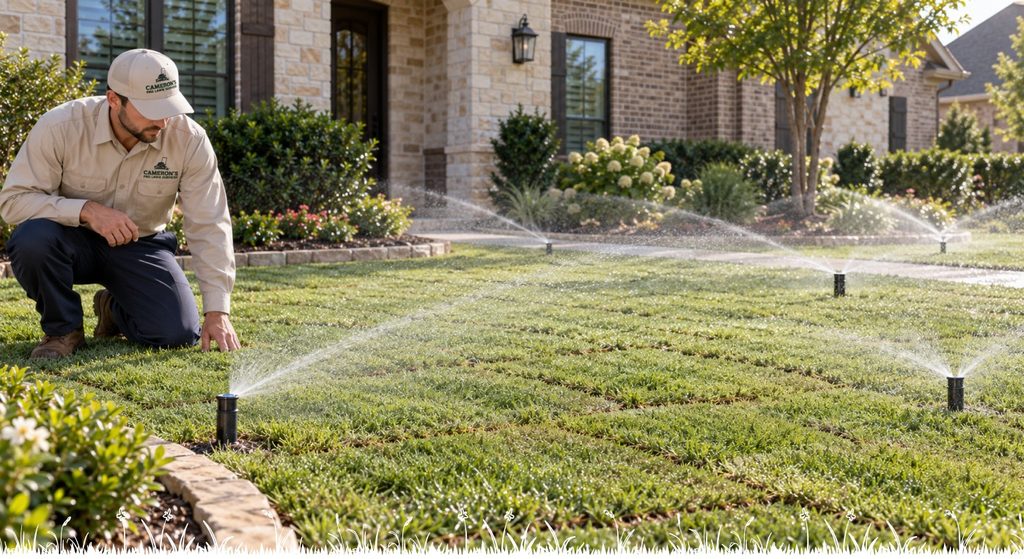
The New Sod Is Not Receiving Enough Water
Freshly installed sod can dry quickly, particularly during warm North Texas conditions.
Watering is especially important during the early establishment period because the root system has not yet developed deeply into the soil.
Signs that an area may not be receiving enough water can include:
- Dry or crispy grass
- Shrinking edges between sod pieces
- Sections changing color
- Soil underneath becoming excessively dry
- Certain areas struggling more than others
The exact watering needs can vary depending on weather, soil conditions, grass type, and the property itself. Instead of relying only on a fixed schedule, monitor how the new lawn is responding.
Your Irrigation Coverage Is Uneven
Even if the sprinkler system runs every day that does not guarantee every section of new sod receives the same amount of water.
Blocked sprinkler heads, incorrect spray patterns, low pressure, or poorly positioned sprinklers can leave dry areas between watering patterns.
Before or shortly after using a professional grass sod installation service, it is important to make sure the irrigation system provides appropriate coverage across the installation area.
If some parts of your new sod look healthy while others repeatedly appear dry, professional irrigation services can help identify coverage problems, damaged sprinkler heads, or other issues that may be preventing your new sod from receiving consistent water.
Our recent guide, Why Does Your Sprinkler System Keep Running After It Should Stop? Also covers common controller, valve, solenoid, and wiring problems that can affect how an irrigation system operates.
The Sod May Be Receiving Too Much Water
Not enough water can cause problems, but excessive watering is not automatically better.
If the lawn remains constantly saturated, certain areas may become excessively soft or develop standing water. Poor drainage can make the issue worse.
After watering, inspect the lawn for:
- Standing water
- Extremely soft soil
- Water collecting in low spots
- Areas remaining wet much longer than others
- Runoff onto sidewalks or driveways
The goal is to support establishment without leaving the property unnecessarily saturated.
The New Lawn Is Being Used Too Soon
New sod needs time to establish before it receives normal foot traffic.
Walking, playing, moving equipment, or repeatedly crossing the same sections too early can shift sod pieces and interfere with root-to-soil contact.
Try to minimize unnecessary activity while the lawn is establishing.
This is particularly important around:
- Walkways
- Driveways
- Backyard entrances
- Gates
- High-traffic outdoor areas
Once the sod begins rooting properly, it will become more stable and better able to handle normal lawn activity.

Mowing Too Early Can Stress New Sod
Homeowners are often eager to mow once fresh sod begins growing, but mowing before the lawn has started establishing can disturb sections that have not rooted securely.
Before mowing, the sod should be stable enough that normal mowing will not pull, lift, or shift the pieces.
Once mowing begins, avoid removing too much grass at one time. Appropriate mowing practices can help maintain a cleaner, more consistent appearance as the lawn continues developing.
Professional lawn maintenance services can help keep the lawn maintained after the initial sod establishment period.
Give New Sod Time to Establish
Fresh sod does not become a fully established lawn immediately after installation.
The lawn needs time to develop roots into the soil underneath it. During this period, watering, irrigation coverage, soil conditions, foot traffic, and mowing practices can all influence how consistently the sod establishes.
Monitor different sections rather than judging the lawn only by its overall appearance. A recurring problem in one particular area may provide a clue about watering, drainage, soil contact, or another property condition.
Protect Your Investment with Consistent Lawn Care
Sod installation can create a major visual improvement, but maintaining that appearance requires continued attention after installation.
Regular lawn maintenance, appropriate irrigation, clean landscape areas, and seasonal property care can all contribute to keeping the outdoor space well maintained.
Homeowners searching for lawn maintenance Lewisville TX can turn to Cameron’s Pro Lawn Services for sod installation, lawn maintenance, irrigation, landscaping, and seasonal services throughout Lewisville and surrounding North Texas communities.
Frequently Asked Questions
Why is my new sod not rooting?
Poor soil preparation, weak soil contact, watering problems, excessive foot traffic, and other site conditions can interfere with establishment.
How can I tell if new sod is getting enough water?
Check several sections of the lawn rather than only one area. Dry edges, shrinking pieces, or sections drying significantly faster than others may indicate inconsistent watering.
Can too much water cause problems for new sod?
Yes. Constantly saturated areas, standing water, and poor drainage can create unfavorable conditions while the sod is establishing.
When can I start walking on new sod?
Unnecessary foot traffic should generally be minimized while the sod is establishing and developing stronger roots.
Why are some pieces of sod growing better than others?
Differences in irrigation coverage, soil contact, and drainage, sunlight, and installation conditions can cause sections to establish at different rates.
Help Your New Sod Establish Properly
When new sod struggles to grow, the problem is often connected to the conditions around it. Soil preparation, root-to-soil contact, irrigation coverage, watering, foot traffic, and early mowing can all affect establishment.
Cameron’s Pro Lawn Services provides professional sod installation and ongoing outdoor property services throughout Lewisville and surrounding North Texas communities. Proper installation followed by consistent care can help give your new lawn a stronger start.

Cameron's Lawn Care Service
Explore helpful lawn care, landscaping, irrigation, sod installation, seasonal maintenance, and outdoor property care tips from our team.
See All Blog