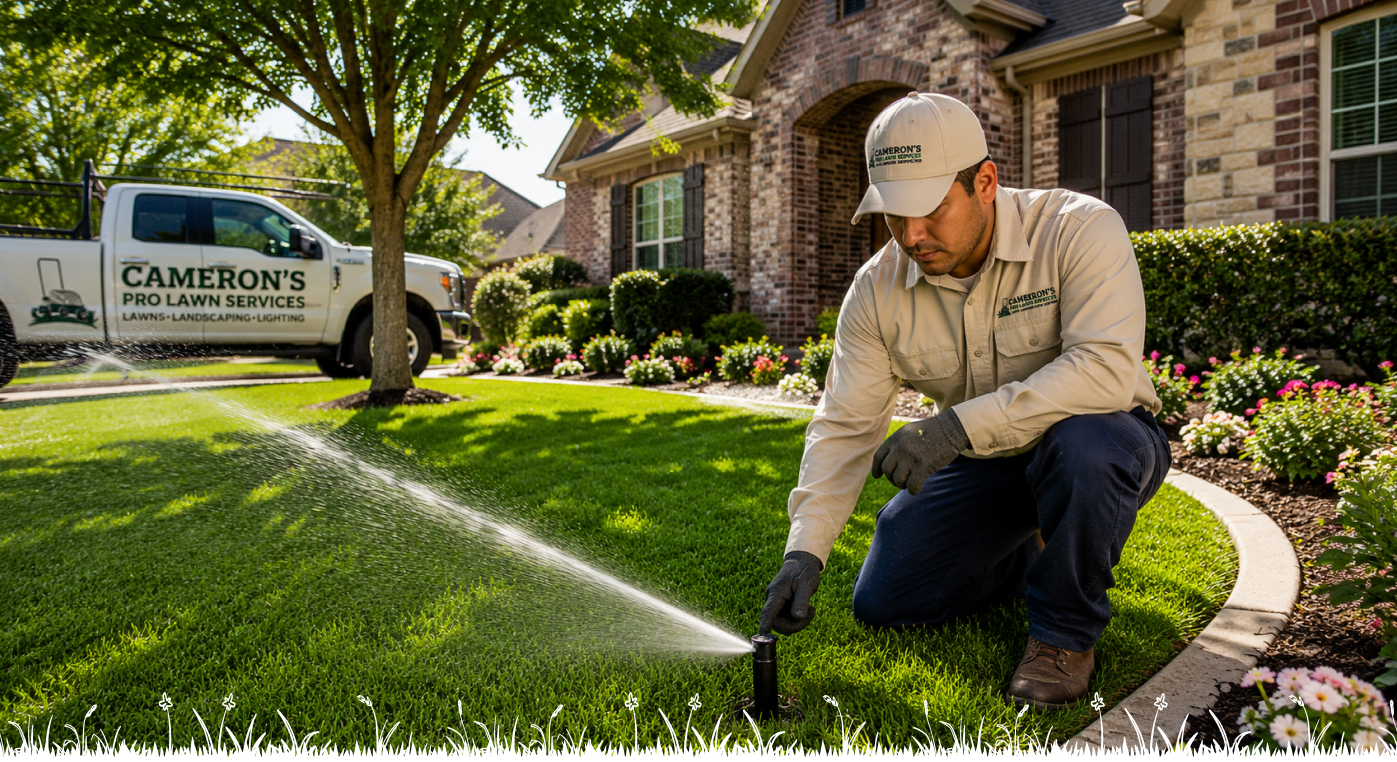
A healthy lawn and landscape depend on receiving the right amount of water at the right time. When an irrigation system develops problems, some areas may receive too little water while others become oversaturated. Small issues such as a damaged sprinkler head or hidden leak can eventually affect grass health, landscaping, and water usage if they are not identified early.
Professional irrigation services can help homeowners and commercial property owners identify these problems and keep their systems operating properly. Cameron’s Pro Lawn Services provides irrigation solutions throughout Lewisville and surrounding North Texas communities, helping properties maintain consistent watering as weather and seasonal conditions change.
What Is Irrigation and Why Does It Matter?
If you are wondering what is irrigation, it is simply the controlled application of water to lawns, plants, and landscapes when natural rainfall does not provide enough moisture.
For residential and commercial properties, an irrigation system can distribute water across different areas of the landscape without requiring everything to be watered manually.
A properly operating system can help support:
- Consistent lawn moisture
- Healthy landscape plants
- More even watering
- Efficient water distribution
- Seasonal lawn care
- Newly installed sod
- Residential and commercial landscaping
However, irrigation systems contain multiple components, and problems with even one area can affect overall watering performance.
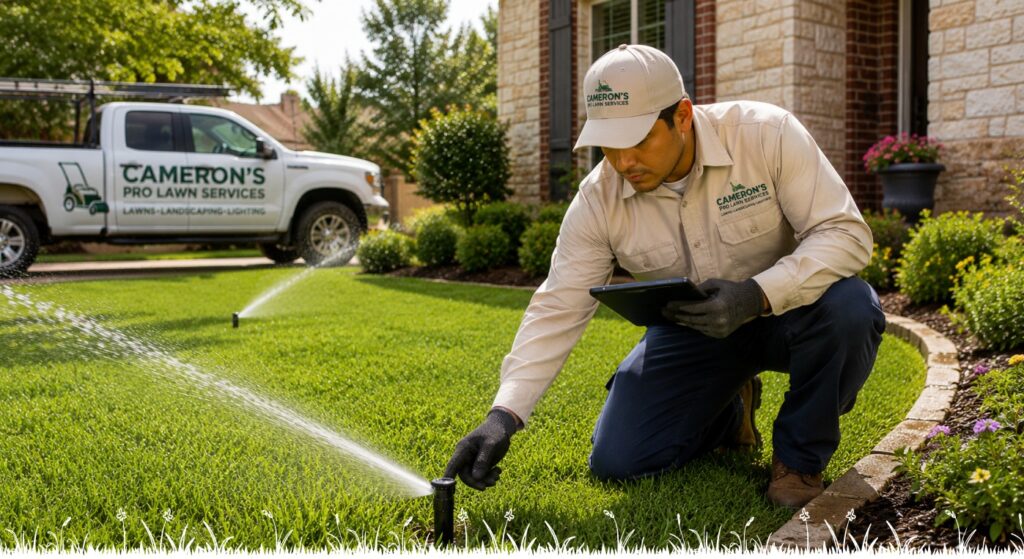
Broken or Damaged Sprinkler Heads
Broken sprinkler heads are among the easiest irrigation problems to notice.
Damage can happen because of lawn equipment, vehicles, soil movement, normal wear, or accidental impact.
Signs of a damaged sprinkler head may include:
- Water spraying in the wrong direction
- Water shooting unusually high
- Pooling around one sprinkler
- Weak spray
- A sprinkler that does not rise correctly
- Water flowing continuously around the head
A damaged sprinkler may waste water while leaving part of the lawn without sufficient coverage.
Walk around the property occasionally while the irrigation system is running. Observing each zone in operation makes these problems much easier to identify.
Uneven Watering Across the Lawn
One part of your lawn may look healthy while another appears dry even though both areas are supposedly receiving irrigation.
This can indicate uneven coverage.
Potential causes include:
- Incorrect sprinkler positioning
- Blocked sprinkler heads
- Damaged nozzles
- Poor water pressure
- Plants blocking spray
- Incorrect zone configuration
Dry areas should not automatically be treated by increasing the watering time for the entire property. Doing so could overwater healthy sections while failing to correct the actual coverage problem.
An irrigation maintenance service can help identify why coverage is uneven and determine whether adjustments or repairs are needed.
Low Water Pressure
Sprinklers require adequate pressure to distribute water across their intended areas.
If several sprinkler heads suddenly produce weak spray or fail to reach their normal coverage area, water pressure may be contributing to the problem.
Possible causes can include:
- Leaks
- Damaged components
- Valve problems
- Blockages
- Other system issues
Low pressure can be particularly difficult to identify when the system still appears to be operating.
Instead of assuming the lawn simply needs longer watering cycles, compare current sprinkler performance with how the system normally operates.
Water Pooling in Certain Areas
Standing water or consistently soggy areas deserve attention.
Pooling may indicate that too much water is reaching one location, but irrigation is not always the only possible cause. Drainage and soil conditions can also contribute.
When the irrigation system is involved, possible issues include:
- Leaking sprinkler heads
- Broken underground lines
- Incorrect spray patterns
- Excessive watering time
- Malfunctioning valves
Regularly inspect the lawn after irrigation cycles. Areas that remain noticeably wetter than the surrounding grass may need further investigation.
Unexpectedly High Water Usage
A noticeable increase in water usage without a corresponding change in normal household or business activity can sometimes indicate an irrigation problem.
Small underground leaks may not always create dramatic flooding at the surface.
Instead, you might notice:
- Constantly damp soil
- Unusually green patches
- Soft ground
- Water around valve boxes
- Higher water consumption
Finding irrigation leaks early can help prevent unnecessary water waste and potential damage to surrounding areas.
Sprinkler Heads Watering Sidewalks and Driveways
An irrigation system should primarily deliver water where the landscape needs it.
If large amounts of water repeatedly land on sidewalks, streets, walls, or driveways, sprinkler alignment may need adjustment.
Some overspray can occur because of wind, but consistent watering of hard surfaces usually indicates that coverage should be checked.
Proper adjustments can redirect more water toward grass and landscaping instead of areas where it provides little benefit.
Some Irrigation Zones Aren’t Working
Larger irrigation systems divide a property into separate watering zones.
If one zone stops working while others continue operating normally, the problem may be isolated to that particular section.
Potential causes can involve:
- Valves
- Electrical connections
- Controller settings
- Wiring
- Damaged sprinkler components
Test individual zones periodically instead of assuming the entire system is functioning simply because some sprinklers are operating.
This is especially useful when certain areas of the lawn begin showing signs of stress.
The Lawn Develops Dry or Brown Areas
Brown grass does not automatically mean the entire lawn needs more water.
Dry areas can result from several factors, including irrigation coverage, lawn maintenance practices, soil conditions, weather, or other turf problems.
Before significantly increasing watering, check whether sprinklers are actually reaching the affected area.
If nearby grass remains healthy while one section repeatedly dries out, uneven irrigation coverage may be worth investigating.
Consistent lawn maintenance can also make it easier to identify changes in turf condition before they become widespread.
Overwatering Can Be a Problem Too
Not every irrigation problem involves too little water.
Overwatering can create excessively wet soil and unnecessary water use. Watering requirements can also change as temperatures, rainfall, and seasonal conditions change.
Signs that an area may be receiving excessive moisture include:
- Persistent soggy soil
- Standing water
- Runoff
- Water flowing onto hard surfaces
- Lawn areas remaining wet for extended periods
Instead of using the same irrigation schedule throughout the year, watering should reflect actual property and weather conditions.
Irrigation Problems Can Affect Your Landscaping
Your irrigation system supports more than just grass.
Trees, shrubs, flowers, and landscape beds may depend on appropriate watering as well. Poor irrigation coverage can therefore affect the appearance and condition of the overall property.
When reviewing sprinkler performance, consider whether water is being distributed appropriately around landscaped areas without unnecessarily saturating them.
Professional full-service landscape maintenance combined with properly functioning irrigation can help keep different parts of the outdoor space maintained together.
Why Seasonal Irrigation Checks Matter in North Texas
North Texas weather can change significantly throughout the year.
A watering schedule appropriate during hot, dry conditions may not be appropriate after temperatures decrease or rainfall increases.
Seasonal irrigation checks can help property owner’s review:
- Watering schedules
- Sprinkler coverage
- Damaged components
- Leaks
- Controller settings
- Lawn conditions
- Landscape watering needs
The goal is not simply to run the irrigation system more often. It is to make sure water is being delivered efficiently according to current property needs.
Irrigation Is Especially Important for New Sod
New sod requires careful moisture management while its roots establish in the soil.
Uneven sprinkler coverage can cause one section to dry too quickly while another receives excessive water. This makes checking irrigation performance particularly important before and after sod installation.
We recently covered the complete aftercare process in:
New Sod Care: How to Help Your Lawn Establish Strong Roots
The guide explains watering, first mowing, foot traffic, irrigation coverage, and other important steps for helping newly installed sod establish successfully.
When Should You Call an Irrigation Professional?
Some irrigation problems are easy to notice, but determining their actual cause may require closer inspection.
Consider contacting an irrigation company when you notice recurring problems such as:
- Multiple sprinkler heads not operating correctly
- Persistent dry areas
- Unexplained wet spots
- Suspected underground leaks
- Significant pressure changes
- Irrigation zones that stop operating
- Coverage that remains uneven after basic adjustments
Addressing problems early may help prevent a small irrigation issue from affecting larger portions of the lawn or landscape.
Why Choose Cameron’s Pro Lawn Services?
Lawn care, landscaping, irrigation, and seasonal maintenance are closely connected. A watering problem can affect grass health, newly installed sod, landscape plants, and the overall appearance of a property.
Cameron’s Pro Lawn Services provides outdoor property solutions for residential and commercial customers throughout Lewisville and surrounding North Texas communities.
Our services include:
- Irrigation
- Lawn maintenance
- Landscaping
- Sod installation
- Seasonal services
- Holiday lighting
By looking at irrigation as part of the overall lawn and landscape environment, we can help property owners maintain outdoor spaces throughout changing conditions.
Frequently Asked Questions
How do I know if my irrigation system has a leak?
Look for unusually wet areas, soft ground, water around sprinkler components, unexplained increases in water usage, or areas that remain wet after other sections have dried.
Why are some areas of my lawn dry even though the sprinklers run?
Uneven sprinkler coverage, damaged heads, blocked nozzles, pressure problems, or incorrect positioning can prevent certain areas from receiving sufficient water.
Should I use the same irrigation schedule throughout the year?
Not necessarily. Watering needs can change with temperature, rainfall, grass conditions, and seasonal changes.
Why is one irrigation zone not working?
A non-working zone can potentially involve a valve, controller setting, electrical connection, wiring, or another system component.
Can irrigation problems damage new sod?
Yes. Newly installed sod depends on consistent moisture while establishing roots. Both insufficient and excessive watering can interfere with establishment.
How often should an irrigation system be inspected?
It’s useful to observe the system periodically and check it when seasons change or whenever you notice unusual lawn conditions, leaks, pressure changes, or uneven watering.
Keep Your Irrigation System Working for Your Property
Small irrigation problems can become larger lawn and landscape issues when they go unnoticed.
Broken sprinkler heads, leaks, uneven coverage, incorrect schedules, low pressure, and malfunctioning zones can all affect how efficiently water reaches your property.
Regularly observing your irrigation system and responding to changes early can help maintain more consistent watering and protect the appearance of your lawn and landscape.
Cameron’s Pro Lawn Services provides professional irrigation solutions throughout Lewisville and surrounding North Texas communities. If your system isn’t watering your property the way it should, professional inspection and maintenance can help identify the problem and determine the appropriate solution.

Cameron's Lawn Care Service
Explore helpful lawn care, landscaping, irrigation, sod installation, seasonal maintenance, and outdoor property care tips from our team.
See All Blog