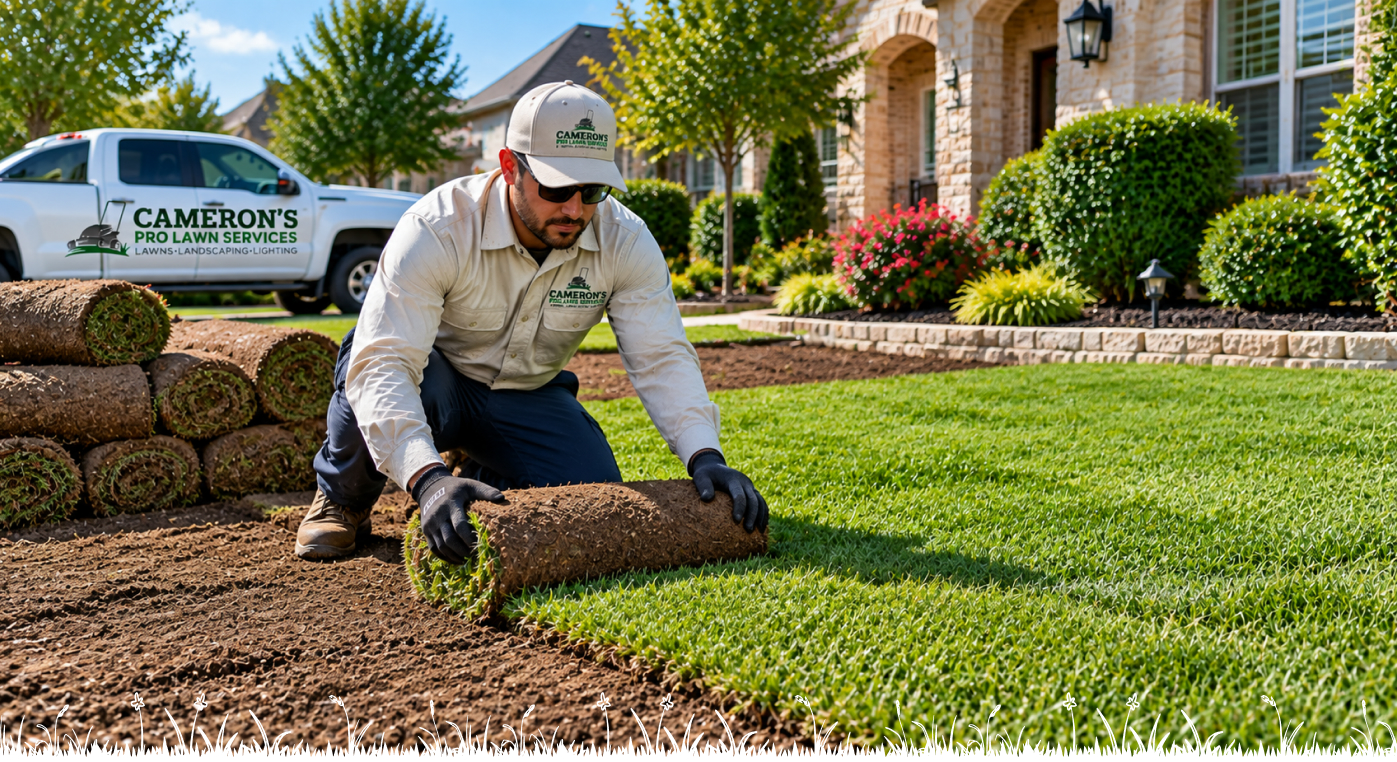
Installing new sod can quickly improve the appearance of a thin, patchy, or worn-out lawn. Because sod arrives with established grass, many homeowners wonder whether they can save time by simply placing the new sod directly over their existing grass.
Although this may seem like an easier approach, successful sod installation depends heavily on what happens underneath the new grass. Proper soil contact, grading, preparation, watering, and irrigation can all affect how well new sod establishes.
Before scheduling a sod installation service, North Texas homeowners should understand why preparing the existing lawn is an important part of creating a stronger foundation for new sod.
Can New Sod Be Installed Directly Over Existing Grass?
Placing sod directly over existing grass may appear convenient, but it can create problems between the sod and the soil underneath.
New sod needs good contact with prepared soil so its roots can begin establishing. When old grass, weeds, thatch, or other material creates a layer between the new sod and the soil, that contact may be reduced.
Instead of focusing only on how quickly sod can be installed, homeowners should consider how well the new grass will be able to establish after installation.
Proper preparation can make an important difference during this early stage.
Why Existing Grass Should Be Removed?
Removing existing grass allows the condition of the underlying area to be evaluated before new sod is installed.
Once the old lawn is removed, problems that were previously hidden may become easier to identify. These could include:
- Uneven areas
- Compacted soil
- Poor grading
- Rocks or debris
- Low spots
- Existing weeds
- Drainage concerns
Installing fresh sod without addressing these conditions may leave the new lawn with some of the same problems that affected the previous grass.
A properly prepared surface also makes it easier to install sod evenly across the property.
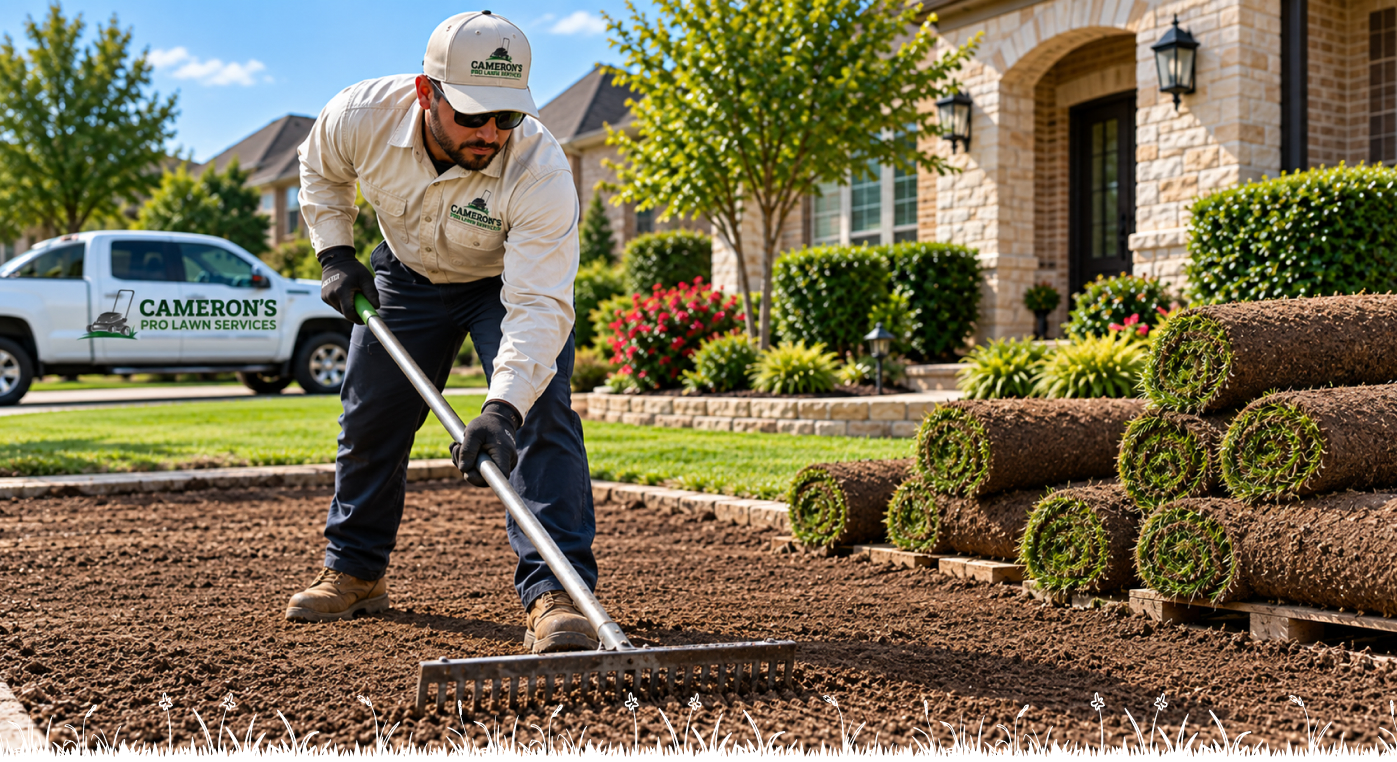
Soil Preparation Helps New Sod Establish
After the old grass is removed, the installation area should be prepared for the new sod.
The exact preparation required will depend on existing property conditions, but the goal is to create a clean, relatively even surface that allows the sod to make direct contact with the soil.
Preparation may involve removing debris, correcting uneven areas, and evaluating the condition of the soil before installation begins.
Homeowners comparing installed sod prices should remember that the project involves more than simply purchasing rolls of grass. Site preparation, property conditions, the size of the area, sod selection, and installation requirements can all influence the overall project.
Proper Grading Should Be Considered Before Installation
Once new sod is installed, correcting major surface problems becomes more difficult.
That is why preparation is a good opportunity to look for noticeable high spots, low areas, and grading issues.
An uneven surface can affect the finished appearance of the lawn and may also influence how water moves across the property.
Landscape conditions around the installation area should also be considered. Beds, edging, walkways, shrubs, and other outdoor features may affect how the finished lawn looks and functions.
Professional landscaping services can help maintain surrounding outdoor areas so the new lawn fits cleanly with the rest of the property.
Check Your Irrigation before New Sod Goes Down
New sod requires consistent watering while it begins establishing, which makes irrigation an important part of the installation process.
Before sod is installed, run the sprinkler system and check whether the installation area receives appropriate coverage.
Look for:
- Sprinkler heads that are not operating
- Weak spray patterns
- Areas receiving little water
- Broken sprinkler heads
- Water spraying onto pavement
- Zones that fail to activate
Fixing irrigation problems before installation can be easier than discovering them after fresh sod has already been placed.
Professional irrigation services can help identify system issues that may interfere with consistent watering.
 Professional Installation Can Help Avoid Common Mistakes
Sod installation involves more than laying individual pieces of turf next to each other.
Existing grass removal, surface preparation, grading, placement, irrigation coverage, and post-installation care all contribute to the finished result.
When searching for the best sod installation services nearby, homeowners should look beyond the sod itself and consider whether the company can properly evaluate and prepare the installation area.
A carefully prepared lawn provides a better starting point than simply covering existing grass and hoping the new sod establishes successfully.
Coordinate Sod Installation with Your Landscaping
If you are already planning changes to your outdoor space, it may make sense to coordinate sod installation with other landscape improvements.
Completing bed work, edging, shrub maintenance, or other changes before fresh sod is installed may help reduce unnecessary disturbance to the new lawn.
We recently discussed seasonal timing for outdoor improvements in When Is the Best Time to Update Your Landscaping in North Texas?
Planning the lawn and surrounding landscape together can help create a cleaner and more consistent finished appearance.
.
Maintain Your New Lawn after Sod Installation
Once the sod begins establishing, ongoing care becomes an important part of protecting its appearance.
Monitor watering, avoid unnecessary traffic during the early establishment period, and transition into an appropriate mowing and maintenance routine as the lawn develops.
Homeowners looking for lawn maintenance Lewisville TX can turn to Cameron’s Pro Lawn Services for professional lawn care and outdoor property services throughout Lewisville and surrounding North Texas communities.
Frequently Asked Questions
Can I put new sod directly over my old lawn?
Removing the existing grass and preparing the soil generally provides better contact between the new sod and the ground beneath it. Simply covering existing grass can create an unwanted layer between the sod and soil.
Do I need to remove all old grass before laying sod?
The installation area should be properly prepared before new sod is placed. Existing grass, weeds, debris, and other material can interfere with the surface needed for installation.
Why is soil preparation important for new sod?
Proper preparation creates a cleaner and more even surface while allowing the sod to make better contact with the soil underneath.
Should I check my sprinkler system before installing sod?
Yes. Checking irrigation coverage before installation can help identify sprinkler problems before the new lawn requires consistent watering.
How soon can newly installed sod be mowed?
The appropriate timing depends on how well the sod has established. Avoid rushing into regular mowing before the new lawn has had time to begin rooting.
Start Your New Lawn with Proper Preparation
Installing new sod over existing grass may look like a shortcut, but the condition underneath the sod plays an important role in how the new lawn establishes.
Removing old grass, preparing the soil, checking grading, evaluating irrigation coverage, and providing appropriate aftercare can create a stronger starting point for your new lawn.
Cameron’s Pro Lawn Services provides professional sod installation, lawn maintenance, landscaping, irrigation, and seasonal services throughout Lewisville and surrounding North Texas communities.

Cameron's Lawn Care Service
Explore helpful lawn care, landscaping, irrigation, sod installation, seasonal maintenance, and outdoor property care tips from our team.
See All Blog