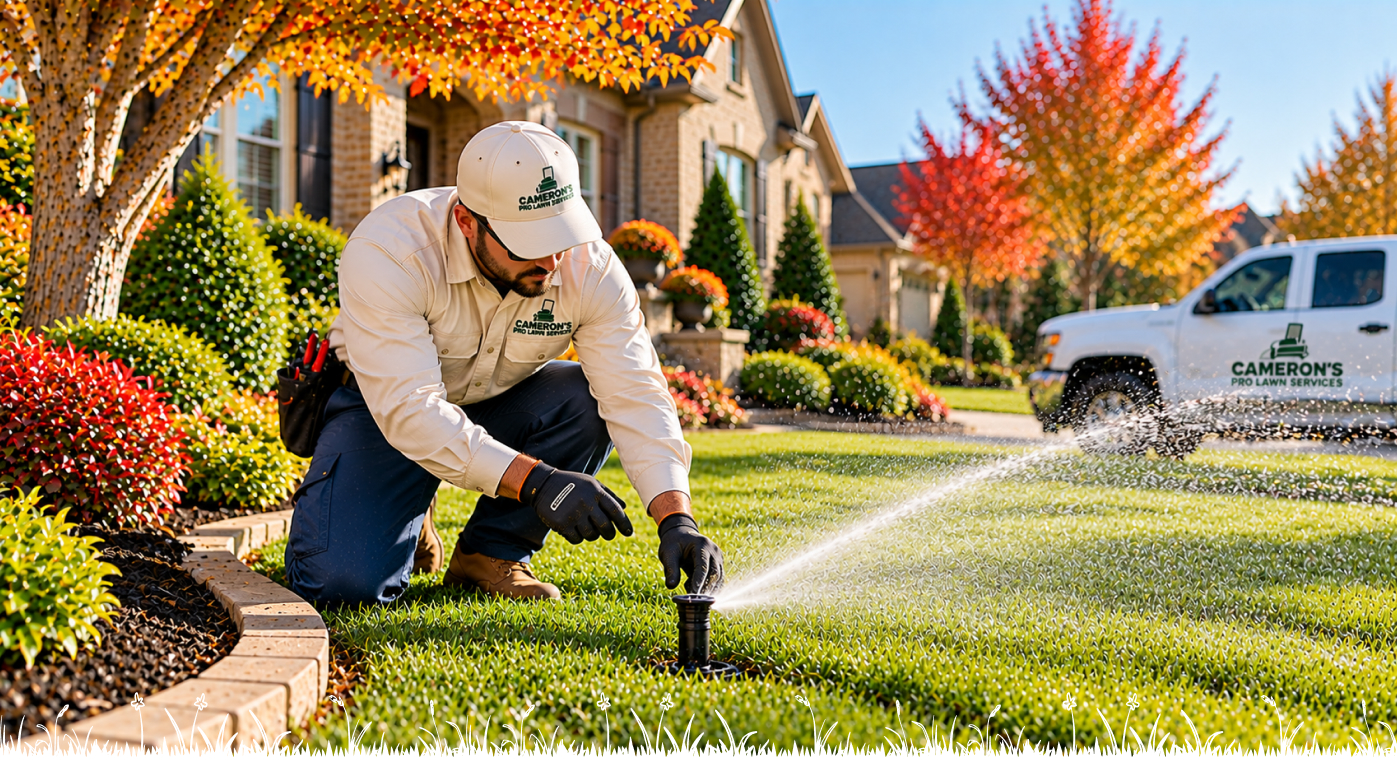
Irrigation system settings that worked during the hottest part of summer may not be appropriate once October arrives in North Texas. Cooler temperatures, shorter days, changing rainfall, and slower grass growth can all affect how much water your lawn and landscape actually need.
Instead of continuing a summer watering routine automatically, homeowners should pay attention to current weather and soil conditions. Adjusting irrigation at the right time can help avoid unnecessary watering while still providing enough moisture for lawns, plants, and landscape beds.
Why Fall Changes Your Watering Needs
Summer heat causes water to leave the soil more quickly through evaporation and plant use.
As temperatures begin to fall, that demand generally decreases. This means a watering schedule that was useful during July or August may provide more water than the landscape needs in October.
North Texas Municipal Water District guidance also changes between the summer and winter watering periods. During November through March, spray irrigation is limited to no more than one day per week, with less frequent watering often being sufficient depending on conditions.
The important point is that homeowners should not simply leave their summer controller settings running indefinitely.
Reduce Watering as Temperatures Cool
One of the first adjustments to consider is watering frequency.
As fall progresses, lawns generally lose less moisture than they do during the hottest summer weeks. If rainfall is occurring regularly, the need for supplemental irrigation can decrease even further.
However, reducing watering does not mean automatically shutting the system off.
A lawn that is still actively growing or experiencing dry conditions may continue to need supplemental moisture. Recent North Texas guidance emphasizes watering according to actual need rather than relying on a fixed summer schedule.
Check the Soil Before Running Sprinklers
Looking at the lawn alone does not always tell you whether irrigation is necessary.
Before turning on your sprinklers, check the soil moisture in several areas of the property.
If the soil is still holding adequate moisture from recent rainfall or previous irrigation, another cycle may not be necessary.
North Texas clay soils can also retain significant amounts of water. The North Texas Municipal Water District notes that local clay soils absorb water slowly and can hold moisture for extended periods.
Checking the soil can therefore help homeowners avoid watering simply because the controller says it is time.
Pay Attention to Rainfall
Fall rainfall can significantly change irrigation requirements.
If the property receives meaningful rainfall, automatic irrigation may become unnecessary for that period.
Running sprinklers immediately after rain can waste water and leave soil unnecessarily wet.
Some modern irrigation controllers include rain sensors or weather-based adjustments that can help prevent unnecessary watering.
Even with these features, homeowners should periodically inspect their system and make sure the controller is responding correctly.
Inspect Sprinkler Heads Before Winter
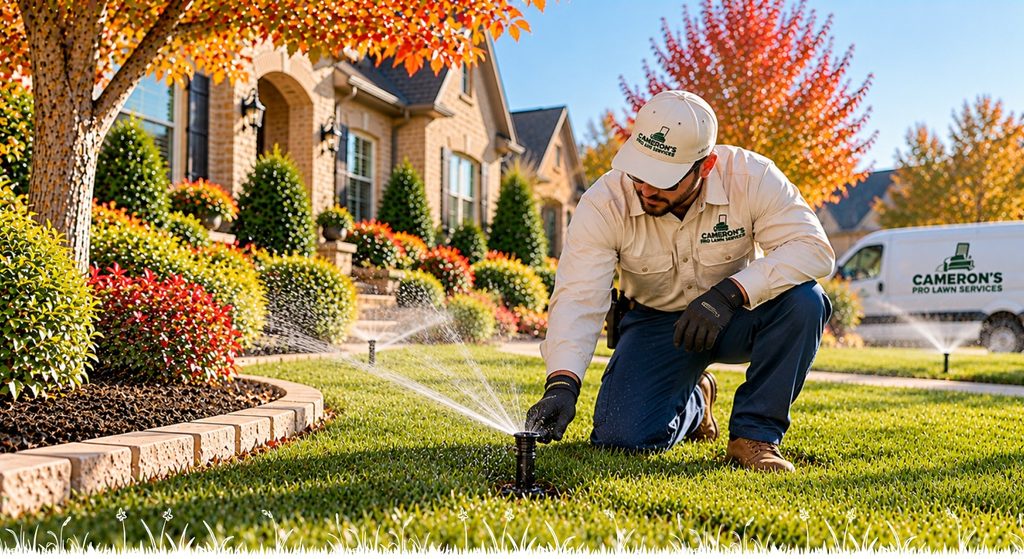
Fall is also a useful time to inspect the physical condition of an irrigation system.
Look for sprinkler heads that are:
- Broken
- Misaligned
- Clogged
- Covered by growing grass
- Spraying sidewalks or driveways
- Providing uneven coverage
A damaged sprinkler head can affect one section of the lawn while the rest of the property receives normal coverage.
This can create dry areas on one side and excessive moisture on another.
Water Early When Irrigation Is Needed
When supplemental watering is necessary, the time of day matters.
North Texas municipalities commonly restrict automatic spray irrigation during daytime hours because watering during hotter parts of the day can increase evaporation and reduce efficiency.
Early-morning watering is generally a practical option because temperatures are lower and wind conditions may be more favorable.
Homeowners should also follow the watering rules that apply to their specific city or water provider.
Avoid Overwatering Your Lawn
More water does not automatically mean a healthier lawn.
Overwatering can leave the soil excessively wet and may contribute to lawn and plant problems.
Recent North Texas irrigation guidance specifically warns that overwatering becomes more common as fall progresses because homeowners sometimes continue using summer schedules after conditions have changed.
Instead of focusing on running the sprinkler for a certain number of minutes simply because that is what the controller has always done, look at the lawn, soil, rainfall, and weather conditions.
Watch Areas With Different Sun Exposure
Not every section of a property dries at the same rate.
A lawn receiving direct afternoon sunlight may lose moisture faster than an area shaded by mature trees.
Landscape beds may also have different moisture requirements than open turf.
This means one fixed watering approach may not work equally well across the entire property.
Check areas individually when possible and pay attention to sections that repeatedly appear unusually dry or wet.
Make Sure Water Is Reaching the Right Areas
An irrigation system should deliver water where it is needed.
Sprinklers that spray sidewalks, driveways, fences, or other hard surfaces waste water without benefiting the landscape.
Misaligned heads can also leave portions of the lawn dry.
Walk through the property while the system is running and observe the spray pattern.
If water is missing sections of turf or overspraying hard surfaces, adjustments may be needed.
Consider Your Landscape Plants
Grass is not the only part of your property affected by irrigation.
Shrubs, flowers, trees, ground cover, and other landscape plants can have different watering requirements.
A mature tree, for example, may not need the same frequent shallow watering approach as a small planting bed.
Understanding the landscape as a complete system can help homeowners make better decisions about irrigation.
This is particularly important during seasonal transitions when plant growth and water demand change.
Don’t Forget About Landscape Maintenance
Irrigation works together with other parts of property care.
Overgrown grass can hide sprinkler heads. Leaves and debris can collect around landscape areas, while poorly maintained beds can make it harder to identify irrigation problems.
Regular landscape maintenance can help keep these areas organized and make irrigation inspections easier.
Adjust Irrigation as Fall Progresses
October should not necessarily be treated as one fixed watering period.
Weather can change from week to week.
A stretch of warm, dry weather may increase watering needs, while rainfall and cooler temperatures may reduce them.
The best approach is to keep checking conditions instead of programming the controller once and forgetting about it.
Recent North Texas guidance recommends adjusting irrigation based on changing weather and actual landscape needs.
Prepare for the Winter Watering Schedule
November marks an important change in the regional watering framework.
North Texas Municipal Water District’s winter schedule runs from November 1 through March 31 and limits spray irrigation to no more than one day per week, with the recommendation that less than weekly watering or none at all may often be sufficient.
Local city rules can differ, so homeowners should check their own water provider’s requirements before changing their controller.
Connect Irrigation With Lawn Care
A properly adjusted irrigation system can support healthier turf, but watering is only one part of lawn care.
Mowing, edging, weed management, seasonal cleanup, and monitoring turf conditions also matter.
For homeowners looking for reliable lawn maintenance, keeping a consistent maintenance schedule can make it easier to notice changes in the lawn before they become larger problems.
Seasonal Services Can Help Keep Everything Coordinated
Fall property care involves more than adjusting sprinklers.
Leaves, changing grass growth, landscape plants, irrigation, and other outdoor areas all respond differently as temperatures change.
Coordinating these tasks can help homeowners maintain a cleaner and more consistent property throughout the season.
Professional seasonal services can be especially useful when several areas of the landscape need attention at the same time.
Use Water Based on Need, Not Habit
One of the easiest irrigation mistakes is continuing a routine simply because it worked previously.
The landscape does not stay the same throughout the year.
Temperature, rainfall, soil moisture, plant growth, and sunlight all influence how much supplemental water is appropriate.
A quick inspection before each irrigation cycle can help homeowners determine whether watering is actually necessary.
Your Latest Cameron’s Pro Lawn Services Guide
Our latest blog, Is Fall the Best Time for Sod Installation in North Texas?, explains why fall can be a useful period for improving damaged or declining turf and what homeowners should consider before installing new sod.
New sod also requires careful attention to watering while it establishes, making irrigation an important part of the overall lawn-care process.
Related Reading
If you want to learn more about keeping an outdoor property consistently maintained, Landscape Maintenance: How to Keep Your Property Looking Its Best Year-Round covers lawn care, landscape beds, shrubs, irrigation, weed management, and seasonal maintenance.
Keep Your Irrigation and Lawn Working Together
For homeowners looking for lawn maintenance Lewisville TX, keeping irrigation and lawn care coordinated can help make seasonal changes easier to manage.
The goal is not simply to water more or less. It is to provide the right amount of moisture based on what the property actually needs.
Check Your System Before the Next Season
Fall is a good opportunity to look closely at the condition of your irrigation system.
Check sprinkler heads, observe coverage, review controller settings, look at soil moisture, and pay attention to rainfall.
Small adjustments now can help prevent wasted water and potential lawn problems as North Texas moves toward winter.
Frequently Asked Questions
Should I change my irrigation schedule in fall?
Yes. Cooler temperatures and changing rainfall generally reduce water demand, so a summer schedule may no longer be appropriate.
Should I stop watering my lawn in October?
Not automatically. Watering should depend on rainfall, soil moisture, grass activity, and current weather conditions.
How often should I water in fall?
There is no single schedule for every property. Watering needs depend on local conditions, and homeowners should follow their city’s current watering requirements.
What should I check on my sprinkler system?
Check for broken or clogged heads, uneven spray patterns, leaks, overspray, and areas that are not receiving adequate water.
Is morning a good time to water?
Early morning is generally preferable to hotter parts of the day, and local watering restrictions should always be followed.
Can rain replace irrigation?
Often it can temporarily reduce or eliminate the need for supplemental watering. Check soil moisture and current conditions before running the system.
Does North Texas have winter watering rules?
Yes. The North Texas Municipal Water District’s winter schedule runs November 1 through March 31, with spray irrigation limited to no more than one day per week. Local requirements may vary.
Keep Your Fall Irrigation Under Control
Fall is a transition period for North Texas landscapes. The hot summer watering routine is no longer automatically appropriate, but lawns and plants may still need supplemental moisture during dry periods.
By checking soil moisture, monitoring rainfall, inspecting sprinkler heads, adjusting controller settings, and following local watering requirements, homeowners can keep their irrigation more efficient as the season changes.
Cameron’s Pro Lawn Services provides irrigation, lawn maintenance, landscaping, seasonal services, sod installation, and holiday lighting for homeowners and property managers throughout Lewisville and surrounding North Texas communities.
Ready to have your irrigation system checked? Contact Cameron’s Pro Lawn Services for a free quote.

Cameron's Lawn Care Service
Explore helpful lawn care, landscaping, irrigation, sod installation, seasonal maintenance, and outdoor property care tips from our team.
See All Blog