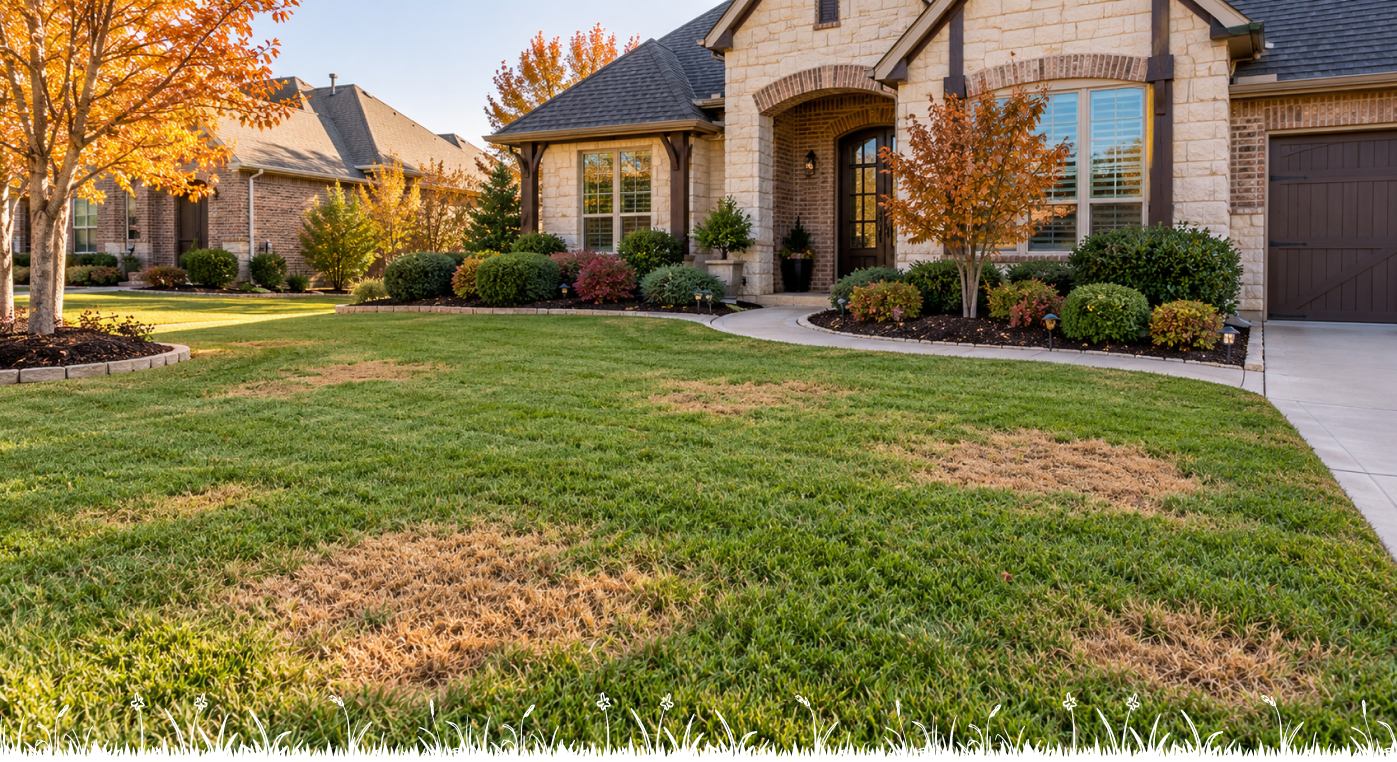
Fall can bring welcome relief from the intense North Texas summer heat, but cooler temperatures do not always mean lawn problems are over. Some homeowners begin noticing circular brown areas, thinning turf, or patches of discolored grass just as temperatures start becoming more comfortable.
The cause is not always simply a lack of water. Changing temperatures, extended moisture, irrigation habits, mowing practices, fallen leaves, and seasonal turf conditions can all influence how a lawn looks during fall.
Professional seasonal landscape services can help homeowners adjust outdoor maintenance as conditions change instead of continuing the same summer lawn routine throughout the fall.
Cooler Nights Can Change Lawn Conditions
North Texas lawns experience a significant transition between late summer and fall.
Daytime temperatures may remain warm while nights become cooler. Grass growth and moisture evaporation can begin changing even before homeowners make adjustments to their lawn-care routines.
A watering schedule that worked during peak summer may therefore become excessive as temperatures fall.
Seasonal changes should be considered across the entire property. Professional seasonal lawn landscaping can help keep lawn and landscape maintenance aligned with changing weather and growing conditions.
Too Much Moisture Can Create Problems
During summer, homeowners often focus on preventing their lawns from becoming too dry. In fall, the opposite issue can sometimes become important.
Cooler weather can reduce how quickly moisture evaporates. If irrigation schedules remain unchanged while temperatures fall, parts of the lawn may stay wet for longer periods.
Persistent moisture can create unfavorable turf conditions and may contribute to certain lawn diseases.
Instead of automatically following the same watering schedule every week, homeowners should observe the soil, recent rainfall, temperatures, and overall lawn condition.
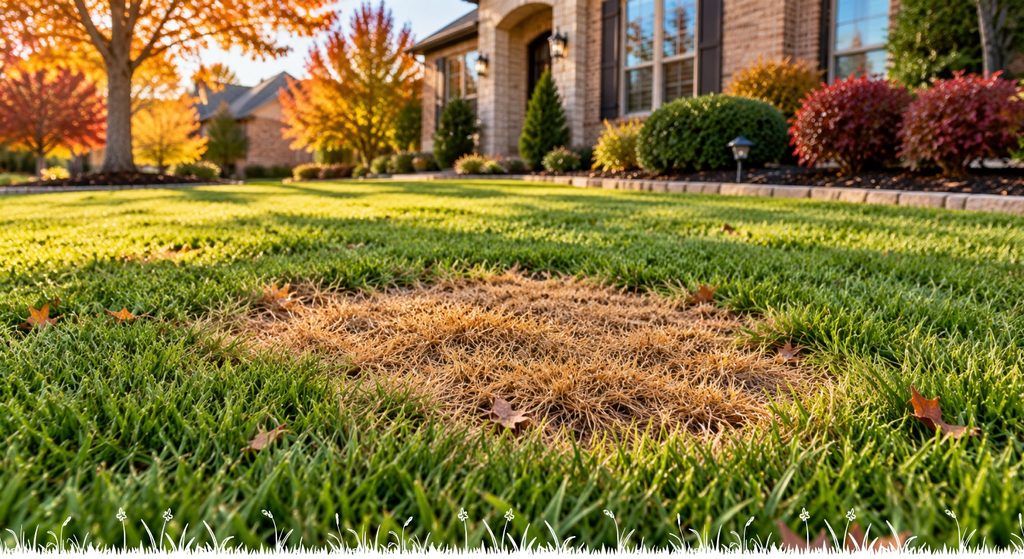
Fall Lawn Disease May Look Like a Watering Problem
Brown areas are sometimes assumed to mean the lawn needs additional water.
However, adding more water without identifying the cause can make some moisture-related problems worse.
Certain turf diseases can become more noticeable when environmental conditions favor them. Brown or discolored areas may appear in irregular or roughly circular patterns and can gradually expand.
Because several lawn problems can produce similar symptoms, identifying the pattern and surrounding conditions is more useful than assuming every brown area is drought stress.
If you’re unsure whether irrigation is contributing to the problem, professional irrigation services can help evaluate sprinkler coverage and watering performance.
Your Summer Irrigation Schedule May Need Adjustment
Irrigation schedules should not necessarily remain identical from July through October.
Hot summer conditions can create significantly different water demands than cooler fall weather. Rainfall patterns can also change, making automatic schedules less appropriate if they are never reviewed.
Our recent guide, How Much Water Does Your North Texas Lawn Actually Need?, explains why watering frequency, soil absorption, runoff, rainfall, and irrigation coverage should all be considered rather than relying only on a fixed controller schedule.
A seasonal adjustment can help reduce unnecessary watering while still providing the lawn with appropriate moisture.
Fallen Leaves Can Hold Moisture against the Turf
A thin scattering of leaves may not immediately create a problem, but allowing heavy layers of leaves to remain across the lawn can affect the turf underneath.
Leaves can block sunlight, reduce airflow, and trap moisture near the grass surface. If they remain in place for extended periods, the covered grass may become stressed or discolored.
Routine fall cleanup helps keep lawn surfaces clearer as leaves begin dropping.
Mowing Habits Should Change With Grass Growth
Grass growth can slow as temperatures change, but that does not mean mowing practices should suddenly become aggressive.
Cutting turf too short can place additional stress on grass that is already adjusting to seasonal conditions. At the same time, allowing grass to become excessively overgrown can create its own maintenance issues.
Consistent lawn maintenance services can help keep mowing and routine lawn care appropriate for the current condition of the property.

Brown Areas May Have More Than One Cause
Not every brown patch that appears during fall is caused by the same issue.
Possible contributing factors can include:
- Excessive moisture
- Poor sprinkler coverage
- Seasonal turf disease
- Compacted soil
- Heavy traffic
- Shade
- Leaf accumulation
- Mowing stress
- Natural seasonal changes
This is why treating every brown area by simply increasing watering may not solve the problem.
Look at where the patches appear, whether they are expanding, how wet the soil remains, and whether the same areas experienced problems earlier in the year.
How Can You Tell Whether a Brown Patch Needs Attention?
Start by watching how the affected area changes.
A temporary change in turf color may behave differently from an area that continues expanding. Repeatedly wet soil may point toward a different problem than dry, compacted ground.
You should also check whether sprinklers are watering the affected area correctly and whether fallen leaves or other debris are keeping the turf covered.
Looking at several clues together can provide a much clearer picture than judging the lawn by color alone.
Fall Is a Good Time to Review the Entire Property
Seasonal lawn care is not only about responding to visible brown patches.
Fall is also an opportunity to evaluate irrigation schedules, lawn condition, leaf accumulation, landscape beds, shrubs, and other areas before winter conditions arrive.
A property that receives consistent seasonal attention is easier to maintain than one where small issues are ignored until they become more noticeable.
For homeowners looking for dependable lawn maintenance Lewisville TX services, Cameron’s Pro Lawn Services can provide ongoing lawn and seasonal property care throughout Lewisville and surrounding North Texas communities.
Frequently Asked Questions
Why does my lawn develop brown patches in the fall?
Several factors can contribute, including excessive moisture, seasonal turf disease, irrigation habits, leaf accumulation, mowing stress, soil conditions, and changing temperatures.
Should I water brown patches more often?
Not automatically. Brown grass does not always indicate insufficient water. Check soil moisture and irrigation coverage before increasing watering.
Can overwatering cause lawn problems during fall?
Yes. As temperatures decrease, the lawn may not require the same irrigation schedule used during hotter summer conditions.
Can fallen leaves damage grass?
Heavy leaf accumulation can block sunlight, reduce airflow, and hold moisture against the turf. Regular cleanup can help reduce these conditions.
Should I stop mowing my lawn in fall?
Not simply because fall has arrived. Mowing frequency may decrease as growth slows, but lawn condition and grass growth should determine when mowing is needed.
Prepare Your Lawn for Changing Fall Conditions
A healthy fall lawn requires more than continuing the same routine used throughout summer. Watering, mowing, cleanup, turf condition, and changing weather should all be considered as North Texas moves into cooler months.
Cameron’s Pro Lawn Services provides lawn maintenance, seasonal services, irrigation, landscaping, and sod installation throughout Lewisville and surrounding North Texas communities.
Contact Cameron’s Pro Lawn Services today to request a free quote and prepare your property for the season ahead.

Cameron's Lawn Care Service
Explore helpful lawn care, landscaping, irrigation, sod installation, seasonal maintenance, and outdoor property care tips from our team.
See All Blog