
Regular mowing is an important part of maintaining a clean and attractive lawn, but mowing alone cannot guarantee thick, healthy-looking grass. Some North Texas homeowners mow consistently and still notice thin patches, weak growth, or areas where the lawn never seems to fill in.
The reason is often connected to conditions beyond mowing. Irrigation coverage, soil compaction, sunlight, foot traffic, seasonal stress, and overall maintenance can all influence lawn density. For larger properties, professional large lawn maintenance services can help address the entire lawn rather than focusing only on cutting the grass.
Here are seven common reasons your lawn may continue looking thin despite regular mowing.
Your Lawn May Not Be Getting Water Evenly
A lawn can be mowed perfectly and still struggle when irrigation coverage is inconsistent.
Sprinkler heads can become blocked, damaged, misaligned, or affected by changes in surrounding landscaping. As a result, one section may receive sufficient water while another remains consistently dry.
Run each sprinkler zone and look for:
- Dry areas between spray patterns
- Weak sprinkler heads
- Water spraying onto pavement
- Areas receiving excessive water
- Sprinklers blocked by grass or plants
- Noticeable differences in soil moisture
Professional irrigation services can help identify coverage problems that may contribute to thin or inconsistent grass.
Mowing Too Short Can Stress the Grass
Cutting the lawn shorter does not necessarily mean it will stay healthier or require less maintenance.
Repeatedly removing too much grass can leave the lawn looking stressed and may make existing thin areas more noticeable. Mowing practices should respond to the grass type, growth conditions, season, and overall condition of the property.
Other mowing issues can include dull mower blades, inconsistent mowing height, or waiting too long between cuts and then removing too much at once.
Consistent professional lawn maintenance services can help keep mowing and edging on a regular schedule while allowing lawn conditions to be monitored over time.
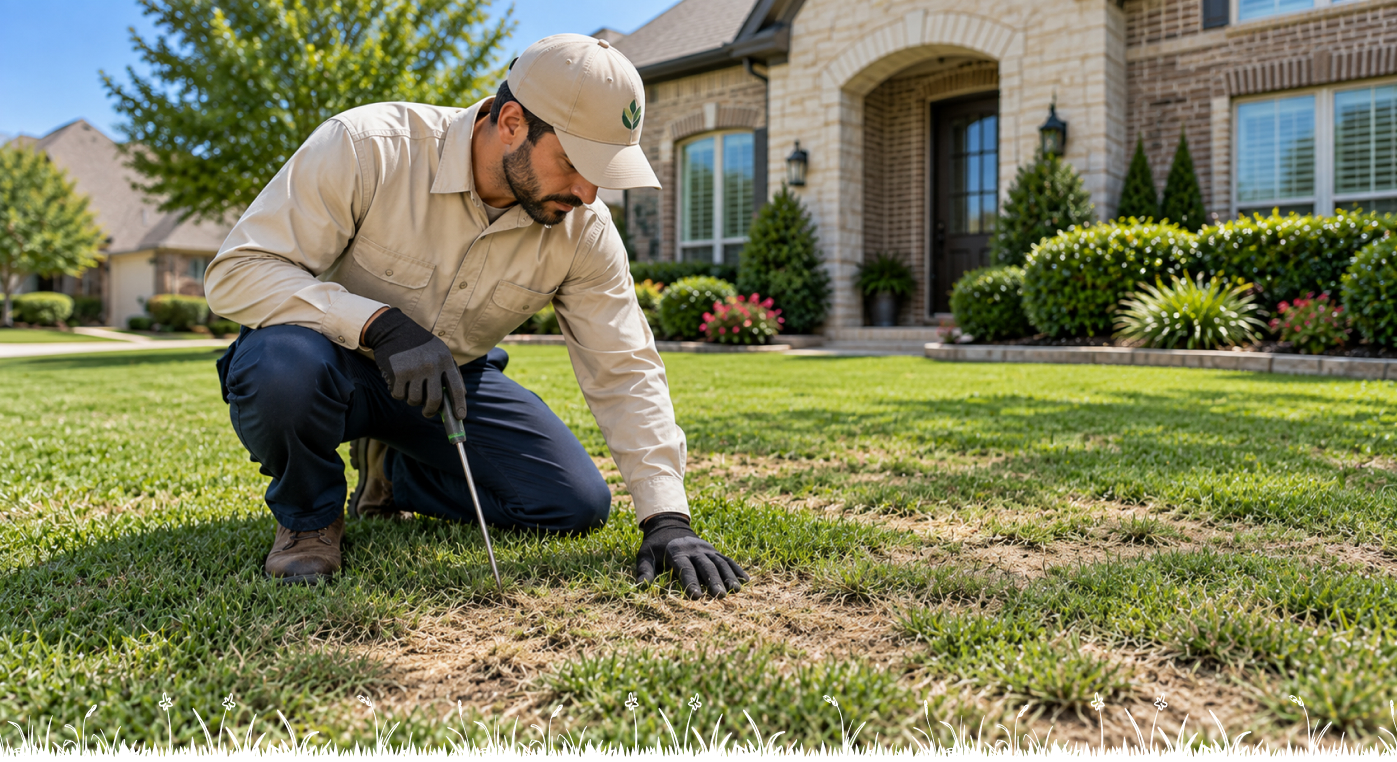
Compacted Soil Can Limit Lawn Growth
Soil conditions underneath the grass can vary considerably across a property.
Areas that receive frequent foot traffic, lawn equipment, pets, or other activity can gradually become more compacted. These sections may develop thinner growth even when the rest of the lawn looks relatively healthy.
Pay particular attention to areas near:
- Driveways
- Gates
- Walkways
- Patios
- Outdoor seating areas
- Frequently used backyard paths
If the same areas remain thin year after year, the condition of the soil may be contributing to the problem.
Some Areas May Not Receive Enough Sunlight
Trees, fences, shrubs, buildings, and other structures can create significant differences in sunlight across the same lawn.
Grass growing in heavily shaded areas may behave differently from grass receiving more direct sunlight. As trees and landscape plants mature, areas that once received adequate sunlight may gradually become more shaded.
This is why it is useful to inspect the lawn at different times of day rather than judging sunlight conditions from a single observation.
Professional landscaping services can also help keep shrubs, beds, and surrounding landscape areas maintained as they grow and change.
Heavy Traffic Can Wear Down Certain Areas
Some thin lawn areas are caused by how the property is used.
People, pets, lawn equipment, and repeated activity can wear down the same sections over time. Larger residential or commercial lawns may also develop visible pathways where people regularly cross the grass.
If you are comparing the cost to hire lawn maintenance service, consider the overall property requirements rather than mowing alone. Property size, edging, lawn condition, frequency of service, and additional maintenance needs can all affect the amount of work involved.
Identifying high-traffic areas can also help determine whether routine mowing is actually addressing the reason the lawn looks thin.
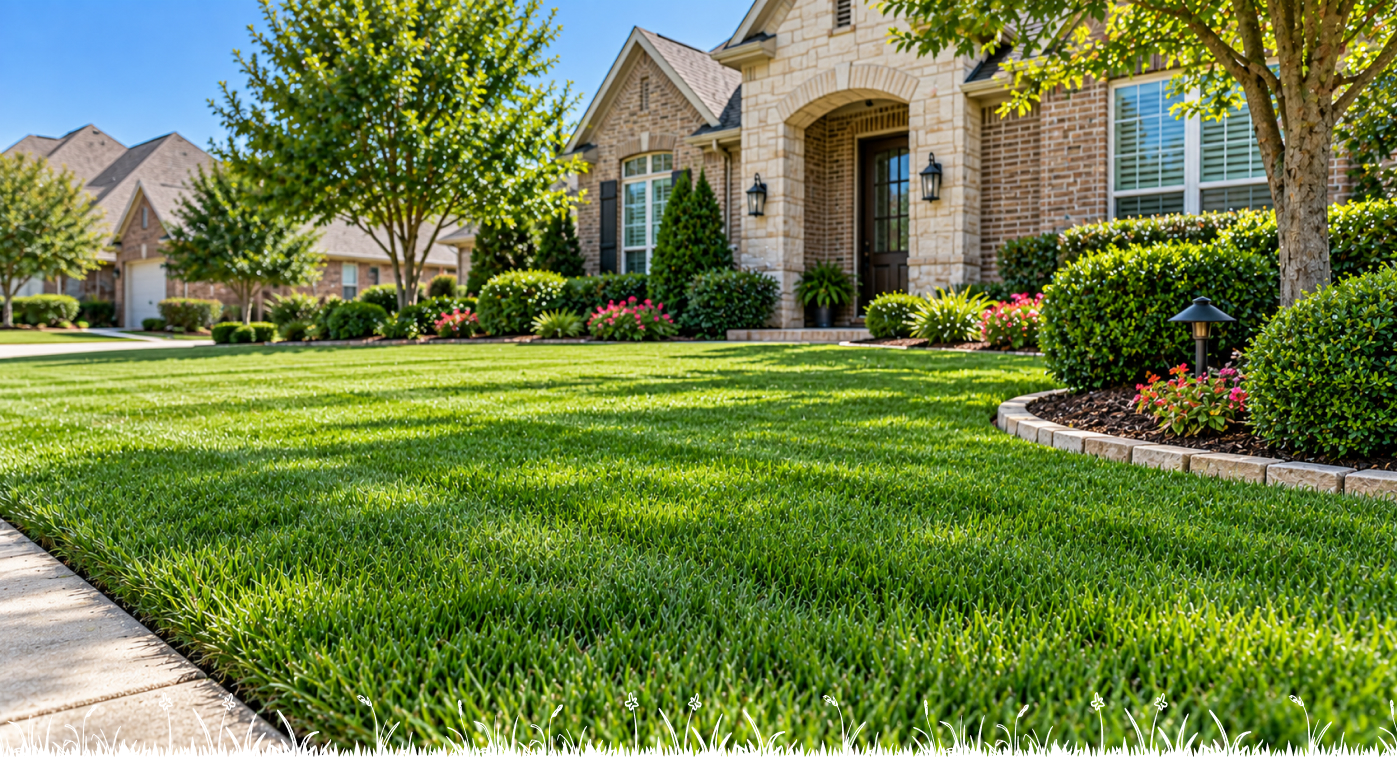
Seasonal Stress Can Change Lawn Density
North Texas lawns experience changing conditions throughout the year.
Summer heat, changing rainfall, cooler temperatures, and seasonal growth patterns can all affect how dense the lawn appears. Some areas may recover more slowly than others after periods of environmental stress.
Seasonal property care can help address changing lawn and landscape needs throughout the year rather than relying on exactly the same maintenance routine every month.
Our recent guide, Why Is Your New Sod Developing Gaps Between the Pieces?, also explains how watering, soil preparation, irrigation coverage, and early maintenance can influence the establishment and appearance of new grass.
Mowing May Not Be the Actual Problem
Regular mowing improves appearance, but it cannot correct every lawn issue.
If grass remains thin despite consistent mowing, look beyond the mower. Irrigation, drainage, soil conditions, shade, traffic, seasonal stress, and previous lawn damage may all need to be considered.
The location of the thin areas can provide useful clues. For example, repeated thinning near a walkway may indicate traffic, while irregular dry sections may point toward sprinkler coverage.
Understanding the pattern can help determine what type of maintenance the property actually needs.
Give Thin Areas Time to Recover
Lawn improvement is not always immediate.
Once the likely cause has been identified, the grass may still need time to respond to improved conditions. Continue monitoring the lawn and compare problem areas over several weeks rather than expecting overnight changes.
Avoid making several major changes at once. If mowing height, watering, irrigation settings, and other factors are all changed simultaneously, it can become difficult to determine what was actually affecting the lawn.
Homeowners searching for lawn maintenance Lewisville TX can turn to Cameron’s Pro Lawn Services for professional lawn maintenance, irrigation, landscaping, sod installation, and seasonal services throughout Lewisville and surrounding North Texas communities.
Frequently Asked Questions
Why is my lawn thin even though I mow it regularly?
Regular mowing does not address every factor affecting grass density. Irrigation coverage, soil conditions, shade, foot traffic, seasonal stress, and mowing height can all contribute.
Can mowing too short make a lawn look thinner?
Yes. Repeatedly cutting grass too short can place additional stress on the lawn and make existing thin areas more noticeable.
Can sprinkler problems cause thin patches?
Yes. Poor or uneven sprinkler coverage can leave certain sections consistently drier than others.
Why is grass thinner under trees?
Areas under trees often receive less sunlight and may also experience different moisture and soil conditions than open sections of the lawn.
How do I know what is causing thin grass?
Look at where the thinning occurs and compare irrigation, sunlight, traffic, soil, and mowing conditions in those areas. Recurring patterns can provide clues about the underlying issue.
Keep Your Lawn Consistently Maintained
A thin lawn does not necessarily mean you need to mow more often. The underlying problem may involve watering, soil, sunlight, traffic, seasonal conditions, or another part of your lawn care routine.
Cameron’s Pro Lawn Services provides professional lawn maintenance, irrigation, landscaping, sod installation, and seasonal services throughout Lewisville and surrounding North Texas communities. Consistent maintenance combined with attention to changing lawn conditions can help keep your property looking clean and well cared for.

Cameron's Lawn Care Service
Explore helpful lawn care, landscaping, irrigation, sod installation, seasonal maintenance, and outdoor property care tips from our team.
See All Blog