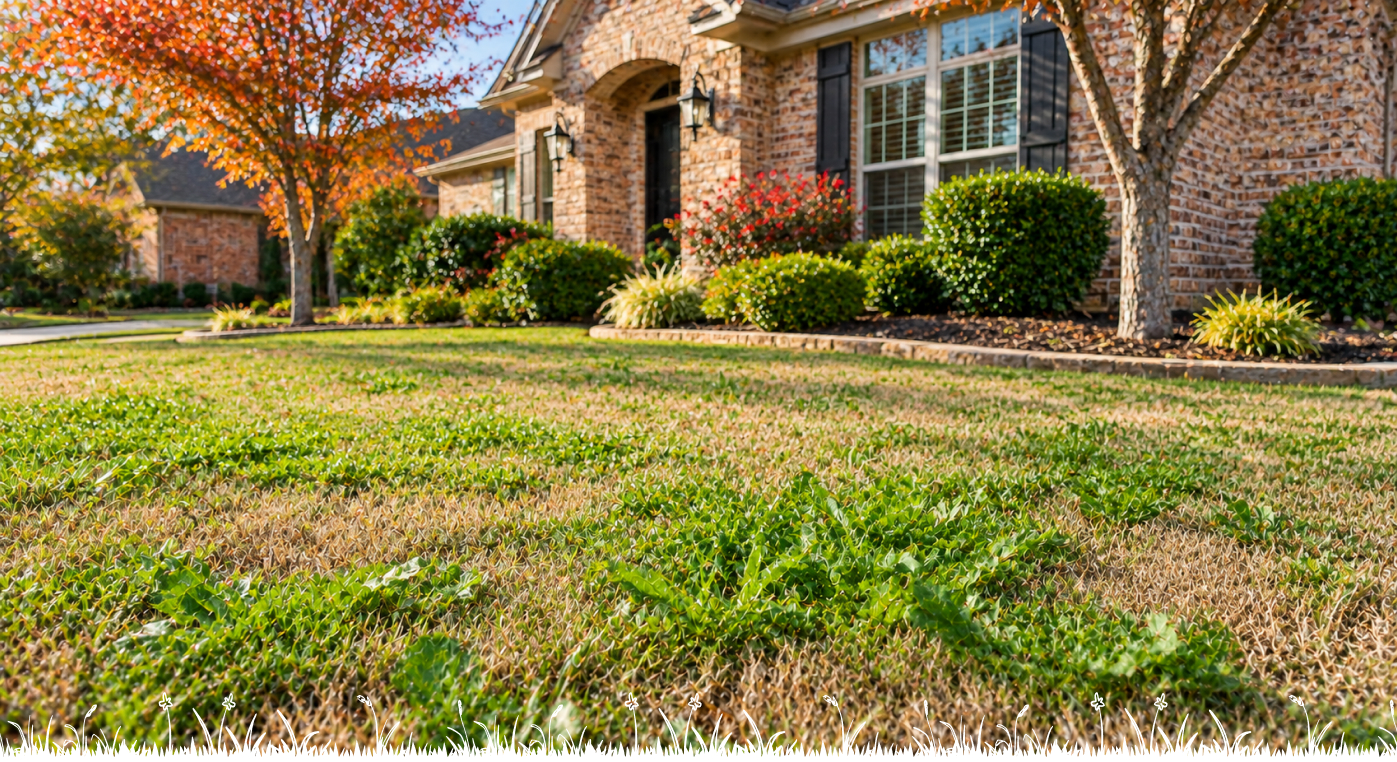
As November arrives in North Texas, homeowners often notice an unexpected change in their lawns. While Bermuda grass begins losing its green summer color, bright green patches suddenly appear across the yard. These patches may look like healthy grass, but they are often winter weeds.
Winter weeds in North Texas become more noticeable as temperatures cool and warm-season turf begins entering dormancy. These unwanted plants can grow in thin lawns, bare soil, and areas where summer heat has weakened the grass.
For homeowners in Lewisville, Flower Mound, Highland Village, and Frisco, understanding why winter weeds appear and how to manage them can make a significant difference in maintaining a healthier lawn.
The key is identifying the problem early, understanding the correct treatment window, and following a consistent seasonal maintenance plan.
1. Why Do Winter Weeds Appear in November?
Many winter annual weeds begin germinating during late summer or early fall when soil temperatures become favorable. By November, some are already growing actively.
Meanwhile, warm-season grasses such as Bermuda begin slowing down as temperatures drop. This creates a noticeable contrast between dormant turf and bright green winter weeds.
Several lawn conditions can encourage weed growth:
- Thin grass caused by summer heat or drought
- Bare patches around sidewalks and driveways
- Compacted soil that limits healthy root development
- Excess moisture in poorly drained areas
- Weed seeds left behind from previous growing seasons
Regular lawn maintenance services can help homeowners identify thinning grass, drainage problems, and seasonal weed activity before they become more difficult to manage.
2. Common Winter Weeds Found in North Texas Lawns
Identifying the weed is important because different species require different management methods.
Annual Bluegrass (Poa Annua)
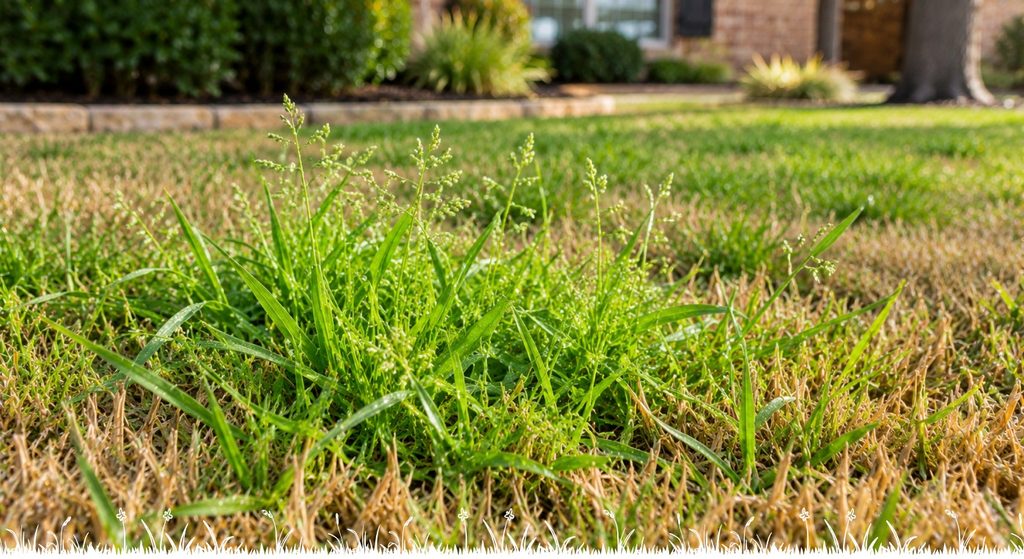
Annual bluegrass is one of the most recognizable winter grassy weeds. It produces bright green clumps that stand out against dormant Bermuda grass.
As it matures, annual bluegrass may develop small seed heads, even when the lawn is regularly mowed.
Henbit
Henbit is a winter annual broadleaf weed with rounded, scalloped leaves. It often produces small purple flowers as the growing season progresses.
It commonly appears in thin turf, landscape borders, and disturbed soil.
Chickweed
Chickweed grows close to the ground and can spread across moist, shaded areas. Its small leaves and dense growth may create noticeable patches.
Rescuegrass
Rescuegrass is another cool-season grassy weed that may appear in North Texas lawns. It often grows in bunches and becomes easier to notice as surrounding warm-season turf enters dormancy.
Correct identification helps determine whether hand removal, spot treatment, or a professional weed management plan is appropriate.
3. Is November Too Late to Prevent Winter Weeds?
November is generally later than the ideal prevention window for many winter annual weeds.
Pre-emergent herbicides work by preventing susceptible weed seedlings from becoming established. These treatments must be applied before the target weeds emerge.
In North Texas, late summer through early fall is an important prevention period for several winter annual weeds.
By November, many weeds may already be visible. Once weeds have emerged, pre-emergent products generally will not eliminate them.
However, treatment timing depends on the weed species, weather conditions, and product label.
Homeowners planning year-round lawn care should include weed prevention in their seasonal services schedule rather than waiting until weeds become widespread.
4. How to Control Winter Weeds Already Growing
When winter weeds have already appeared, the focus changes from prevention to controlling existing growth.
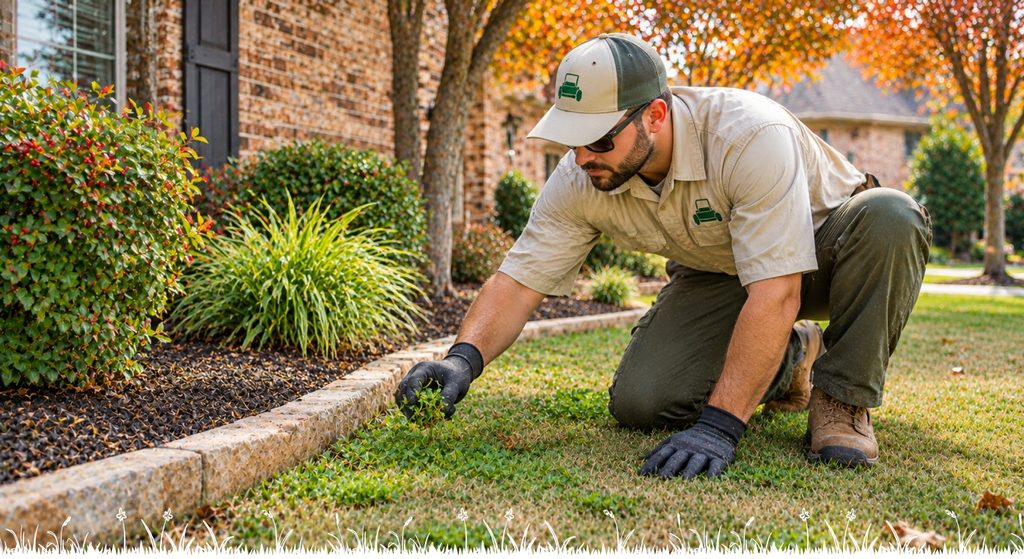
For small infestations, careful hand removal may be practical. Removing weeds before they produce seeds can help reduce future problems.
For larger areas, selective post-emergent herbicides may be considered. However, the correct product depends on both the weed species and the type of lawn grass.
Bermuda, St. Augustine, and Zoysia can respond differently to weed-control products. A treatment that is appropriate for one lawn may damage another.
Always follow the product label and avoid applying herbicides under unsuitable temperature or turf-stress conditions.
If you are unsure which weeds are present, professional identification is a safer starting point than applying an unfamiliar product.
5. Why Thin Lawns Develop More Winter Weeds
Weeds frequently establish where healthy turf coverage is missing.
Summer drought, excessive foot traffic, improper mowing, shade, and drainage problems can all weaken grass.
When the lawn becomes thin, sunlight reaches exposed soil, creating opportunities for weed seedlings to develop.
Improving turf density is an important long-term strategy.
Depending on the property, homeowners may need to address compacted soil, improve drainage, or restore severely damaged grass areas.
For lawns with extensive bare patches, professional sod installation services may be considered when growing conditions are suitable.
Healthy grass cannot prevent every weed, but dense turf can help reduce the open spaces where unwanted plants establish.
6. Adjust Your Watering Schedule during Cooler Weather
Excessive watering can create favorable conditions for certain winter weeds, especially in poorly drained areas.
As November temperatures decline, warm-season lawns generally require less irrigation than they do during summer.
Instead of continuing a summer watering schedule, homeowners should consider recent rainfall, soil moisture, and the actual needs of their grass.
Overwatering can waste water and contribute to unnecessary moisture around dormant turf.
A properly maintained irrigation system helps homeowners manage watering more efficiently during seasonal transitions.
The goal is to provide appropriate moisture without keeping the soil constantly wet.
Latest Blog: Do You Need to Winterize Your Sprinkler Backflow Preventer in North Texas?
As temperatures begin dropping across Lewisville and surrounding North Texas communities, protecting your irrigation system becomes an important part of seasonal lawn care.
Our latest guide, “Do You Need to Winterize Your Sprinkler Backflow Preventer in North Texas?” , explains why backflow preventers need attention during freezing weather and how homeowners can prepare their irrigation systems for colder temperatures.
7. Should You Fertilize a Lawn With Winter Weeds?
Some homeowners assume that applying fertilizer will help their grass overcome winter weed growth.
However, late-season fertilization is not always beneficial for warm-season turf.
As Bermuda grass enters dormancy, it uses fewer nutrients for active growth. Applying unnecessary nitrogen during this period may encourage unwanted plants instead of improving the lawn.
A better approach is to follow a fertilization schedule based on grass type, soil conditions, and seasonal growth.
For established Bermuda lawns, late-fall and winter nitrogen applications are generally not recommended during dormancy.
Healthy turf depends on correct timing and balanced maintenance rather than frequent fertilizer applications.
8. Keep Landscape Beds and Lawn Edges Clean
Winter weeds do not appear only in open lawn areas.
They can also grow around flower beds, tree rings, sidewalks, fences, and landscape borders.
These locations often contain disturbed soil or gaps where weed seeds can germinate.
Removing unwanted growth early, maintaining appropriate mulch coverage, and keeping landscape edges defined can improve the property’s appearance.
Professional landscaping services can help homeowners maintain clean outdoor spaces and address landscape conditions that contribute to recurring weed problems.
Keeping these areas maintained throughout autumn also makes winter property care easier.
9. How to Reduce Winter Weed Problems Next Year
The most effective winter weed management strategy usually begins before November.
Homeowners can reduce recurring infestations by following a consistent prevention plan.
- Identify the weed species that appeared during the previous winter.
- Maintain appropriate mowing heights during the active growing season.
- Address thin grass, drainage problems, and compacted soil.
- Schedule suitable pre-emergent treatments before expected germination.
- Monitor the lawn during fall for newly emerging weeds.
- Avoid unnecessary watering and fertilization during dormancy.
These steps work best when combined with ongoing property maintenance.
For homeowners seeking professional lawn maintenance Lewisville TX, Cameron’s Pro Lawn Services can help evaluate seasonal lawn conditions and discuss suitable maintenance options.
Related Reading: How to Check Your North Texas Lawn for Winter Pests
Not every lawn problem appearing in November is caused by weeds.
Some discoloration, thinning, and damaged patches may be associated with insects, environmental stress, or seasonal turf changes.
Our related guide, “How to Check Your North Texas Lawn for Winter Pests”, explains common warning signs and why identifying the real cause matters before choosing a treatment.
Understanding the difference between weed activity and other lawn problems can help homeowners avoid unnecessary treatments.
10. When Should You Contact a Lawn Care Professional?
A few isolated weeds may be manageable with basic maintenance, but widespread or recurring infestations often indicate underlying lawn problems.
Professional assistance may be helpful when weeds repeatedly return, multiple species are growing together, or large sections of grass have become thin.
A lawn care professional can assess turf conditions, identify likely weed species, and recommend a seasonal maintenance approach appropriate for the property.
Early attention may also help reduce the number of weeds that reach maturity and produce seeds.
Frequently Asked Questions
Why are weeds growing when my Bermuda grass is turning brown?
Bermuda grass slows down during cooler weather, while many winter annual weeds continue growing. This makes bright green weeds more noticeable against dormant turf.
Can I apply pre-emergent weed control in November?
November is generally later than the ideal prevention window for many winter annual weeds. Pre-emergent products do not normally eliminate weeds that have already emerged.
What are the bright green patches in my winter lawn?
They may be annual bluegrass or another cool-season grassy weed. Correct identification is important before choosing a treatment.
Will winter weeds disappear in spring?
Many winter annual weeds naturally complete their life cycle as temperatures rise. However, they may produce seeds before dying, contributing to future infestations.
Does mowing help control winter weeds?
Appropriate mowing can improve appearance and sometimes limit seed production, but mowing alone usually does not eliminate established winter weeds.
How can I prevent winter weeds next year?
Maintain healthy turf, address bare spots, improve drainage where necessary, and plan suitable weed-prevention treatments before fall germination.
Protect Your North Texas Lawn This Winter
Winter weeds can make an otherwise well-maintained lawn appear uneven and neglected.
Understanding their seasonal growth patterns, maintaining healthy turf, and following a consistent prevention schedule can help homeowners reduce recurring weed problems.
Whether you are dealing with annual bluegrass, henbit, chickweed, or thin lawn areas, Cameron’s Pro Lawn Services can help you plan appropriate seasonal maintenance.
Contact Cameron’s Pro Lawn Services to discuss lawn care in Lewisville and surrounding North Texas communities.

Cameron's Lawn Care Service
Explore helpful lawn care, landscaping, irrigation, sod installation, seasonal maintenance, and outdoor property care tips from our team.
See All Blog