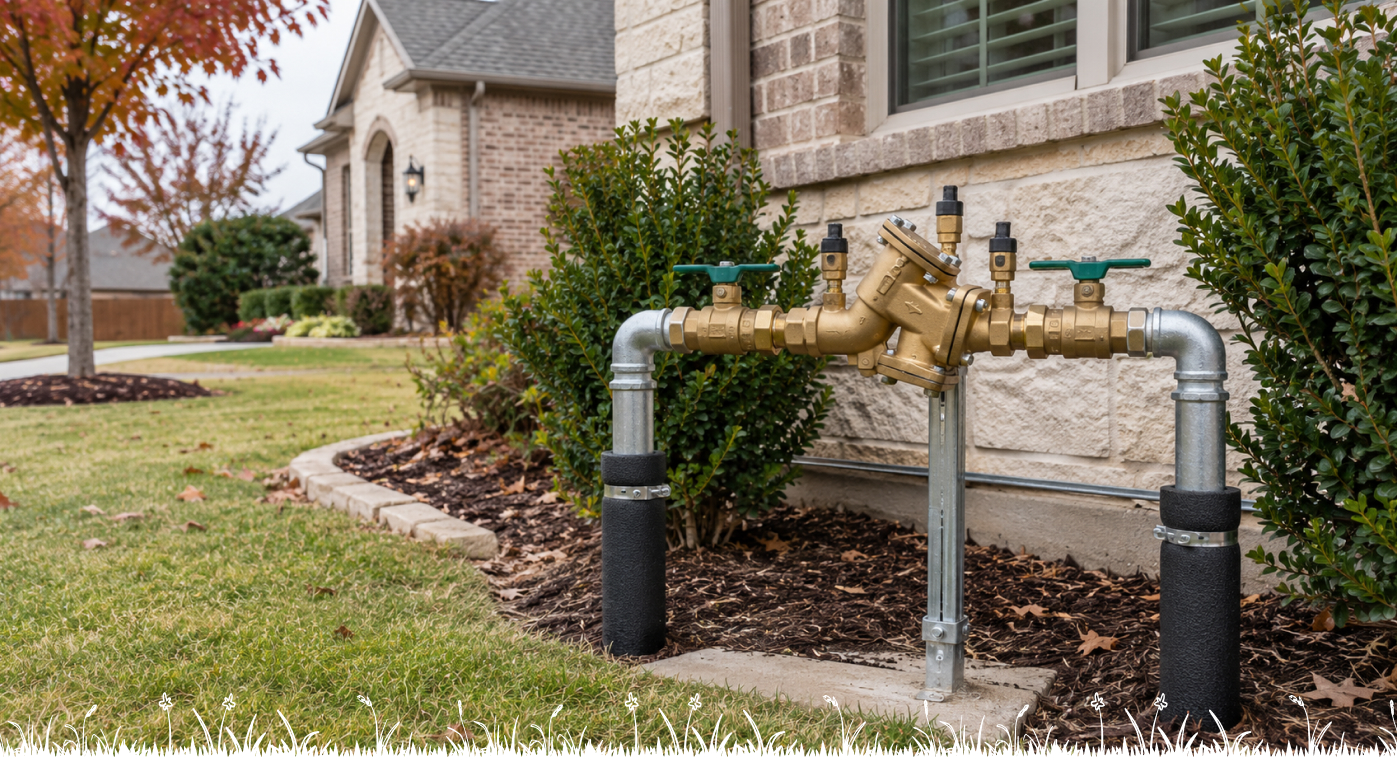
As November temperatures begin dropping across Lewisville and surrounding North Texas communities, homeowners often focus on reducing sprinkler schedules and preparing their lawns for winter.
However, one important irrigation component is frequently overlooked: the backflow preventer.
A backflow prevention assembly helps protect drinking water supplies by preventing potentially contaminated irrigation water from flowing backward into the potable water system.
Some assemblies contain exposed pipes, valves, and fittings that may be vulnerable to freezing temperatures.
Understanding sprinkler backflow preventer winterization Texas homeowners should consider can help reduce the risk of expensive damage and unexpected irrigation repairs.
1. What Is a Sprinkler Backflow Preventer?
A sprinkler backflow preventer is a plumbing safety device designed to stop irrigation water from flowing backward into the drinking water supply.
Irrigation systems can be exposed to soil, fertilizers, pesticides, and other outdoor contaminants.
Without appropriate backflow protection, certain pressure conditions could allow contaminated water to enter the potable water system.
Backflow prevention assemblies come in different types, including pressure vacuum breakers and reduced-pressure assemblies.
Their installation requirements depend on local plumbing regulations and the irrigation system’s configuration.
Because these devices serve an important water-safety function, homeowners should avoid unauthorized modifications or repairs.
2. Why North Texas Freezes Can Damage Backflow Assemblies
North Texas winters may include mild periods followed by sudden freezing temperatures.
Exposed backflow assemblies can be especially vulnerable because water may remain inside valves, fittings, and connected piping.
When trapped water freezes, it expands.
That expansion can damage internal components, crack housings, or cause pipe failures.
The risk depends on the assembly type, exposure, insulation, duration of freezing conditions, and whether water remains trapped inside.
Proper sprinkler backflow preventer winterization Texas homeowners arrange through qualified professionals can help address these risks before severe cold weather arrives.
3. Which Backflow Preventers Are Most Exposed?
Not all irrigation backflow prevention devices are installed in the same location.
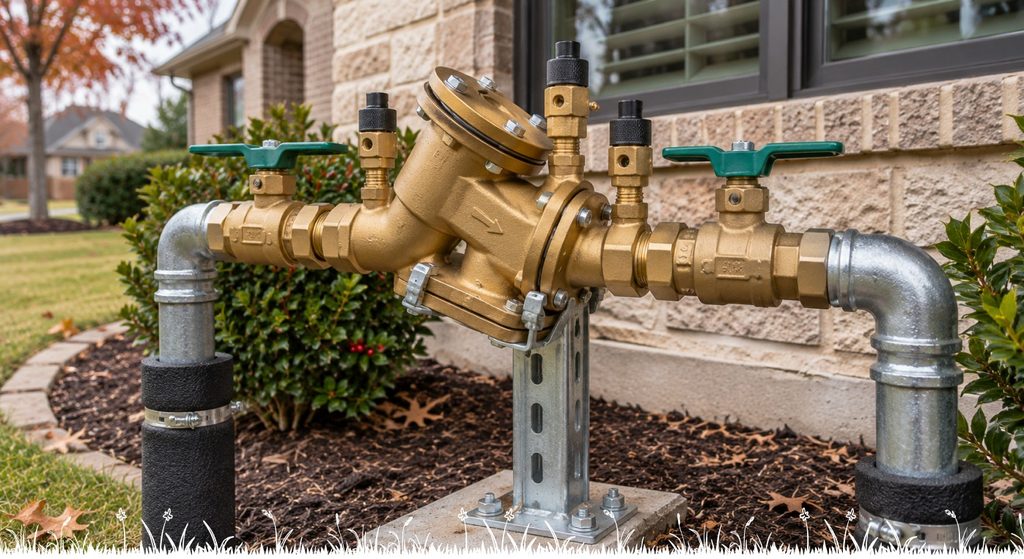
Some systems have above-ground assemblies near the building or landscape beds.
Others use devices located in protected enclosures or different plumbing configurations.
Above-ground assemblies are generally easier to see but may be more exposed to freezing air.
An assembly installed inside an enclosure may have some protection, although an enclosure alone does not guarantee freeze resistance.
Homeowners should identify the location and type of their assembly before planning winter protection.
A licensed irrigation or plumbing professional can help determine which precautions are appropriate.
4. Should You Cover Your Backflow Preventer?
Insulated covers are sometimes used to help protect exposed backflow assemblies during cold weather.
However, the effectiveness of a cover depends on its design, fit, weather conditions, and the specific assembly.
A cover should not obstruct required ventilation, drainage, inspection access, or the proper operation of the device.
Some backflow assemblies discharge water as part of their protective function.
Improper coverings or modifications can interfere with that function.
Homeowners should follow manufacturer instructions and local requirements rather than assuming that any insulated bag or blanket is suitable.
During prolonged or severe freezes, insulation alone may not provide adequate protection.
5. Is Turning Off the Sprinkler Controller Enough?
Turning off an irrigation controller stops scheduled watering, but it does not necessarily remove water from exposed pipes or backflow components.
Water can remain inside portions of the system even when no sprinklers are operating.
That trapped water may still freeze under certain conditions.
Proper winter preparation may require additional steps depending on the system’s configuration.
For professional irrigation system maintenance in Lewisville, homeowners should have their equipment evaluated before attempting unfamiliar winterization procedures.
Do not open test ports, dismantle assemblies, or use compressed air without appropriate training and equipment.
6. Warning Signs of Backflow Preventer Damage
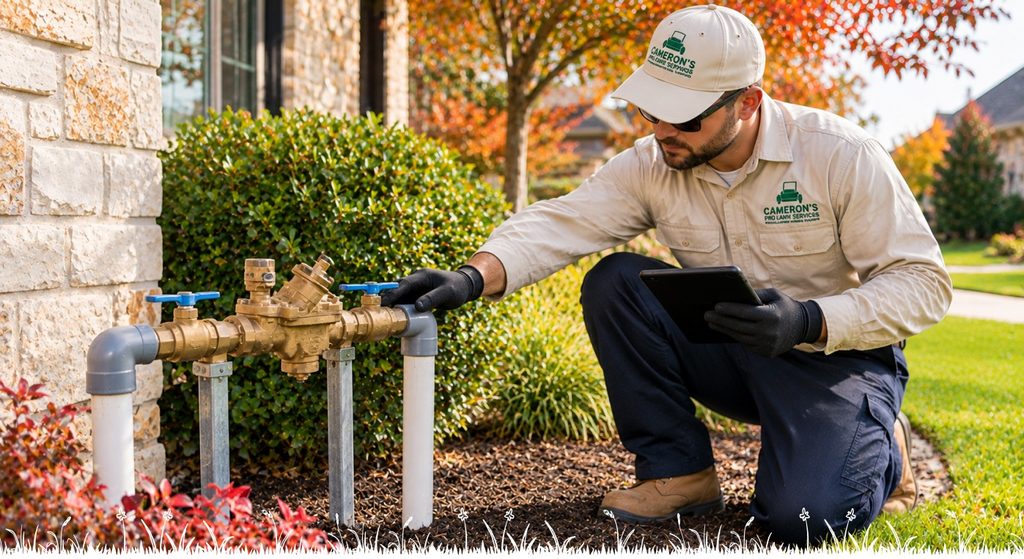
After freezing weather, inspect visible irrigation equipment from a safe distance.
Possible warning signs include dripping connections, unusual water discharge, cracked components, or unexplained water accumulation near the assembly.
Some internal failures may not be visible.
Changes in water pressure or unexpected irrigation behavior can also indicate a problem requiring further inspection.
If you suspect damage, avoid operating the affected system until a qualified professional has assessed it.
Backflow prevention assemblies may require testing or repairs by appropriately licensed or certified personnel under local rules.
Latest Blog: Sod Installation in November
Winter irrigation preparation is closely connected to lawn establishment, especially when homeowners are considering new sod during cooler weather.
Our latest article, Is November Too Late to Install Sod in North Texas?, explains how November temperatures affect Bermuda, St. Augustine, and Zoysia sod, along with soil preparation, watering requirements, and winter establishment challenges.
Understanding how newly installed sod responds to colder conditions can help homeowners make better irrigation and lawn care decisions.
7. When Should You Prepare Your Backflow Preventer?
Homeowners should review exposed irrigation equipment before freezing weather is forecast.
Waiting until temperatures are already below freezing may leave little time to arrange professional assistance.
November is a practical time to inspect the system, identify exposed components, and discuss suitable protection methods.
However, the exact timing depends on local forecasts and the condition of the equipment.
North Texas weather can change quickly, so homeowners should monitor forecasts throughout the colder months.
Planning early can reduce the likelihood of emergency service needs during widespread freezing events.
8. How Seasonal Yard Maintenance Helps
Winter irrigation preparation is closely connected to overall property maintenance.
Fallen leaves, overgrown shrubs, and accumulated debris can make exposed irrigation components harder to access or inspect.
Keep the area around visible equipment clear without disturbing the assembly itself.
Professional seasonal property maintenance can help keep surrounding outdoor spaces organized and accessible during colder weather.
Homeowners should also check for standing water around landscape beds and avoid allowing debris to obstruct drainage.
These steps complement professional irrigation inspections but do not replace proper backflow protection.
9. Common Winterization Mistakes to Avoid
A common mistake is assuming that North Texas winters are too mild to damage irrigation equipment.
Even short periods of freezing temperatures can create problems for exposed water-filled components.
Other mistakes include relying entirely on the controller’s rain or freeze sensor, using unsuitable insulation, and attempting to drain or dismantle unfamiliar equipment.
Some homeowners also assume that a sprinkler system is protected because the grass is dormant.
Turfgrass dormancy does not eliminate the risk of damage to plumbing components.
The safest approach is to identify the assembly type, understand the manufacturer’s guidance, and use qualified professionals when required.
10. What Should You Do After a Freeze?
Once temperatures rise, inspect visible irrigation components for obvious signs of damage.
Do not force frozen valves or attempt to operate equipment that appears cracked or leaking.
If you notice unusual water discharge, contact a qualified professional.
Some damage may become apparent only after water pressure is restored.
Depending on the assembly type and local regulations, professional testing may be necessary to confirm proper backflow protection.
Addressing suspected problems before regular irrigation resumes can help prevent further damage.
Related Reading: Preparing Your Irrigation System for Winter
Backflow protection is one part of broader sprinkler system preparation.
Our guide, How to Prepare Your North Texas Irrigation System for winter, covers additional considerations for irrigation equipment, seasonal watering, and exposed components.
Together, these maintenance practices can help homeowners prepare their outdoor systems for changing winter conditions.
Frequently Asked Questions
Can a sprinkler backflow preventer freeze in North Texas?
Yes. Exposed assemblies containing water can be damaged when temperatures fall below freezing, particularly during prolonged cold weather.
Does turning off the sprinkler controller protect the backflow preventer?
No. Turning off the controller does not necessarily remove water from the backflow assembly or connected piping.
Can I wrap my backflow preventer with a blanket?
Improvised coverings may be unsuitable for some assemblies. Use protection appropriate to the device and follow manufacturer and local requirements.
Should I drain my backflow preventer myself?
Homeowners should avoid unfamiliar draining or disassembly procedures. Some assemblies require specific handling by qualified professionals.
When should I schedule irrigation winterization in Lewisville?
Before freezing weather is expected, allowing enough time to inspect equipment and arrange any necessary professional service.
Professional Irrigation Services in Lewisville, TX
Protecting your irrigation system before winter can help reduce the risk of damaged components and unexpected repairs.
Cameron’s Pro Lawn Services provides irrigation and lawn maintenance services for homeowners in Lewisville and surrounding North Texas communities.
For year-round lawn maintenance Lewisville TX property owners can rely on Cameron’s Pro Lawn Services to help maintain their outdoor spaces.
Contact Cameron’s Pro Lawn Services today to request an irrigation service estimate.

Cameron's Lawn Care Service
Explore helpful lawn care, landscaping, irrigation, sod installation, seasonal maintenance, and outdoor property care tips from our team.
See All Blog