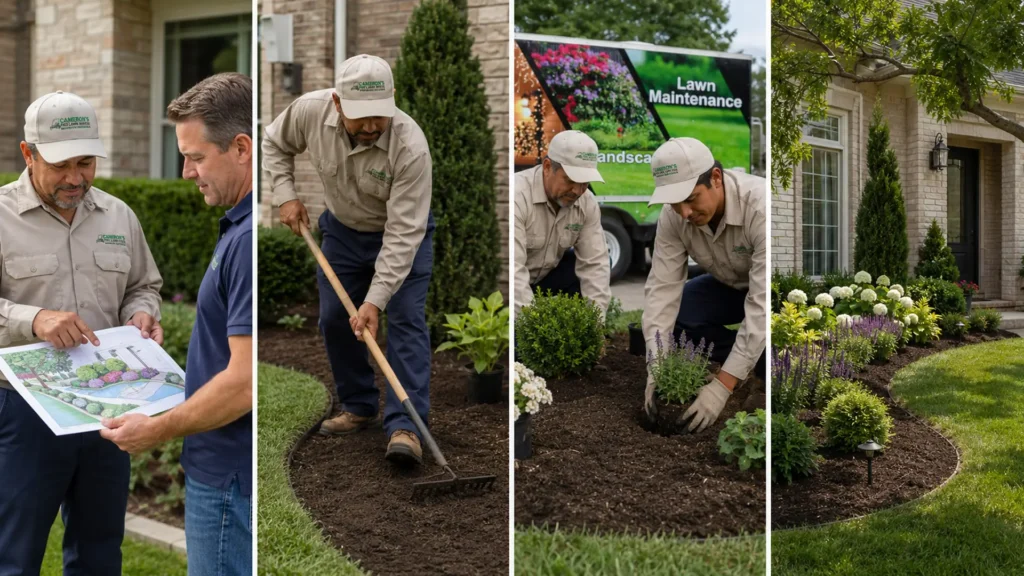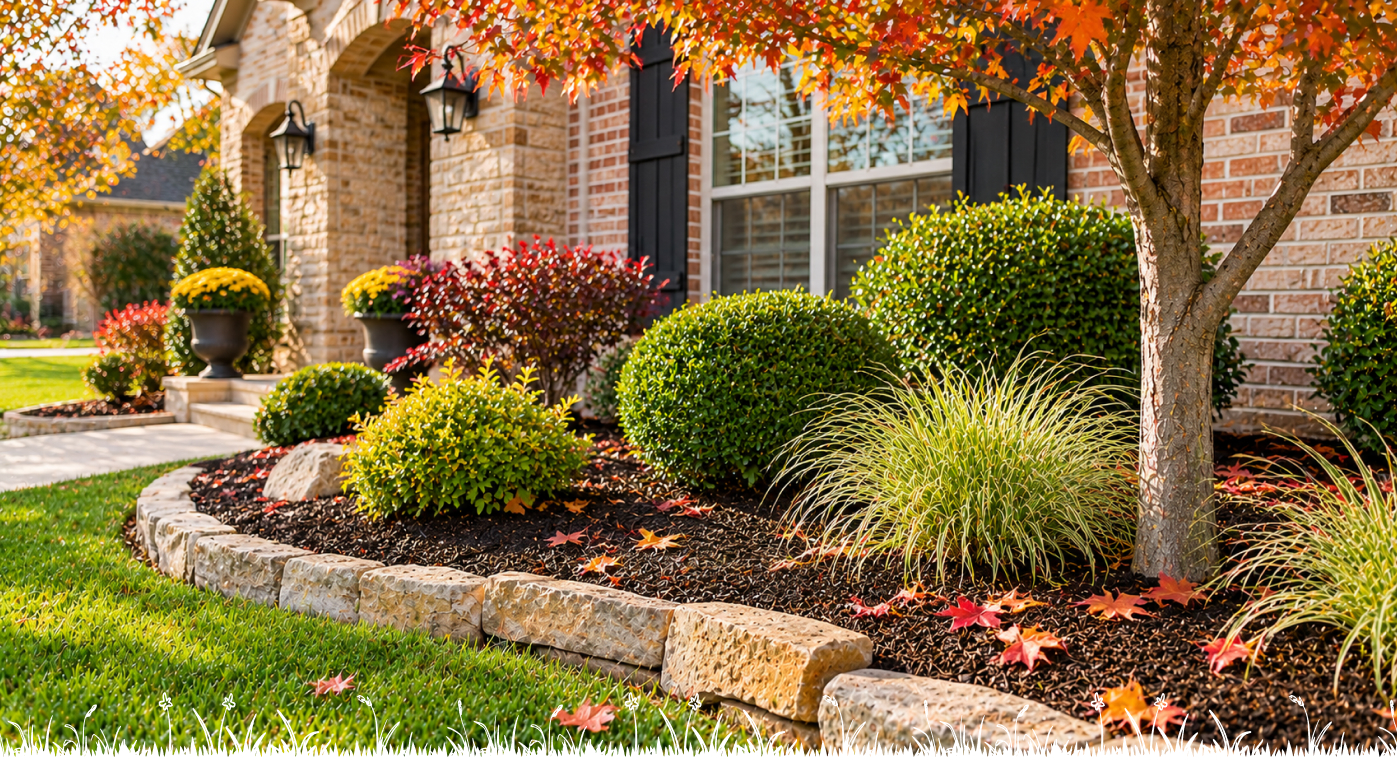
As November temperatures begin to cool, homeowners in Lewisville and surrounding North Texas communities should start paying closer attention to their landscape beds.
Flower beds, ornamental shrubs, young plants, and exposed soil can experience stress when temperatures fluctuate between warm afternoons and freezing nights.
Preparing these areas before winter arrives helps reduce avoidable damage and makes seasonal property maintenance easier.
Effective winter landscape bed preparation North Texas homeowners can follow includes inspecting plants, refreshing mulch, managing fallen leaves, checking drainage, and protecting vulnerable vegetation when freezing weather is expected.
Here are practical steps to keep landscape beds in better condition throughout the colder months.
1. Inspect Your Landscape Beds Before Winter
Start by walking around your property and examining each landscape bed.
Look for damaged branches, declining plants, exposed roots, compacted soil, and areas where water collects.
Some plants naturally change color or lose leaves during autumn, so seasonal changes do not always indicate a problem.
However, severely wilted plants, broken branches, and persistent standing water deserve closer attention.
Documenting problem areas in November makes it easier to plan appropriate maintenance before colder weather arrives.
2. Refresh Mulch Around Trees and Shrubs
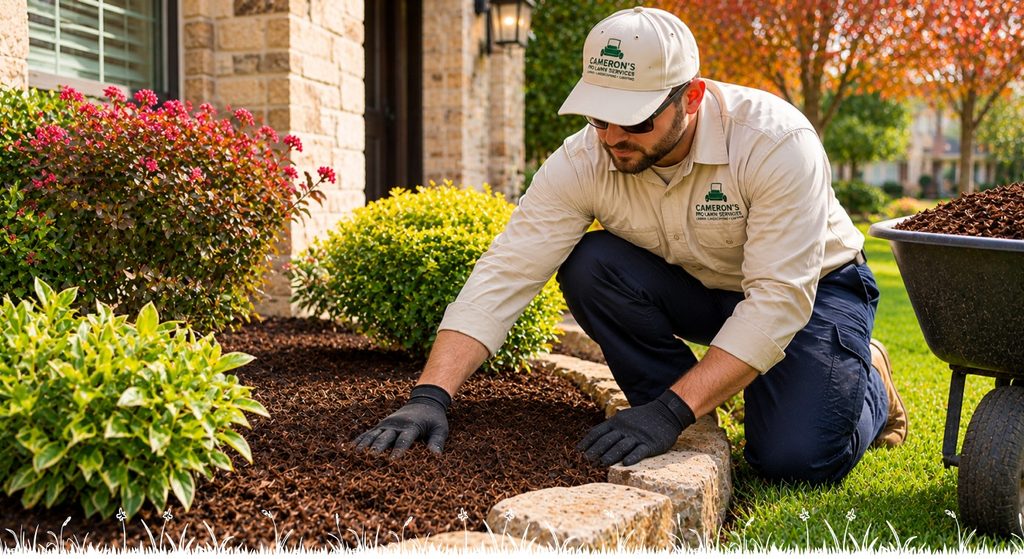
Mulch is one of the most useful materials for seasonal landscape bed maintenance.
An appropriate layer of organic mulch helps moderate soil temperature, conserve moisture, and reduce some weed growth.
During fall, existing mulch may become thin or uneven because of decomposition, rainfall, and routine maintenance.
For effective winter landscape bed preparation North Texas homeowners should inspect mulch depth and replenish it where necessary.
For many established landscape beds, approximately two to three inches of organic mulch is appropriate, although individual plants and site conditions may require adjustments.
Keep mulch away from tree trunks and shrub stems to avoid trapping excessive moisture against plant tissue.
3. Remove Excessive Leaves and Debris
Fallen leaves are common throughout November, particularly around mature trees.
A light layer of leaves can sometimes be beneficial in planted areas, but heavy accumulations may cover small plants, obstruct drainage, and create unwanted moisture conditions.
Remove debris that is smothering sensitive vegetation or blocking water movement.
Healthy leaves can sometimes be shredded and reused as mulch or composted, depending on their condition.
Avoid leaving thick, matted layers over low-growing plants.
Regular cleanup also helps keep pathways, landscape borders, and drainage features accessible.
4. Protect Sensitive Plants From Freezing Temperatures
Not every landscape plant responds to cold weather in the same way.
Established, cold-hardy plants may tolerate typical North Texas winter conditions, while tender ornamentals and recently planted shrubs can be more vulnerable.
Before a freeze, review the needs of individual plants and identify those requiring protection.
Breathable frost cloth or suitable plant coverings may provide limited protection during certain cold events.
Secure covers properly and follow plant-specific guidance. Remove or ventilate coverings when conditions improve.
Avoid assuming that one covering method will protect every plant during a severe freeze.
5. Check Drainage Around Landscape Beds
Winter landscape preparation should include an inspection of how water moves through your property.
Poor drainage may cause water to collect around plant roots, especially in compacted or clay-heavy soil.
Inspect beds near foundations, fences, retaining walls, and low areas after rainfall.
Make sure fallen leaves and debris are not obstructing existing drainage paths.
If recurring drainage problems affect your landscape, professional landscaping services in Lewisville can help you evaluate suitable improvements.
Correcting drainage issues can benefit plants throughout the year, not only during winter.
Latest Blog: Low-Maintenance Landscaping Ideas
Preparing landscape beds for winter is also an opportunity to evaluate how much maintenance your existing landscape requires.
Our latest article, Best Low-Maintenance Landscaping Ideas for North Texas Homes Before Winter, discusses practical plant selection, mulch beds, landscape edging, and drainage improvements.
These ideas can help homeowners plan outdoor spaces that are attractive and easier to maintain throughout the seasons.
6. Avoid Unnecessary Heavy Pruning
November is not always the best time to perform major pruning on ornamental shrubs.
Heavy pruning can sometimes encourage new growth that may be vulnerable to freezing temperatures.
Remove clearly dead, broken, or hazardous branches when appropriate, but consider the needs of each plant before making substantial cuts.
Spring-flowering shrubs may also develop flower buds before winter, so improper pruning can reduce their next season’s blooms.
For major tree pruning or potentially hazardous branches, consult a qualified professional.
7. Review Watering Needs for Landscape Plants
As temperatures decline, many landscape plants require less frequent watering.
However, recently installed plants and certain evergreens may still need moisture during extended dry periods.
Check soil conditions rather than watering automatically.
Waterlogged soil can stress roots, while excessively dry conditions may also damage vulnerable plants.
Adjust irrigation according to rainfall, plant needs, and upcoming weather.
For homeowners who need help maintaining their watering equipment, professional irrigation system maintenance can help identify sprinkler-related issues and support more efficient landscape watering.
Avoid running sprinklers during freezing conditions, particularly where water could create icy sidewalks or driveways.
8. Maintain Clean Landscape Edges
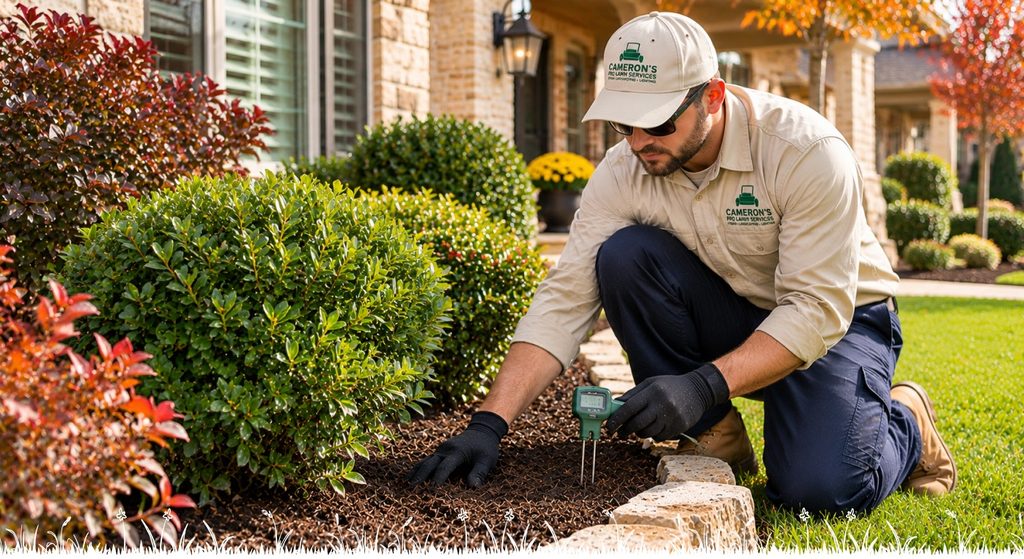
Landscape borders help create a neat appearance and separate planting beds from surrounding lawns.
During autumn, soil movement, fallen debris, and routine yard activity may affect edging.
Inspect stone, brick, or manufactured borders for displaced sections and areas requiring minor adjustments.
Clear excessive leaves from walkways and remove weeds that remain active during cooler weather.
These small maintenance tasks can make landscape beds easier to manage when spring growth begins.
9. Coordinate Seasonal Services With Lawn Maintenance
Landscape beds and lawns should not be treated as completely separate areas.
Heavy leaves, poor drainage, and overgrown borders can affect the appearance and condition of surrounding turf.
Professional lawn maintenance Lewisville TX homeowners can rely on helps keep grass, edges, and surrounding outdoor areas maintained as seasons change.
Cameron’s Pro Lawn Services provides routine lawn care and seasonal property maintenance throughout Lewisville and nearby North Texas communities.
Coordinating these services can help keep the entire property looking organized and well maintained.
Related Reading: Winter Irrigation Preparation
Landscape beds and irrigation systems often need attention at the same time as colder weather approaches.
Our article, How to Prepare Your North Texas Irrigation System for winter, explains practical considerations for sprinkler equipment, watering schedules, and protecting exposed irrigation components.
Understanding these related maintenance tasks can help homeowners prepare their outdoor spaces more effectively.
Frequently Asked Questions
When should I prepare landscape beds for winter in North Texas?
Late fall is a useful time to inspect landscape beds, refresh mulch, remove excessive debris, and identify plants that may need protection before freezing weather.
Should I remove all fallen leaves from flower beds?
Not necessarily. A light layer of healthy leaves can provide benefits, but thick accumulations that cover plants or block drainage should be managed.
How much mulch should I use before winter?
Approximately two to three inches of organic mulch is suitable for many landscape beds. Keep mulch away from trunks and stems.
Should I prune shrubs before winter?
Avoid unnecessary heavy pruning without considering the plant species and its growth cycle. Remove damaged or hazardous material when appropriate.
Do landscape plants need water during winter?
Some plants may still need occasional watering during dry periods. Water according to soil moisture, weather, and individual plant requirements.
Schedule Seasonal Landscape Maintenance in Lewisville, TX
Preparing your landscape beds before winter can help protect vulnerable plants, improve outdoor appearance, and reduce unnecessary seasonal maintenance problems.
Cameron’s Pro Lawn Services helps residential and commercial property owners maintain attractive landscapes throughout Lewisville and surrounding North Texas communities.
Contact Cameron’s Pro Lawn Services today to request a free estimate for seasonal property maintenance.

Cameron's Lawn Care Service
Explore helpful lawn care, landscaping, irrigation, sod installation, seasonal maintenance, and outdoor property care tips from our team.
See All Blog