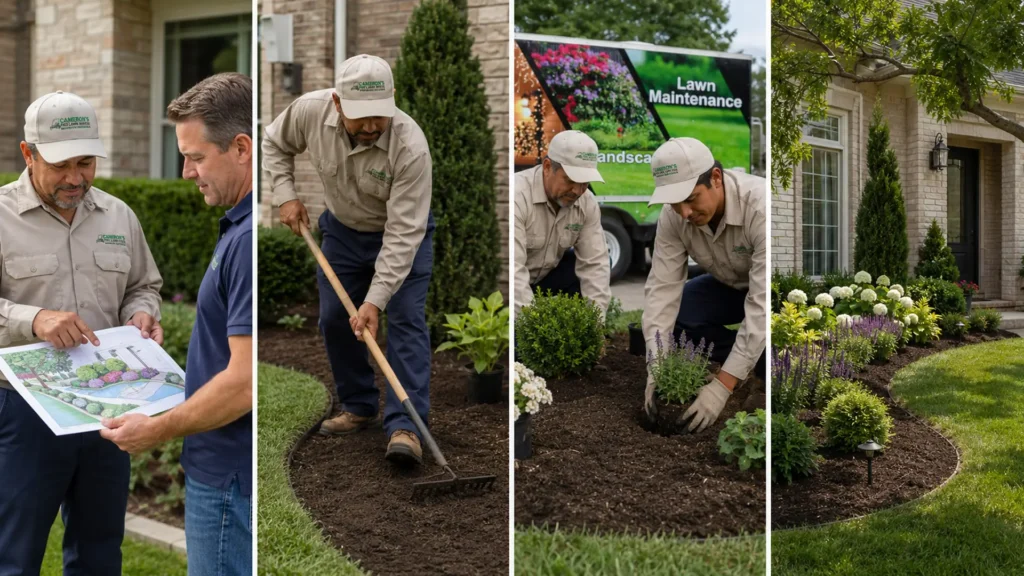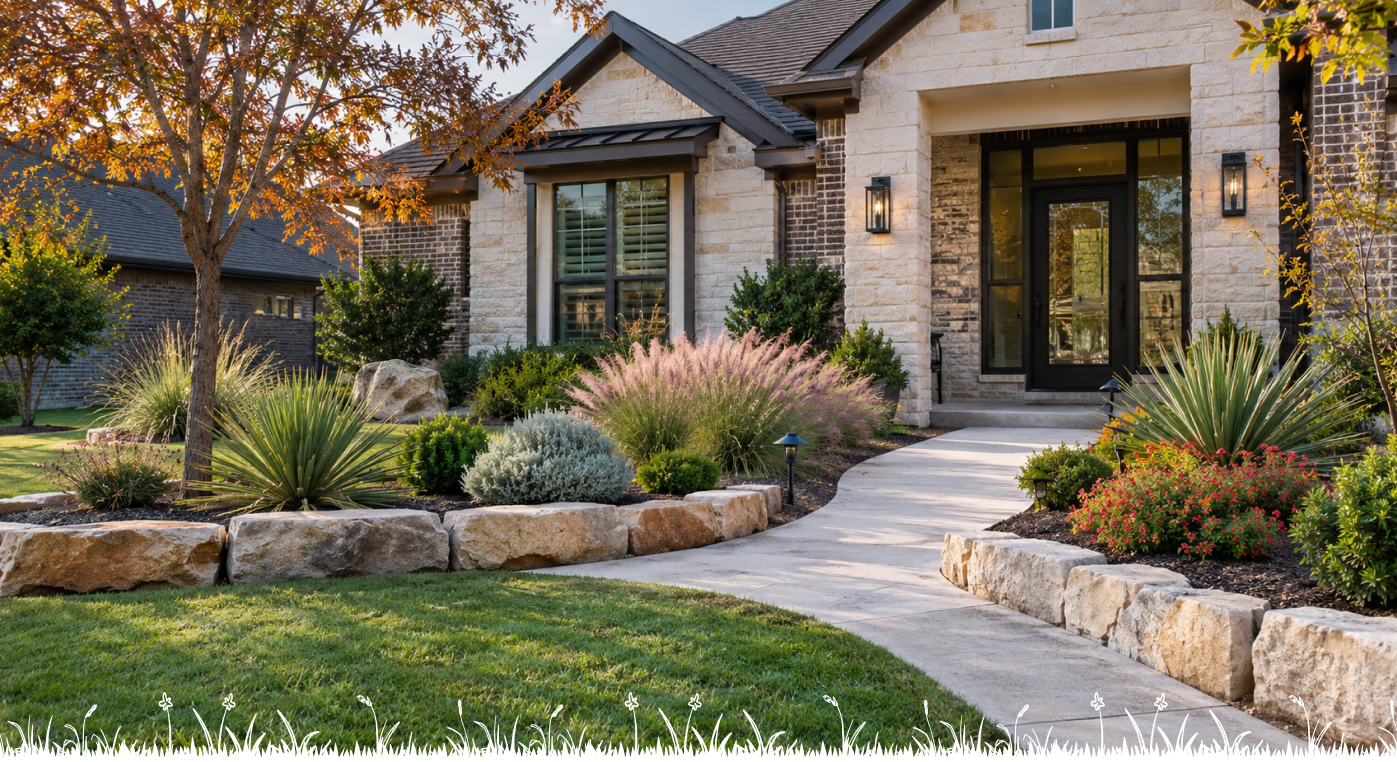
A beautiful landscape should not require constant watering, trimming, or expensive seasonal repairs. For homeowners in Lewisville and surrounding North Texas communities, November is an excellent time to evaluate existing landscape features and identify improvements that can reduce maintenance throughout the year.
With changing temperatures, unpredictable rainfall, and hot summers, choosing the right landscape materials and plants can make a significant difference.
Investing in low maintenance landscaping North Texas homeowners can manage comfortably starts with understanding local growing conditions, drainage, plant selection, and long-term upkeep.
Here are practical landscaping ideas to consider before winter arrives.
1. Choose Plants That Suit North Texas Conditions
Plant selection is one of the most important factors in creating an attractive landscape that requires less maintenance.
North Texas experiences hot summers, occasional drought, clay-heavy soils, and winter temperature fluctuations. Plants that cannot tolerate these conditions may require frequent watering, replacement, or additional protection.
Consider locally appropriate options such as autumn sage, Texas sage where site conditions permit, and selected native ornamental grasses.
Before planting, evaluate sunlight exposure, mature plant size, soil drainage, and irrigation needs.
Choosing plants based on their growing requirements rather than appearance alone helps create a more sustainable landscape.
2. Use Mulch to Improve Landscape Beds
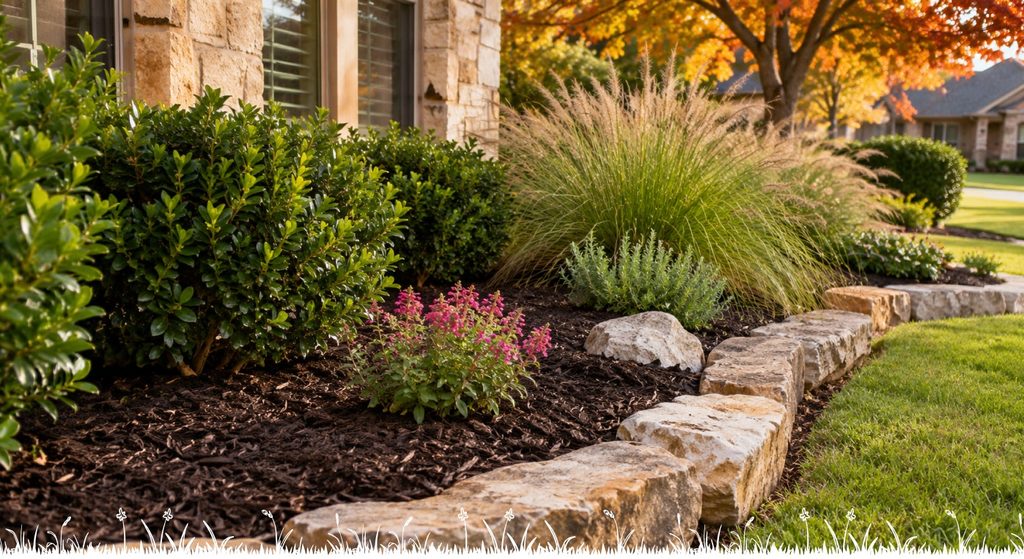
Mulch is a practical addition to many residential landscapes.
A properly maintained mulch layer helps moderate soil temperature, reduce evaporation, and limit some weed growth.
Organic mulch also gradually decomposes, contributing organic material to the soil.
When planning low maintenance landscaping North Texas homeowners can enjoy year-round, mulch beds are worth considering because they simplify maintenance around trees and shrubs.
Avoid piling mulch against tree trunks or shrub stems. Keep the material slightly away from plant bases to reduce unnecessary moisture accumulation.
3. Replace High-Maintenance Areas With Practical Features
Not every part of your yard needs to be covered with turfgrass.
Narrow strips beside fences, heavily shaded corners, and steep slopes can be difficult to mow or maintain.
In suitable locations, homeowners may consider gravel pathways, stepping stones, planted beds, or other landscape features that reduce routine mowing requirements.
However, gravel and hardscape areas still need occasional cleaning, edging, and weed control.
A well-designed landscape balances appearance, usability, drainage, and realistic maintenance expectations.
4. Improve Drainage Before Winter Rainfall
Drainage is especially important in areas with compacted or clay-heavy soil.
Water that repeatedly collects near foundations, walkways, or planting beds can create maintenance problems.
Inspect your property after rainfall and identify areas where water remains for unusually long periods.
Depending on the site, solutions may include adjusting bed elevations, improving grading, or installing suitable drainage features.
Professional irrigation and drainage maintenance can help homeowners identify sprinkler-related water distribution issues and manage excess irrigation around existing outdoor spaces.
Drainage modifications near foundations should be assessed carefully to avoid directing water toward buildings or neighboring properties.
5. Select Landscape Edging That Is Easy to Maintain
Landscape edging creates a clear separation between lawns, flower beds, and pathways.
Stone, brick, and suitable manufactured edging materials can provide durable boundaries when installed correctly.
Clean borders can also simplify trimming and help prevent mulch from spreading into surrounding lawn areas.
Choose edging based on soil movement, installation requirements, and the overall design of your property.
Avoid materials that create unnecessary trip hazards or interfere with mowing equipment.
Latest Blog: November Sprinkler System Maintenance
Low-maintenance landscaping also depends on appropriate watering practices. Even drought-tolerant plants may require irrigation while establishing their roots.
Our recent article, Should You Turn Off Your Sprinkler System in November in North Texas?, explains how seasonal weather changes affect watering schedules and why excessive irrigation can create problems.
Reviewing irrigation needs alongside landscape design can help homeowners reduce unnecessary water use.
6. Plan Landscape Improvements Before Spring
November can be a useful time to evaluate landscape layouts before the busy spring growing season.
Look for overcrowded shrubs, worn-out borders, exposed soil, drainage issues, and areas that are difficult to maintain.
Create a list of improvements based on priority rather than attempting every project at once.
Some planting projects are suitable for fall, while others should wait until temperatures and soil conditions become more favorable.
Planning ahead allows homeowners to make better decisions about plant selection, materials, and installation timing. Scheduling seasonal landscape maintenance can also help keep beds, borders, and outdoor areas maintained while larger improvements are being planned.
7. Keep Trees and Shrubs Manageable
Trees and shrubs add shade, privacy, and visual appeal, but they should be selected with their mature size in mind.
Plants installed too close together may eventually require frequent trimming or removal.
Choose varieties appropriate for the available space and avoid blocking windows, walkways, or important utility access.
Remove dead or damaged material when appropriate, but avoid unnecessary heavy pruning that may stimulate tender growth before freezing weather.
For major tree work, consult a qualified arborist.
8. Coordinate Landscaping With Routine Lawn Care
Even a low-maintenance landscape needs periodic attention.
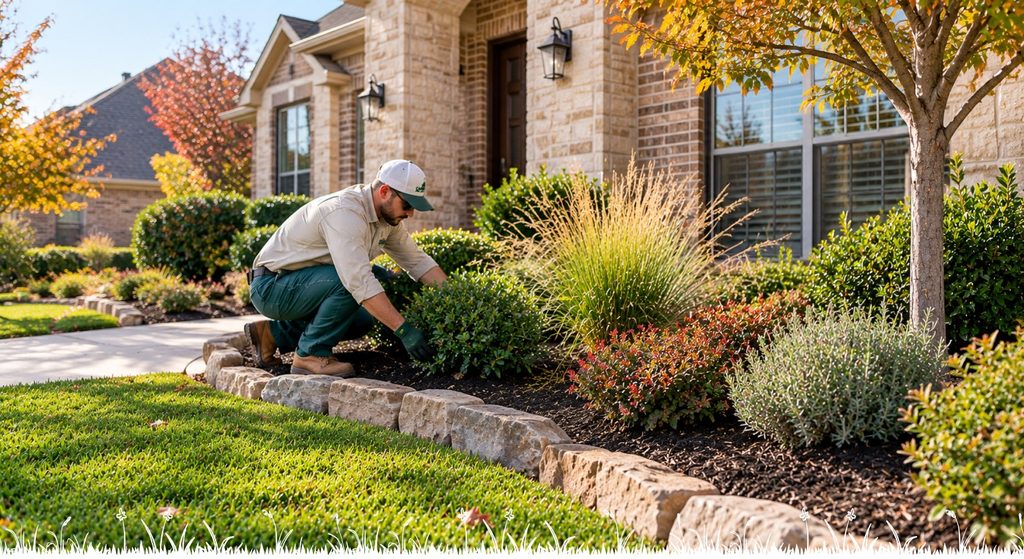
Grass edging, leaf removal, shrub monitoring, and seasonal cleanup help maintain the overall appearance of a property.
Professional lawn maintenance Lewisville TX homeowners can rely on complements thoughtful landscape design by keeping surrounding turf and outdoor areas maintained.
Cameron’s Pro Lawn Services helps Lewisville property owners manage lawn and landscape maintenance throughout changing seasons.
A coordinated maintenance approach can also help identify minor issues before they become larger projects.
9. Avoid Common Low-Maintenance Landscaping Mistakes
Low-maintenance does not mean maintenance-free.
Common mistakes include selecting plants that are too large for the space, using decorative rock without considering heat exposure, ignoring drainage, and installing plants with incompatible watering requirements.
Another mistake is overcrowding beds to achieve an instantly full appearance.
Allowing adequate space for mature growth can reduce future pruning and replacement needs.
A successful landscape should look attractive while remaining practical for the homeowner to maintain.
Related Reading: Seasonal Landscape Preparation
Landscape improvements work best when they are supported by appropriate seasonal care.
Our guide, How to Prepare Your Lewisville Property for the First Freeze, explains how homeowners can protect sensitive plants, review outdoor conditions, and prepare their properties for colder weather.
Combining thoughtful landscaping with seasonal preparation helps reduce avoidable winter maintenance issues.
Frequently Asked Questions
What is the best low-maintenance landscaping for North Texas?
A combination of climate-appropriate plants, properly mulched beds, practical edging, and effective drainage can reduce routine maintenance requirements.
Are native plants always maintenance-free?
No. Native plants generally suit regional conditions, but they still require appropriate placement, establishment watering, and occasional care.
Is November a good time for landscaping in Lewisville?
November can be useful for planning and certain planting projects, depending on plant species, soil conditions, and upcoming weather.
Does mulch help protect plants during winter?
Mulch can help moderate soil temperatures and retain moisture, but it does not guarantee protection against severe freezing conditions.
Can landscaping reduce lawn maintenance costs?
Thoughtful design may reduce mowing and watering requirements, although initial installation costs and ongoing upkeep should also be considered.
Professional Landscaping Services in Lewisville, TX
Creating an attractive, practical outdoor space begins with the right design decisions.
Cameron’s Pro Lawn Services provides landscaping and lawn maintenance services for residential and commercial properties throughout Lewisville and surrounding North Texas communities.
Contact Cameron’s Pro Lawn Services today to request a free estimate for your landscaping project.

Cameron's Lawn Care Service
Explore helpful lawn care, landscaping, irrigation, sod installation, seasonal maintenance, and outdoor property care tips from our team.
See All Blog