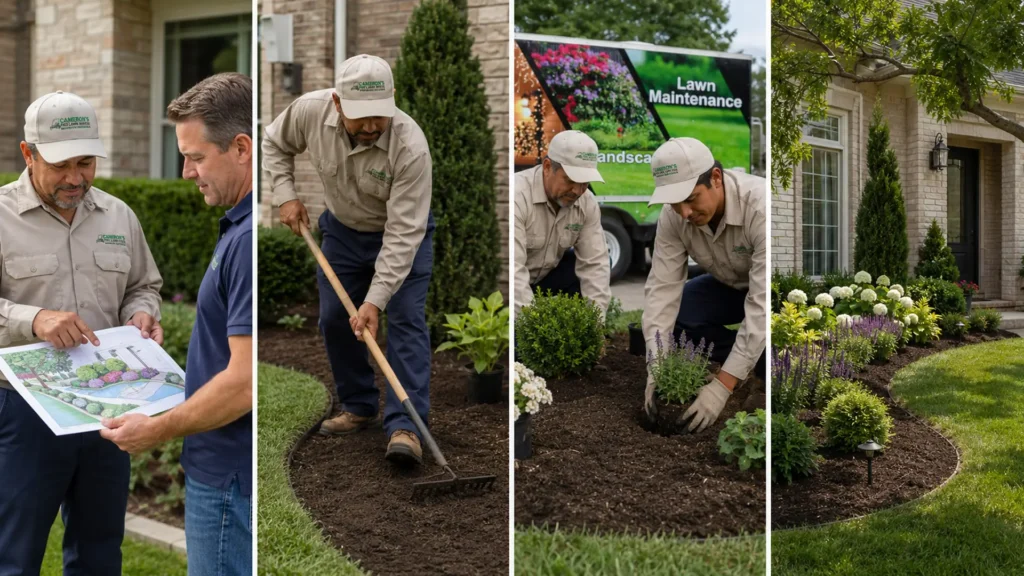
November brings cooler temperatures, shorter days, and changing landscapes across North Texas. For homeowners in Lewisville, Flower Mound, Highland Village, and Frisco, it is also an excellent opportunity to improve outdoor spaces before winter arrives.
Many people assume that spring is the only suitable time for planting. However, fall can be one of the best seasons for establishing certain trees and shrubs in North Texas.
With proper plant selection, soil preparation, watering, and winter protection, planting trees and shrubs in North Texas during November can support healthy root development before the intense heat of summer returns.
Understanding which plants perform well and how to care for them can help homeowners make better landscaping decisions.
1. Why November Can Be a Good Time for Planting
Fall offers several advantages for planting suitable trees and shrubs.
Cooler air temperatures reduce heat stress compared with summer. Meanwhile, soil often remains warm enough to support root development during parts of the fall season.
Newly planted trees and shrubs can use this period to begin establishing roots before warmer weather returns.
Other benefits include:
- Reduced exposure to extreme summer heat
- Lower water loss through leaves
- More comfortable working conditions
- Additional time for root establishment before summer
- Opportunities to improve landscaping before the next growing season
Professional landscaping services can help homeowners select plants suited to their property, soil conditions, and available sunlight.
Although fall planting is often beneficial, success still depends on choosing appropriate species and protecting plants from extreme weather.
2. Which Trees Grow Well in North Texas?
Choosing trees adapted to local conditions is one of the most important parts of a successful landscaping project.
North Texas properties frequently experience clay-heavy soils, hot summers, occasional drought, and winter freezes.
Several trees commonly considered for the region include:
Texas Red Oak
Texas red oak is valued for its shade, attractive foliage, and suitability for many North Texas landscapes when planted in an appropriate location.
It requires enough space for its mature canopy and root system.
Cedar Elm
Cedar elm is a hardy native tree commonly used in North Texas landscapes. It tolerates a range of growing conditions and can provide substantial shade as it matures.
Texas Redbud
Texas redbud is a smaller ornamental tree known for its colorful spring flowers.
It can work well in residential landscapes where a large shade tree would be unsuitable.
Desert Willow
Desert willow is valued for its flowers and tolerance of heat and relatively dry conditions once established.
It performs best in suitable, well-drained locations.
Before planting, homeowners should consider mature tree size, overhead power lines, underground utilities, drainage, and distance from buildings.
3. Best Shrubs to Consider for Fall Landscaping
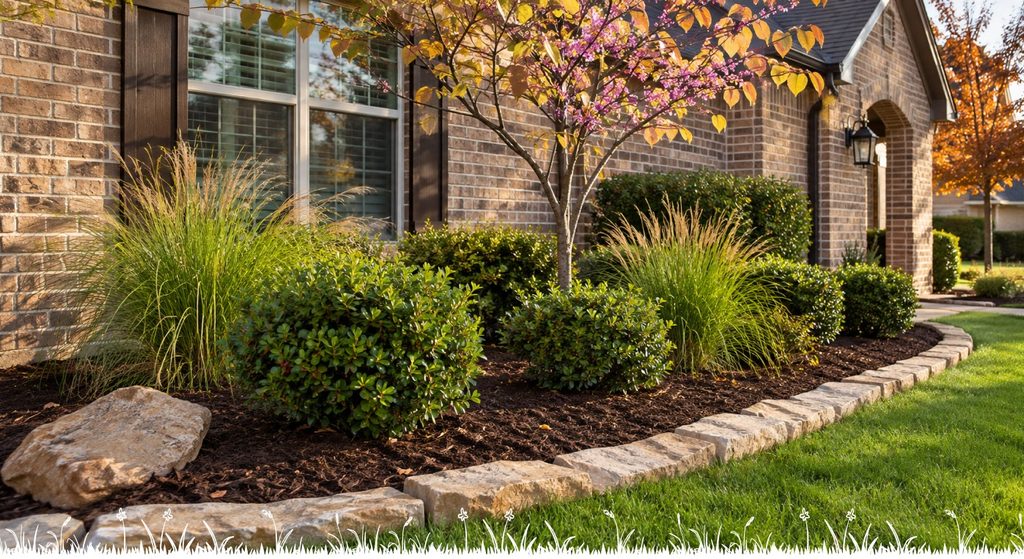
Shrubs can add structure, privacy, seasonal color, and visual interest to residential landscapes.
However, not every shrub performs equally well in North Texas.
Some options worth considering include:
Dwarf Yaupon Holly: A versatile evergreen shrub often used for foundation planting and low-maintenance landscape designs.
Texas Sage: A drought-tolerant shrub that performs best in sunny locations with well-drained soil.
American Beautyberry: A native shrub known for its distinctive purple berries and suitability for certain naturalistic landscapes.
Abelia: A flowering shrub that can provide attractive foliage and seasonal interest, depending on the variety.
Plant selection should account for sunlight, soil drainage, mature size, and cold tolerance.
Homeowners planning new beds may benefit from combining shrub installation with ongoing seasonal landscaping services to maintain the surrounding property.
4. How to Prepare North Texas Soil Before Planting
Healthy root development begins with proper soil preparation.
Many North Texas properties contain dense clay soil that can hold water for extended periods. Poor drainage may create problems for trees and shrubs that require well-drained conditions.
Before planting, evaluate the soil, drainage, and available space.
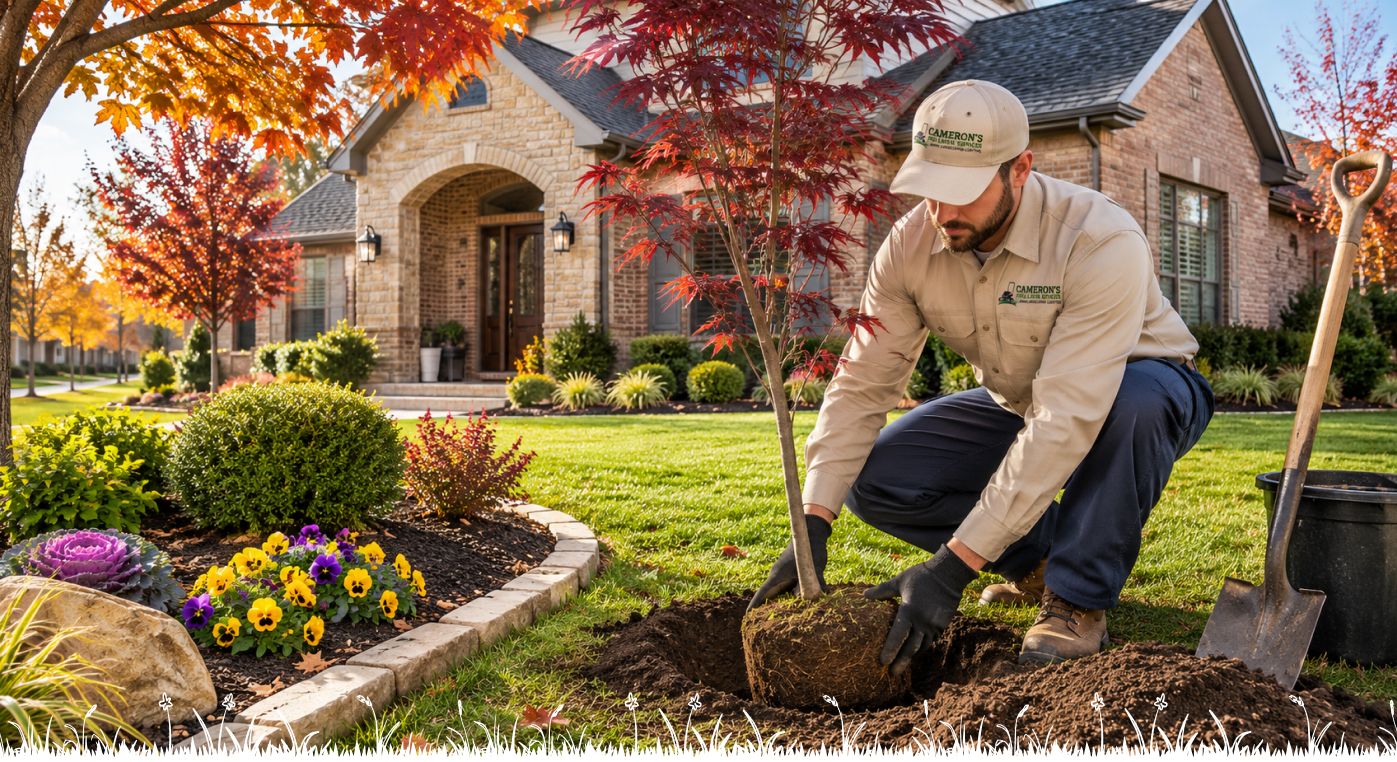
The planting hole should generally be wider than the root ball but no deeper than the root ball’s appropriate planting depth.
The root flare, where the trunk widens into the roots, should remain visible near the soil surface rather than being buried.
Avoid placing excessive soil over the root ball or planting trees too deeply.
Backfill with suitable existing soil unless site-specific conditions require another approach. Adding large amounts of amended soil only inside the planting hole can sometimes create drainage differences between the hole and surrounding ground.
Proper preparation helps new plants establish more successfully.
5. How Much Water Do Newly Planted Trees and Shrubs Need?
Newly installed plants require consistent attention to moisture, even during cooler weather.
Although November temperatures are generally milder than summer temperatures, newly planted root systems still need adequate water.
Watering frequency depends on soil type, plant size, rainfall, drainage, and weather conditions.
Clay soil may retain moisture longer than sandy soil, so watering should be based on actual soil conditions rather than a fixed schedule.
Deep, appropriate watering can encourage root development, while constantly saturated soil can contribute to root problems.
A properly functioning irrigation system can help homeowners manage landscape watering more effectively.
Newly planted trees may also need separate watering attention because standard lawn sprinklers do not always provide enough moisture directly to the root ball.
6. Should You Add Mulch Around New Plants?
Mulch is an important part of fall landscape maintenance.
A suitable layer of organic mulch can help moderate soil temperatures, reduce moisture loss, and limit weed growth.
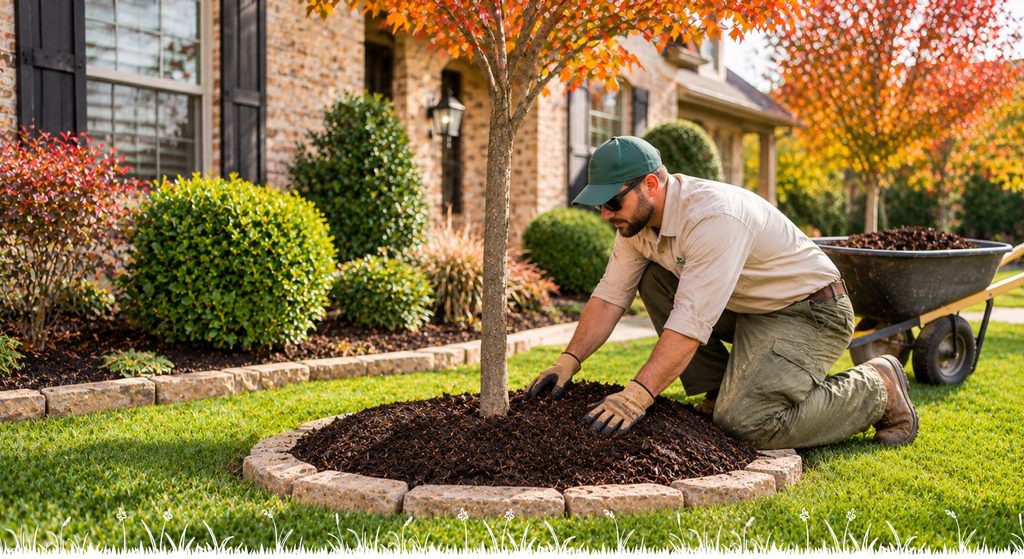
For many landscape beds, approximately two to three inches of mulch is appropriate, depending on the material and site conditions.
However, mulch should not be piled directly against tree trunks or shrub stems.
Excessive mulch around the base of a tree can trap moisture and contribute to bark problems.
Instead, spread mulch evenly across the surrounding root area while leaving space around the trunk.
Proper mulching improves both plant care and the appearance of landscape beds.
Latest Blog: Winter Weeds in North Texas: Why They Appear in November and How to Stop Them
While November can be a suitable time for planting trees and shrubs, it is also a season when winter weeds begin appearing across North Texas lawns.
Our latest guide, “Winter Weeds in North Texas: Why They Appear in November and How to Stop Them,” explains why weeds become more noticeable as Bermuda grass enters dormancy.
It also covers common winter weeds, seasonal prevention timing, and practical lawn maintenance steps.
Reading this guide can help homeowners manage existing lawn areas while planning new landscape improvements.
7. How to Protect Newly Planted Trees From Winter Freezes
North Texas winters can bring sudden temperature changes and occasional hard freezes.
Recently planted trees and shrubs may be more vulnerable because their root systems are not fully established.
Homeowners should monitor weather forecasts and prepare sensitive plants when freezing temperatures are expected.
Depending on the species, protective measures may include appropriate watering before a freeze, maintaining mulch around the root area, and temporarily covering cold-sensitive plants with suitable frost protection material.
Protective covers should extend toward the ground to help retain warmth and should be removed when conditions improve.
Avoid placing plastic directly against sensitive foliage.
Planting cold-hardy species suited to North Texas remains one of the most effective long-term strategies.
8. Common Mistakes to Avoid During November Planting
Even suitable trees and shrubs can struggle when planting practices are incorrect.
Common mistakes include:
- Planting trees too deeply
- Choosing species that are unsuitable for local conditions
- Installing plants in poorly drained locations
- Watering too frequently or too little
- Placing mulch directly against trunks
- Planting too close to buildings or underground utilities
- Ignoring the mature size of trees and shrubs
These problems can affect root development, appearance, and long-term plant health.
A professional landscape assessment can help homeowners avoid costly planting mistakes.
9. How New Trees and Shrubs Improve Property Appearance
Well-planned landscaping can make a residential property more attractive throughout the year.
Trees can provide shade, structure, and seasonal interest, while shrubs help define beds, walkways, and outdoor living areas.
Thoughtful plant placement can also improve privacy and create a more balanced landscape design.
For properties with damaged lawn areas around new plantings, suitable sod installation services may help restore the surrounding turf when growing conditions support establishment.
Combining trees, shrubs, mulch, and healthy lawn areas creates a more cohesive outdoor appearance.
For homeowners seeking dependable lawn maintenance Lewisville TX, Cameron’s Pro Lawn Services provides a local starting point for discussing ongoing lawn and landscape care.
Related Reading: How to Protect Landscape Beds Before Winter in North Texas
Planting new trees and shrubs is only one part of preparing a property for winter.
Existing landscape beds also require attention as temperatures begin dropping.
Our related guide, “How to Protect Landscape Beds Before Winter in North Texas,” explains practical ways to maintain mulch, protect sensitive plants, manage soil moisture, and prepare outdoor spaces for colder weather.
These steps can help homeowners maintain both new plantings and established landscape areas.
10. When Should You Hire a Professional Landscaper?
Small planting projects may be manageable for homeowners with the right tools and experience.
However, larger trees, extensive shrub installations, drainage concerns, and complete landscape redesigns often require professional planning.
A landscaping professional can help evaluate available space, select suitable plants, and identify conditions that may affect long-term growth.
Professional assistance can also be valuable when coordinating planting projects with irrigation improvements, lawn restoration, or seasonal property maintenance.
Choosing the right plants and installing them correctly can reduce avoidable problems in the years ahead.
Frequently Asked Questions
Is November too late to plant trees in North Texas?
Not necessarily. November can be a suitable planting period for many hardy trees, provided soil conditions are appropriate and the plants receive proper care.
Can you plant shrubs during November in Texas?
Yes. Many cold-hardy shrubs can be planted during fall, although species selection, drainage, and freeze protection remain important.
What is the best time to plant trees in North Texas?
Fall is often a favorable planting season for many trees because cooler air temperatures reduce heat stress while soil may remain suitable for root development.
Should newly planted trees be watered during winter?
Yes, when needed. Newly planted trees still require adequate moisture, particularly during dry periods. Avoid overwatering and adjust for rainfall and soil conditions.
How much mulch should I put around a new tree?
A layer of approximately two to three inches is often suitable. Keep mulch away from direct contact with the trunk.
Do newly planted shrubs need protection from freezing weather?
Some do. Cold-sensitive species and recently installed plants may benefit from temporary protection during severe freezes.
Improve Your North Texas Landscape This Fall
November can be an excellent opportunity to improve residential landscapes with carefully selected trees and shrubs.
Cooler temperatures, appropriate soil preparation, and proper watering can help new plants begin establishing roots before the next growing season.
Whether you are planning a small planting project or a larger landscape improvement, choosing suitable plants and following correct installation practices can make a lasting difference.
Contact Cameron’s Pro Lawn Services to discuss landscaping and seasonal property maintenance in Lewisville, Flower Mound, Highland Village, and surrounding North Texas communities.

Cameron's Lawn Care Service
Explore helpful lawn care, landscaping, irrigation, sod installation, seasonal maintenance, and outdoor property care tips from our team.
See All Blog