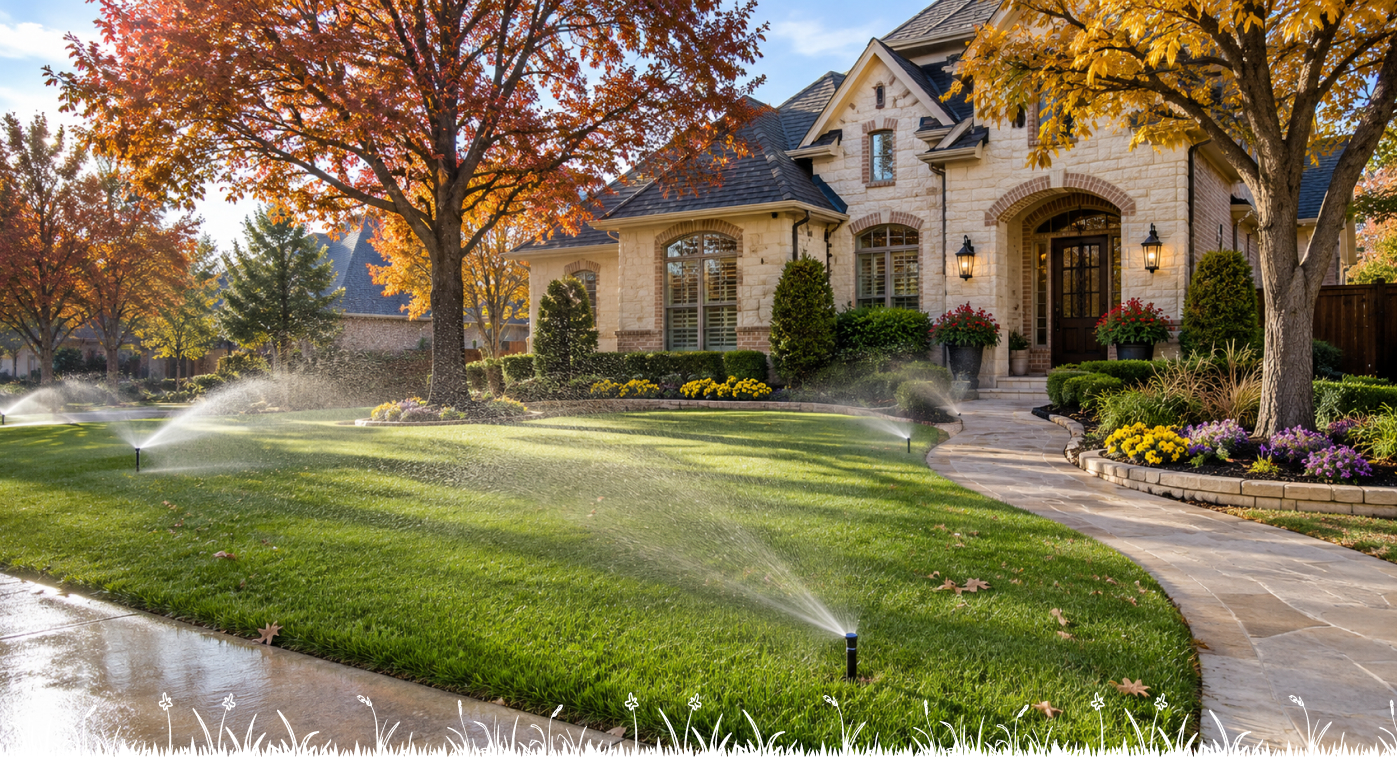
As November arrives in Lewisville and surrounding North Texas communities, homeowners often wonder whether they should turn off their sprinkler systems completely or continue watering their lawns.
The answer depends on weather conditions, soil moisture, rainfall, and the type of grass growing on your property. While warm-season grasses begin slowing down during fall, they may still need occasional moisture when conditions are dry.
Understanding the sprinkler system winter watering in North Texas can help homeowners avoid unnecessary water use, protect their lawns, and prepare their irrigation systems for colder temperatures.
At Cameron’s Pro Lawn Services, we understand how changing seasons affect residential landscapes. Making a few adjustments now can help prevent avoidable watering problems during winter.
1. Should You Turn Off Your Sprinklers in November?
Not every North Texas property needs to stop watering on the same date.
November temperatures can vary significantly. Some weeks remain mild and dry, while others bring rainfall or cooler conditions that reduce lawn watering requirements.
Instead of following a fixed calendar date, homeowners should adjust irrigation based on actual lawn and soil conditions.
A sprinkler system may need to remain off for extended periods after adequate rainfall. During prolonged dry weather, occasional watering may still be appropriate.
The goal is to provide moisture only when necessary rather than continuing a summer watering schedule.
2. Why Winter Watering Needs Are Different
Warm-season grasses such as Bermuda, Zoysia, and St. Augustine naturally slow their growth as temperatures decline.
During active summer growth, lawns typically use more water because of higher temperatures and increased evaporation.
In November, reduced growth and cooler weather generally mean lower irrigation requirements.
However, dormancy does not eliminate every need for moisture. Roots and surrounding landscape plants can still experience stress during extended dry periods.
A sensible approach to sprinkler system winter watering North Texas homeowners can follow begins with checking soil moisture before running automatic irrigation.
Avoid watering simply because your controller is programmed to run on a particular day.
3. How to Check Whether Your Lawn Needs Water
Before adjusting your sprinkler controller, examine the soil in several lawn areas.
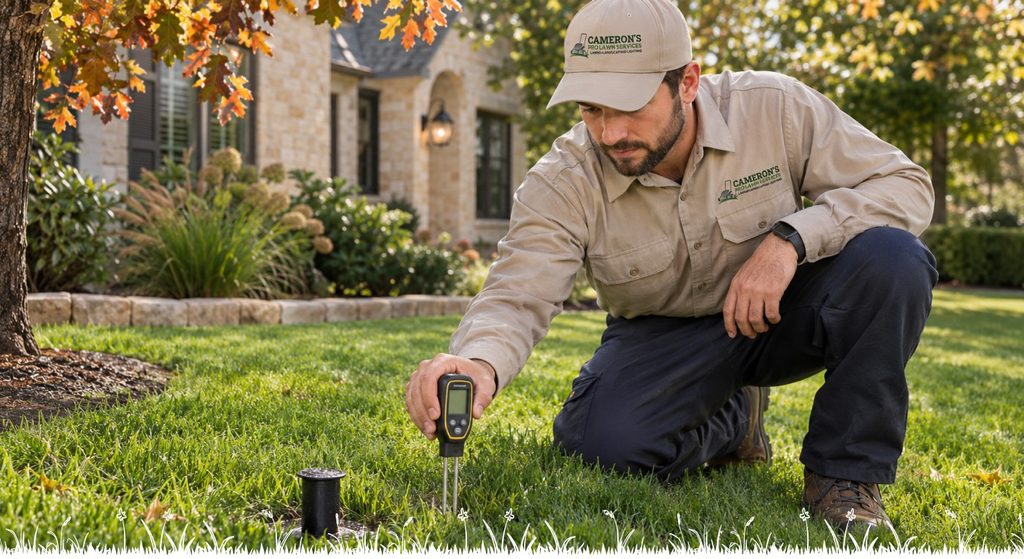
Use a small hand trowel or soil probe to check moisture a few inches below the surface. Soil that remains moist generally does not require additional watering immediately.
If the soil is unusually dry and the weather forecast shows little rainfall, supplemental watering may be appropriate.
Also inspect areas beneath trees, near sidewalks, and around slopes because moisture conditions may vary across the property.
4. Signs You May Be Overwatering Your Lawn
Continuing summer irrigation schedules into November can create unnecessary moisture.
Overwatering may contribute to saturated soil, runoff, shallow puddles, and unhealthy conditions around turfgrass roots.
Watch for these warning signs:
- Standing water after irrigation.
- Soil that remains wet for several days.
- Water flowing onto sidewalks or driveways.
- Persistent dampness in shaded areas.
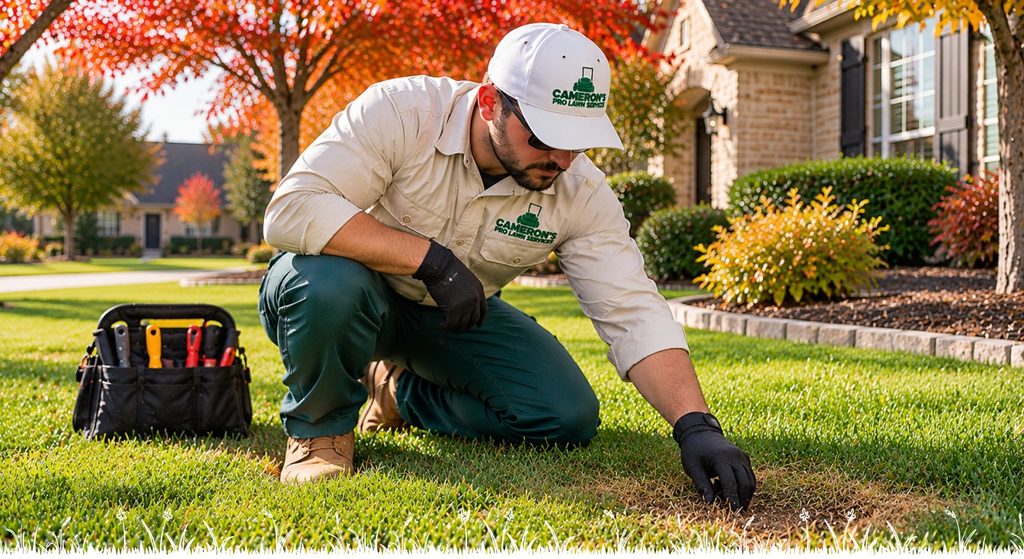
- Increasing brown or discolored turf patches.
Not every brown patch results from excessive watering, but consistently wet conditions can contribute to certain lawn diseases.
If you notice these problems, reduce unnecessary irrigation and inspect your sprinkler system for uneven coverage or leaks.
5. Adjust Your Sprinkler Controller for Cooler Weather
Modern irrigation controllers may include seasonal adjustment settings, rain sensors, or weather-based scheduling features.
These tools can help reduce unnecessary watering when temperatures drop or rainfall increases.
Start by reviewing your existing watering schedule. If it was designed for summer, it may provide considerably more water than your landscape currently needs.
Check each irrigation zone separately because turfgrass, shrubs, and flower beds can have different moisture requirements.
For properties requiring professional assistance, our irrigation services in Lewisville can help homeowners address sprinkler-related maintenance concerns.
Avoid relying on a single watering duration for every area of your property.
Latest Blog: Why Is Your St. Augustine Lawn Turning Brown in November?
Brown grass can sometimes be caused by seasonal dormancy, but fungal disease and excessive moisture may also contribute to discoloration.
Our latest article, Why Is Your St. Augustine Lawn Turning Brown in November in North Texas?, explains how homeowners can recognize the differences between normal winter color changes and potentially unhealthy turf conditions.
Understanding these differences can help you avoid unnecessary irrigation adjustments and treatments.
6. What Happens When Freezing Weather Arrives?
North Texas occasionally experiences freezing temperatures that can damage exposed irrigation components.
Sprinkler heads, backflow assemblies, exposed piping, and other system components may be vulnerable depending on their design and exposure.
Before freezing conditions arrive, review your system’s manufacturer guidance and identify exposed components requiring protection.
Automatic watering should not run during freezing conditions because it can create ice on sidewalks, driveways, and other surfaces.
Some irrigation systems may require additional winterization measures. The correct approach depends on the equipment, installation, and local conditions.
7. Seasonal Property Maintenance Matters Too
Irrigation is only one part of preparing a North Texas property for winter.
Leaves can accumulate around drainage areas, plants may require seasonal attention, and landscape beds should be monitored as temperatures change.
Professional seasonal property maintenance services can help homeowners keep outdoor spaces maintained through fall and winter.
Coordinating lawn care with seasonal maintenance helps homeowners recognize drainage issues, remove excessive debris, and keep their landscapes looking tidy.
8. Should You Water Dormant Grass?
Dormant grass generally requires much less water than actively growing turf.
However, an extended dry period can still affect soil moisture and landscape health.
Rather than running sprinklers automatically every week, check whether the soil is dry and consider recent rainfall.
Watering decisions should also account for local restrictions and the weather forecast.
When watering is necessary, choose conditions that allow moisture to enter the soil without creating freezing hazards.
Avoid irrigating immediately before or during freezing weather.
9. Maintain Your Lawn Without Wasting Water
A healthy winter maintenance routine involves more than irrigation.
Continue mowing only when grass is growing, remove heavy leaf accumulation, and monitor areas where water repeatedly collects.
Consistent lawn maintenance Lewisville TX homeowners can rely on helps maintain attractive outdoor spaces while seasonal watering needs change.
Cameron’s Pro Lawn Services supports residential and commercial properties throughout Lewisville and surrounding communities with professional lawn and landscape maintenance.
Related Reading: Preparing Your Irrigation System for winter
Our guide, How to Prepare Your North Texas Irrigation System for Winter, explains how homeowners can inspect sprinkler heads, check for leaks, adjust controllers, and protect exposed irrigation components before colder weather arrives.
Frequently Asked Questions
Should I completely turn off my sprinkler system in November?
Not necessarily. Many North Texas lawns need significantly less irrigation during November, but occasional watering may still be appropriate during extended dry periods.
How often should I water my lawn during winter in North Texas?
There is no universal schedule. Watering frequency depends on rainfall, soil moisture, grass type, and current weather conditions.
Can overwatering damage my lawn in November?
Yes. Excessive watering can create saturated soil and contribute to poor turf conditions, including increased susceptibility to certain diseases.
Should sprinklers run when temperatures are below freezing?
No. Avoid operating irrigation systems during freezing conditions because water can freeze on paved surfaces and exposed equipment may be vulnerable.
Do sprinkler systems need winterization in Lewisville, TX?
Some systems require protective measures before freezing weather. Requirements depend on system design, exposed components, and manufacturer recommendations.
Get Professional Irrigation and Lawn Maintenance in Lewisville, TX
If your sprinkler system is still running on a summer schedule, November is a good time to review your watering needs.
Cameron’s Pro Lawn Services helps Lewisville homeowners maintain attractive lawns and landscapes through changing seasonal conditions.
Contact Cameron’s Pro Lawn Services today to request a free estimate for your lawn maintenance and irrigation needs.

Cameron's Lawn Care Service
Explore helpful lawn care, landscaping, irrigation, sod installation, seasonal maintenance, and outdoor property care tips from our team.
See All Blog