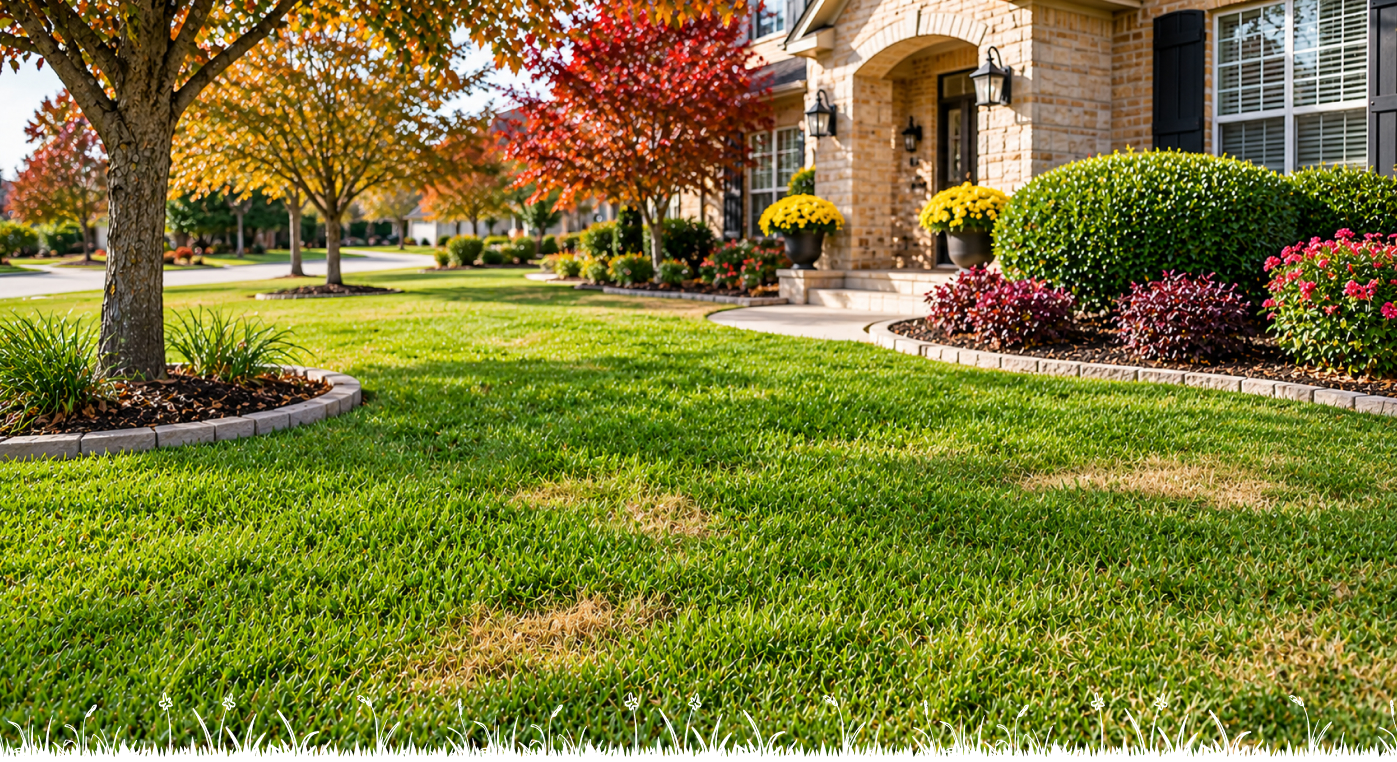
November brings noticeable changes to lawns across Lewisville, Flower Mound, Highland Village, and surrounding North Texas communities. As temperatures begin to drop, homeowners may notice their once-green St. Augustine grass developing yellow or brown areas.
While some color changes are completely natural, others may indicate fungal diseases, excessive moisture, or underlying lawn maintenance problems.
Understanding why St Augustine grass is turning brown in North Texas is important before applying fertilizer, replacing grass, or changing your watering schedule.
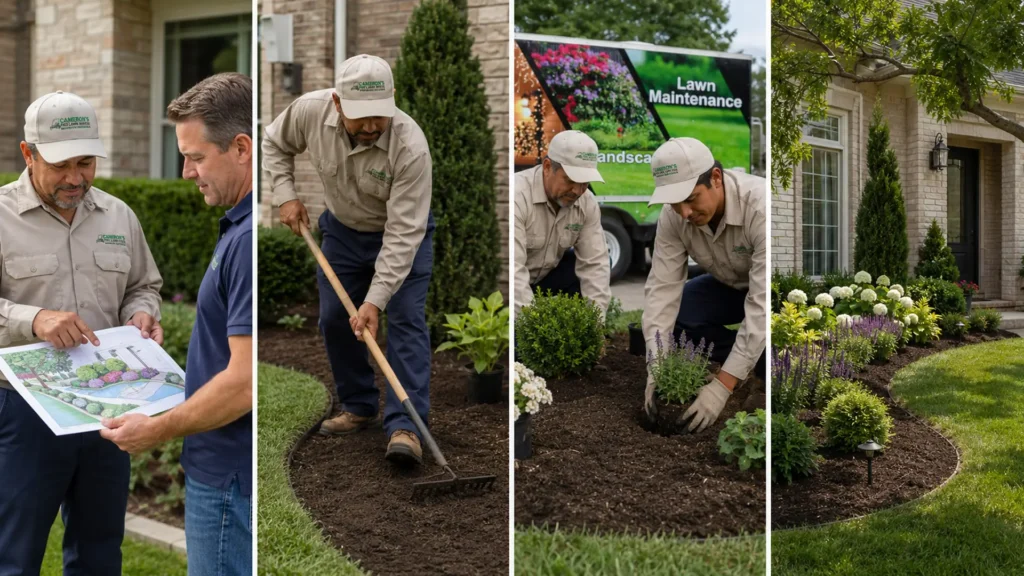
At Cameron’s Pro Lawn Services, we help local homeowners maintain attractive outdoor spaces through changing seasonal conditions. Knowing what to look for can help you make informed decisions about your lawn.
1. Is You’re St. Augustine Grass Entering Winter Dormancy?
St. Augustine is a warm-season grass that grows most actively during warmer months. As temperatures decline in late fall, grass growth slows and the lawn may gradually lose its vibrant green appearance.
This process is known as winter dormancy.
Signs of normal dormancy include:
· Gradual color changes across large lawn areas.
· Reduced grass growth and mowing frequency.
· Yellowing or browning after cooler weather.
· Grass remaining attached to its runners.
Dormancy does not automatically mean your grass is dying. Healthy turf generally resumes active growth when favorable spring temperatures return.
However, if discoloration develops in isolated circles or spreads unusually quickly, another problem may be involved.
2. Large Patch Disease Can Cause Brown Areas
One important reason for St Augustine grass turning brown North Texas homeowners may encounter is large patch disease.
Large patch is a fungal disease that commonly affects warm-season turf during cooler, moist periods in fall and spring.
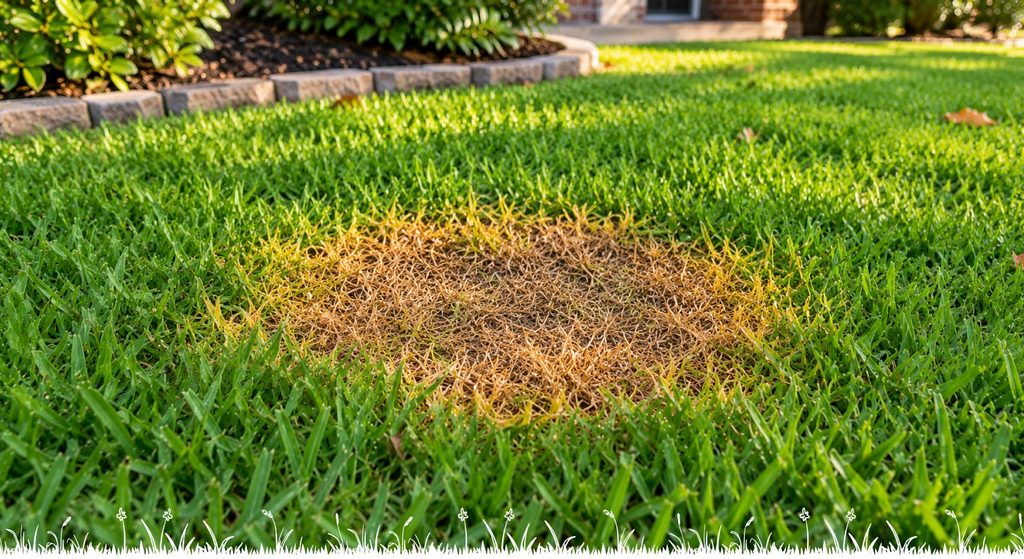
It may cause circular or irregular patches of yellow, orange, or brown grass. Affected areas sometimes expand when moisture and temperature conditions favor fungal activity.
Common warning signs include:
· Circular patches with yellow or orange borders.
· Grass blades that separate easily from their sheaths.
· Brown discoloration concentrated in specific lawn sections.
· Patches that appear repeatedly in the same locations.
These symptoms can suggest large patch, but they do not confirm the diagnosis. Other lawn problems may produce similar discoloration.
3. How to Tell Winter Dormancy from Lawn Disease
Homeowners often mistake natural seasonal changes for fungal damage.
The difference usually becomes clearer when you observe the location, shape, and speed of discoloration.
Normal dormancy tends to produce gradual changes across broader lawn areas. Fungal problems may create more distinct patches, particularly where soil remains wet.
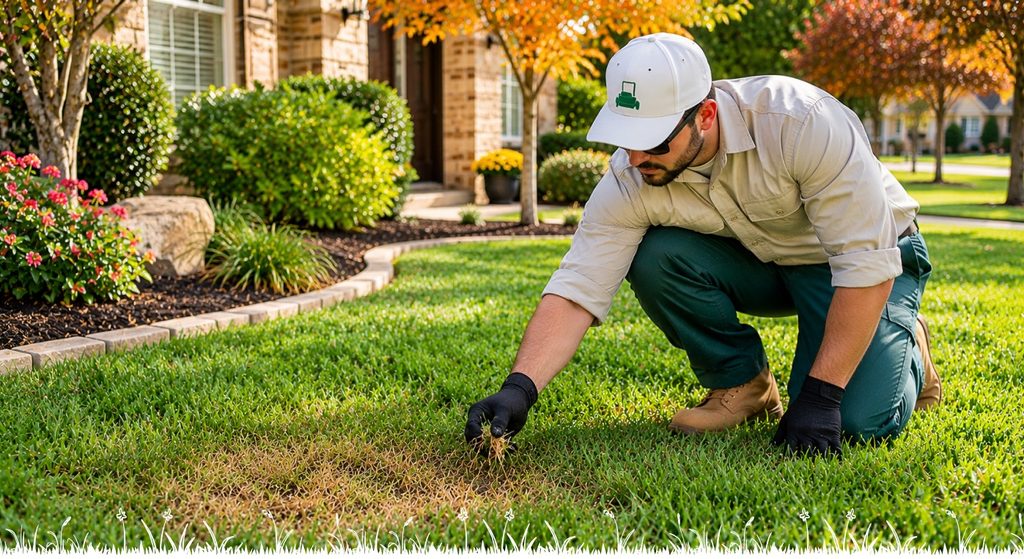
Check whether affected sections are expanding, whether grass blades appear damaged near their bases, and whether nearby areas have standing water.
If you notice brown patches in St Augustine grass, take photographs and monitor the affected locations over several days.
Avoid applying lawn treatments based only on color. Identifying the actual cause is the first step toward choosing an appropriate solution.
4. Overwatering Can Increase Lawn Problems
Many North Texas homeowners continue using summer irrigation schedules after temperatures begin cooling.
However, St. Augustine grass generally requires less water as active growth slows.
Excessive irrigation can leave the soil saturated, particularly in shaded or poorly drained sections. Prolonged moisture may increase susceptibility to diseases such as large patch.
Reviewing your watering schedule is especially important when investigating St Augustine lawn fungus in North Texas.
If your sprinklers create uneven coverage, puddles, or consistently wet areas, professional irrigation services in Lewisville can help address system-related watering problems.
Adjust watering based on actual soil moisture, rainfall, and seasonal conditions rather than following the same schedule year-round.
5. Poor Drainage and Shade Can Stress Your Grass
St. Augustine tolerates partial shade better than many other warm-season grasses, but it still requires sufficient sunlight for healthy growth.
Areas beneath dense trees or beside buildings may remain damp longer and receive less sunlight.
Poor drainage can make these conditions worse.
When water repeatedly collects in the same areas, grass may become thin, discolored, or more vulnerable to disease.
Inspect your lawn for low spots, compacted soil, heavy leaf accumulation, and places where water remains after irrigation or rainfall.
Correcting these conditions may be more beneficial than repeatedly treating the grass without addressing the underlying problem.
Latest Blog: How to Check Your North Texas Lawn for Winter Pests
Brown grass is not always caused by dormancy or fungal disease. Insects, previous summer stress, and other turf problems can sometimes produce similar symptoms.
Our recent article, How to Check Your North Texas Lawn for Winter Pests, explains how homeowners can inspect their lawns for unusual damage before winter dormancy makes problems harder to recognize.
Reading both guides can help you understand the difference between seasonal changes, possible disease symptoms, and other lawn concerns.
6. Avoid Excessive Fertilizer During Late Fall
When grass begins losing its green color, applying more fertilizer may seem like an easy solution.
However, heavy nitrogen fertilization during the transition toward winter can encourage growth when the lawn is naturally slowing down.
Excessive fertilizer can also contribute to conditions that favor certain turfgrass diseases.
Before fertilizing, consider your grass type, soil conditions, recent applications, and seasonal growth.
If the lawn is entering dormancy, fertilizer will not necessarily restore its summer appearance.
Maintaining appropriate mowing and watering practices is often more important than attempting to force new growth.
7. Adjust Your Lawn Maintenance Routine for November
As St. Augustine growth slows, routine maintenance should change with the season.
Continue mowing only when necessary, and avoid cutting the grass excessively short. Remove heavy leaf accumulation so turf is not continually covered by debris.
Monitor drainage, irrigation performance, and recurring problem areas.
Regular lawn maintenance Lewisville TX homeowners can depend on helps keep residential and commercial properties neat throughout seasonal transitions.
Cameron’s Pro Lawn Services provides mowing, edging, trimming, and routine outdoor property maintenance throughout Lewisville and nearby communities.
8. When Should You Consider Replacing Damaged Grass?
Brown St. Augustine grass does not automatically need replacement.
If the lawn is dormant, healthy grass may green up again when temperatures rise in spring.
If severe disease or other damage has killed sections of turf, repairs may eventually be necessary.
Before replacing grass, investigate the underlying cause. New sod may experience the same problems if poor drainage, excessive watering, or insufficient sunlight remains uncorrected.
For severely damaged areas, a professional assessment can help determine whether recovery is possible or replacement should be considered during an appropriate growing period.
9. Prepare Your Lawn for the Months Ahead
November is an important time to review lawn conditions before colder weather arrives.
Look for unusual discoloration, remove excessive debris, monitor watering needs, and document recurring trouble spots.
Homeowners should also consider whether nearby landscape beds, drainage features, and irrigation components need seasonal attention.
A thoughtful maintenance approach helps protect the overall appearance of your property without relying on unnecessary treatments.
Related Reading: Preparing Your Lawn for Winter
If your St. Augustine lawn is gradually changing color, understanding how warm-season grass responds to cooler temperatures can help you avoid common maintenance mistakes.
Our guide, How to Prepare Your Lewisville Property for the First Freeze, covers practical steps for preparing lawn areas, plants, irrigation components, and outdoor spaces before colder conditions arrive.
Frequently Asked Questions
Why is my St. Augustine grass turning brown in November?
Cooler temperatures can cause natural winter dormancy. However, fungal disease, excessive moisture, drainage problems, and other stresses may also contribute to browning.
What does large patch disease look like?
Large patch often creates circular or irregular yellow, orange, or brown areas. Affected grass blades may separate easily from their sheaths.
Can overwatering cause brown patches in St. Augustine grass?
Yes. Excessive watering can contribute to unhealthy soil conditions and increase susceptibility to certain fungal diseases.
Will brown St. Augustine grass turn green again?
Dormant grass generally greens up when favorable growing conditions return. Severely damaged or dead grass may not recover.
Should I apply fungicide immediately?
Not necessarily. Confirm the cause of the discoloration first. Fungicides should only be used when the disease and treatment approach justify their application.
Get Professional Lawn Maintenance in Lewisville, TX
If your St. Augustine lawn is developing unusual brown patches or showing signs of seasonal stress, understanding the cause can help you make better maintenance decisions.
Cameron’s Pro Lawn Services provides professional lawn maintenance and outdoor property care throughout Lewisville, Flower Mound, Highland Village, and surrounding North Texas communities.
Contact Cameron’s Pro Lawn Services today to request a free estimate and keep your lawn looking its best throughout the changing seasons.

Cameron's Lawn Care Service
Explore helpful lawn care, landscaping, irrigation, sod installation, seasonal maintenance, and outdoor property care tips from our team.
See All Blog