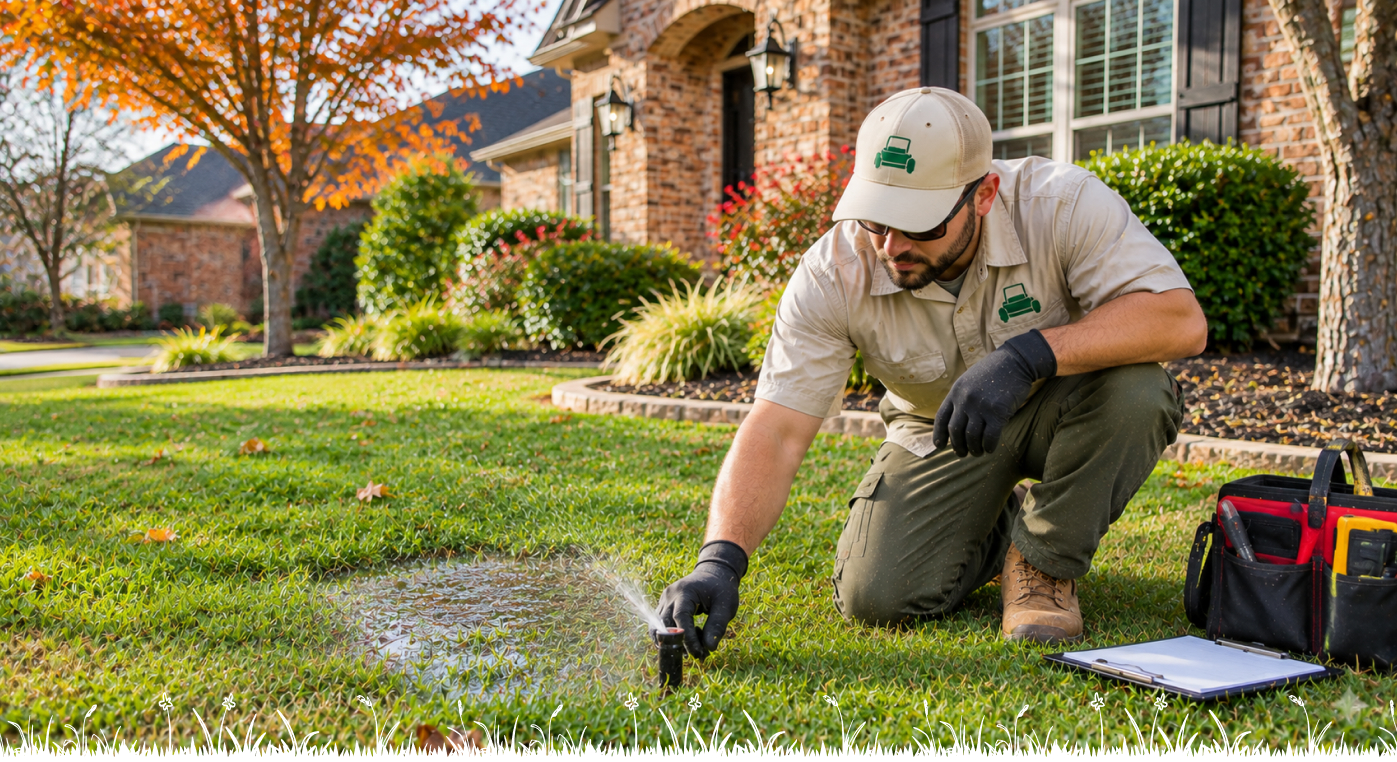
As temperatures begin to drop across North Texas, homeowners in Lewisville, Flower Mound, Highland Village, and Frisco often reduce their outdoor watering schedules. However, irrigation problems that developed during summer may remain unnoticed beneath the lawn.
Hidden sprinkler leaks can waste water, create soggy patches, reduce irrigation pressure, and affect the health of your grass. Some leaks are easy to identify, while others may continue for weeks without producing an obvious sign above ground.
Checking your irrigation system before winter can help prevent unnecessary water loss and identify components that may need repairs before colder weather arrives.
Here are seven warning signs every North Texas homeowner should know.
1. Unexplained Wet Spots in Your Lawn
One of the most noticeable signs of an underground sprinkler leak is an area of grass that stays wet long after the irrigation system has stopped running.
You may notice small puddles, muddy soil, or soft patches that remain damp even when surrounding areas are dry.
A damaged underground pipe, loose connection, or malfunctioning valve could be allowing water to escape into the soil.
However, not every wet spot indicates an irrigation leak. Poor drainage, compacted soil, and recent rainfall can produce similar conditions.
If the same area repeatedly becomes wet without an obvious explanation, consider scheduling an inspection.
Cameron’s Pro Lawn Services provides professional irrigation services, including inspections, repairs, maintenance, and system tune-ups.
2. A Sudden Increase in Your Water Bill
An unexpected increase in water usage may indicate a leak somewhere on your property.
Underground irrigation leaks can be difficult to detect because water may escape below the soil without creating visible puddles.
Compare your current water bill with previous months and consider changes in household water use.
If your irrigation schedule has decreased but overall water consumption remains unusually high, the sprinkler system may be worth investigating.
A water meter can sometimes reveal unexplained water flow when all known water-using fixtures are turned off.
However, this test does not confirm that the irrigation system is responsible. Indoor plumbing leaks and other water-use problems may produce similar results.
A professional inspection can help determine whether irrigation components need attention.
3. Low Water Pressure in One Sprinkler Zone
Sprinkler systems depend on adequate water pressure to distribute moisture across the lawn.
If one zone suddenly produces weak spray patterns or several sprinkler heads fail to reach their normal distance, an underground leak may be one possible cause.
Other potential causes include clogged nozzles, damaged valves, incorrect controller settings, or water supply issues.
Look for sprinkler heads that barely rise, produce uneven sprays, or fail to reach their intended watering areas.
Avoid increasing the watering duration simply to compensate for weak pressure. This may waste water without correcting the underlying problem.
Professional sprinkler leak detection can help identify whether the issue involves a damaged pipe, valve, or another system component.
4. Unusually Green or Fast-Growing Grass
A small section of grass that appears much greener than the surrounding lawn may indicate an uneven moisture supply.
When an underground irrigation pipe leaks, the affected soil may receive more water than other parts of the property.
This can sometimes encourage localized grass growth, even when the rest of the lawn is receiving less moisture.
However, differences in sunlight, fertilizer, grass variety, and soil conditions can also affect lawn color.
For this reason, unusually green grass should be considered alongside other underground sprinkler leak signs rather than treated as proof of a damaged pipe.
Consistent irrigation and routine lawn care work together to support healthier turf.
Consistent irrigation and routine lawn care work together to support healthier turf. Homeowners looking for reliable lawn maintenance in Lewisville, TX can benefit from proper watering, regular mowing, and seasonal lawn care to maintain healthy grass throughout the year.
5. Water Pooling Around Sprinkler Heads
Sprinkler heads can become damaged through mowing, foot traffic, soil movement, or normal wear.
A cracked sprinkler body or damaged underground connection may allow water to collect around the head while the system operates.
Sometimes water continues draining from a sprinkler after the watering cycle ends.
This does not always mean there is a leak. Low-head drainage can occur when water remaining in the pipes flows toward lower sprinkler heads after shutdown.
However, prolonged or repeated water flow may indicate a valve problem or damaged component.
Watch for bubbling water, excessive pooling, broken sprinkler bodies, or unusual movement around the sprinkler head.
Avoid digging around buried irrigation components unless you know the location of nearby utilities.
6. Sprinklers Running When the Controller Is Off
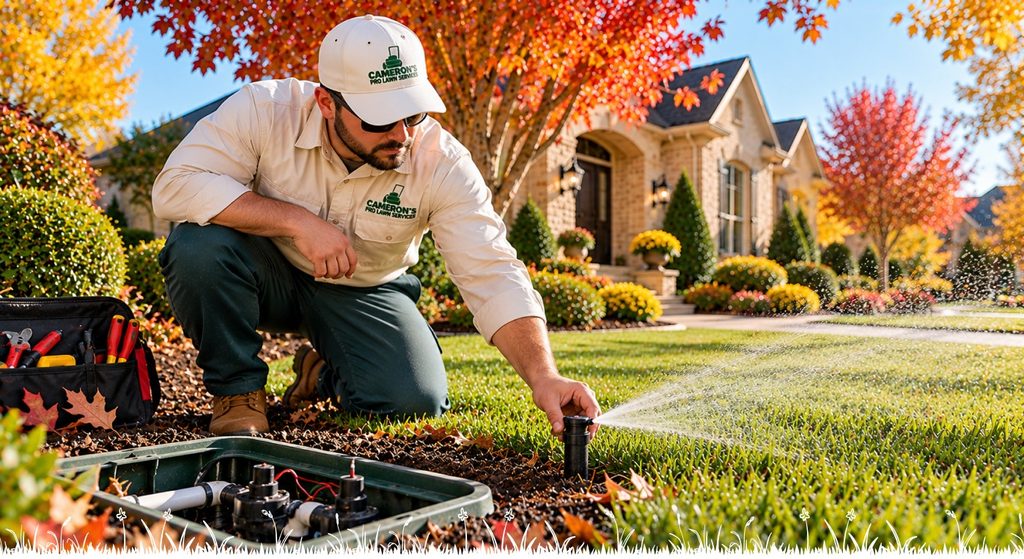
If a sprinkler zone continues releasing water after the scheduled cycle ends, a malfunctioning valve may be responsible.
Irrigation valves control the flow of water into individual zones.
A valve that does not close properly may allow water to continue reaching sprinkler heads.
Sometimes incorrect controller programming can also cause unexpected watering.
Before assuming a valve has failed, review the controller schedule and check whether multiple watering programs are active.
If water continues flowing after the controller is turned off, the problem may involve a mechanically stuck valve or another pressurized component.
In this situation, shutting off the irrigation water supply and arranging professional assistance may be necessary.
7. Soil Erosion or Small Depressions in the Yard
Some underground leaks gradually wash soil away from its original position.
Over time, this can contribute to small depressions, muddy areas, or unusual settling near irrigation lines.
Homeowners may notice that one section of the lawn feels softer underfoot or develops a small low spot.
These changes can also result from drainage issues, erosion, or other underground conditions.
If soil movement occurs alongside persistent moisture or unexpected water use, an irrigation leak becomes a possibility worth investigating.
A qualified irrigation professional can inspect the area and recommend the appropriate next steps.
Why Winter Makes Sprinkler Leak Detection Important
North Texas lawns generally require less supplemental irrigation during cooler months than during the hottest part of summer.
Warm-season grasses such as Bermuda and St. Augustine also slow their growth as temperatures fall.
However, reducing your watering schedule does not automatically stop an existing leak.
Damaged pipes and malfunctioning valves may continue wasting water even when the controller is not actively running.
Before freezing weather arrives, inspect visible sprinkler components, review watering schedules, and address known problems.
The appropriate winter preparation depends on the irrigation system’s design and the location of exposed equipment.
Latest Blog: 7 Christmas Light Installation Mistakes North Texas Homeowners Should Avoid
Planning to decorate your home for the holidays? Our latest blog, 7 Christmas Light Installation Mistakes North Texas Homeowners Should avoid, explains common lighting mistakes, electrical safety concerns, roofline installation problems, and helpful tips for creating a beautiful holiday display.
Read the complete guide to learn how to avoid costly decorating mistakes and prepare your North Texas home for Christmas.
How to Check Your Irrigation System for Leaks
Homeowners can perform a basic inspection without attempting complicated underground repairs.
Start by checking the irrigation controller and confirming that watering schedules are correct.
Next, walk around the property and look for wet patches, unusual grass growth, pooling water, or damaged sprinkler heads.
When weather conditions permit, briefly run each sprinkler zone separately.
Observe whether the heads rise correctly, distribute water evenly, and stop operating when the zone shuts off.
Check accessible components for visible leaks or damaged connections.
If you notice persistent water flow, avoid repeatedly operating the system.
A professional inspection can help identify the cause without unnecessary digging or guesswork.
How Sprinkler Leaks Can Affect Lawn Health
A leaking irrigation system may create both excessively wet and insufficiently watered areas.
Water escaping from a damaged pipe can reduce the amount reaching sprinkler heads farther along the line.
This may leave one section of the lawn saturated while another receives inadequate coverage.
Excessive moisture can contribute to poor soil conditions, while insufficient watering may weaken grass during dry periods.
Routine lawn maintenance services can help homeowners notice recurring wet patches, uneven growth, and other changes in lawn condition.
Properties with newly installed grass require particular attention because fresh sod depends on consistent moisture during establishment.
Before scheduling professional sod installation, checking irrigation coverage can help identify problems that might affect the new lawn.
Related Blog: How Regular Irrigation Maintenance Can Save Water and Protect Your Lawn
Preventing water waste requires more than fixing obvious leaks. Regular irrigation maintenance can help identify damaged sprinkler heads, uneven spray patterns, controller problems, and inefficient watering practices.
Read our related article, How Regular Irrigation Maintenance Can Save Water and Protect Your Lawn, to learn how routine system inspections can support healthier grass and more efficient watering.
When Should You Call an Irrigation Professional?
Some sprinkler problems are easy to notice but difficult to diagnose accurately.
A broken sprinkler head may be visible, while an underground leak or malfunctioning valve may require more detailed inspection.
Professional assistance is worth considering when water continues flowing after the controller stops, a sprinkler zone repeatedly loses pressure, or wet patches persist without an obvious explanation.
Cameron’s Pro Lawn Services offers irrigation inspections, repairs, maintenance, tune-ups, and coverage checks for residential and commercial properties.
Addressing problems early can help reduce unnecessary water waste and support more reliable irrigation performance.
Frequently Asked Questions
How do I know if my sprinkler system has an underground leak?
Common signs include persistent wet patches, unusual water consumption, low sprinkler pressure, localized grass growth, and water pooling near irrigation components. An inspection can help confirm the cause.
Can a sprinkler system leak when it is turned off?
Yes. Some leaks can continue when the controller is off, particularly when pressurized supply pipes or valves are damaged.
Can hidden sprinkler leaks increase my water bill?
Yes. Water escaping from damaged irrigation components can increase consumption and potentially raise utility costs.
Should I repair sprinkler leaks before winter?
Yes. Addressing known leaks before freezing conditions can reduce unnecessary water loss and help prepare the system for colder weather.
Can sprinkler leaks damage my lawn?
Yes. Excessive moisture, poor water distribution, and soil erosion can negatively affect lawn conditions.
Does Cameron’s Pro Lawn Services repair irrigation systems?
Yes. Cameron’s Pro Lawn Services provides irrigation repairs, maintenance, inspections, and related services in Lewisville and surrounding North Texas communities.
Protect Your Lawn and Irrigation System Before Winter
Hidden sprinkler leaks can waste water, create uneven lawn conditions, and lead to unnecessary repair concerns when ignored.
By watching for persistent wet spots, unexpected water usage, weak sprinkler pressure, and damaged components, homeowners can identify possible problems before they become more disruptive.
Cameron’s Pro Lawn Services provides professional irrigation solutions for homeowners and businesses throughout Lewisville and surrounding North Texas communities.
Whether you need a sprinkler inspection, repair, or seasonal system maintenance, our team can help evaluate your irrigation needs.
Keep Your Sprinkler System Working Efficiently
Small irrigation problems can lead to wasted water, higher utility bills, and unhealthy lawns if left untreated.
Cameron’s Pro Lawn Services provides professional irrigation inspection, repair, and maintenance services in Lewisville and surrounding North Texas communities.
Noticing wet spots, low water pressure, or sprinkler problems?
Or call (214) 529-3488 to discuss your irrigation needs.

Cameron's Lawn Care Service
Explore helpful lawn care, landscaping, irrigation, sod installation, seasonal maintenance, and outdoor property care tips from our team.
See All Blog